2 | 14
1. Position the grill well away from sidings, deck railings and out from under eaves and overhanging
branches.
2. Place the grill at a safe distance from lawn games, play areas and foot traffic.
3. Keep children and pets away from the grill area: declare a three-foot “safe zone” around the grill.
4. Put out several long-handled grilling tools to give the chef plenty of clearance from heat and
flames while operating the Mighty Pizza Stone. Use only appropriate bake-ware or utensils while
baking. Do not use plastic, silicone or glass.
5. Periodically remove grease or fat buildup in the trays below the grill so it can’t be ignited by a hot
grill.
6. High-risk times for gas grills are when you first use one that has been left idle, or just after you
refill and reattach the grill’s gas container. Read and follow the manufacturer’s instructions when
connecting or disconnecting LP gas containers.
7. Check the tubes that lead into the burner to make sure they aren’t blocked by bugs or grease.
Use a pipe cleaner or wire to clear blockage and push it through to the main part of the burner.
8. Check grill hoses for cracking, brittleness, holes and leaks. Make sure there are no sharp bends
in the hoses or tubing.
9. Move gas hoses as far as possible away from hot surfaces and dripping hot grease. If you can’t
move the hoses, install a heat shield to protect them.
10. Replace scratched or nicked connectors, which can eventually leak gas.
11. Never use a grill indoors. Use the grill at least 10 feet away from your house or any building. Do
not use the grill in a garage, breezeway, carport, porch, or under a surface that can catch fire.
12. Always follow the manufacturer’s instructions that accompany the grill.
13. Be careful when storing LP gas containers. Keep them upright. Never store a spare gas container
under or near the grill, or indoors. Never store or use flammable liquids, like gasoline, near the
grill.
14. Transport the LP gas container in a secure, upright position. Never keep a filled container in a hot
car, or car trunk. Heat will cause the gas pressure to increase, which may open the relief valve
and allow gas to escape.
15. Check the gas cylinder hose and tank valve for leaks before using it for the first time each year.
A light soap and water solution applied to the hose and valve will quickly reveal escaping propane
by releasing bubbles. If you determine your grill has a gas leak, by smell or by using the soapy
bubble test, and there is no flame, turn off the gas tank and grill. If the leak stops, get the grill
serviced by a professional before using it again. If the leak does not stop, call the fire department.
16. If you smell gas while cooking, immediately get away from the grill and call the fire department.
Don’t try to move the grill.
17. If you have a charcoal grill, remember that this type of fuel produces carbon monoxide (CO) when
it is burned. CO is a colorless, odorless gas that can accumulate to toxic levels in closed
environments. Never burn charcoal inside of homes, vehicles, tents, or campers. Since charcoal
produces CO fumes until the charcoal is completely extinguished, do not store the grill indoors
with freshly used coals.
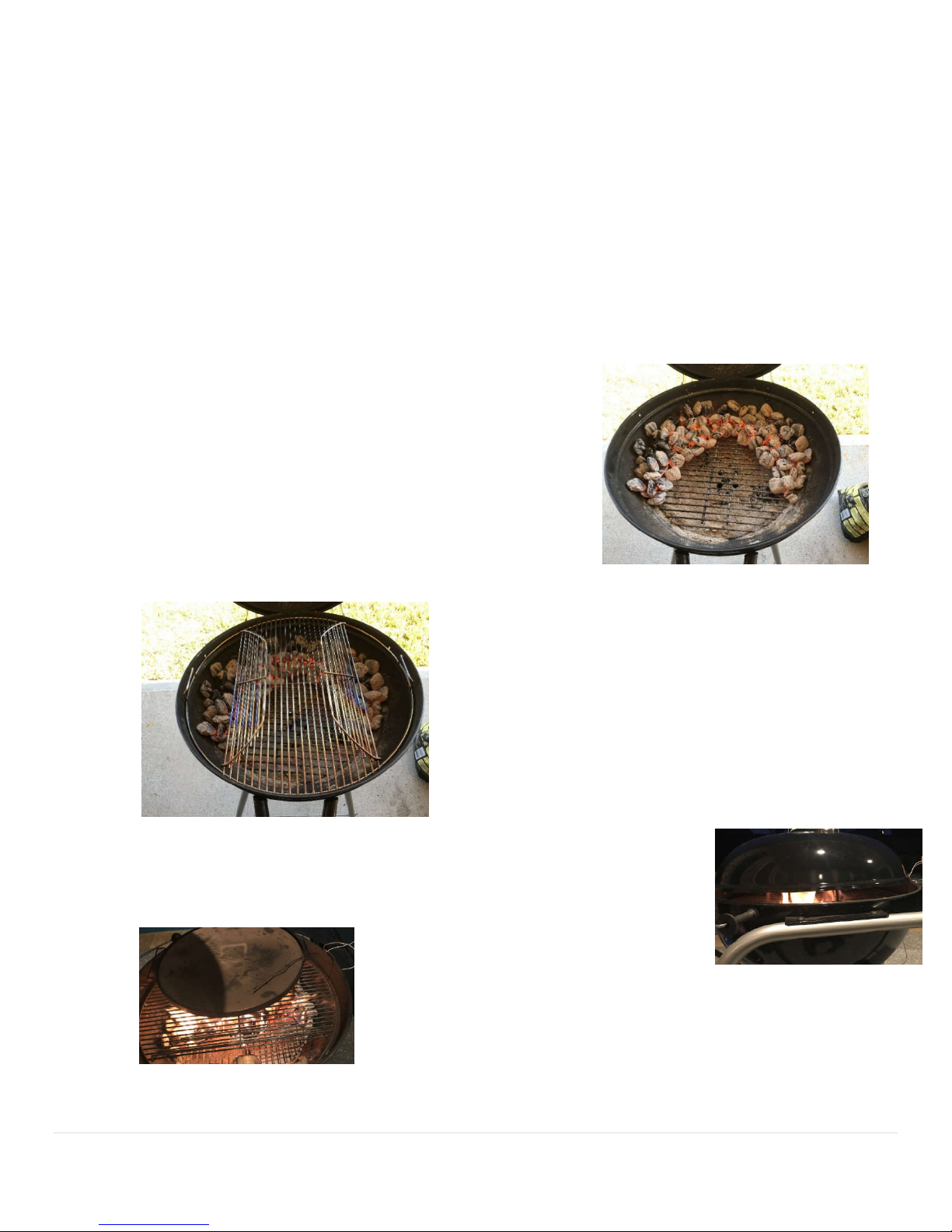
18. Do not close the hood / lid on flaming charcoal or wood chunks. If closed and re-opened, the
flames could leap out and burn.
19. Do not move a grill while it is in use or hot.
20. Allow the grill to cool before handling parts or cleaning
21. Do not wear loose clothing (example: hanging shirttails, clothing with frills, etc.) around a grill
while it is in use or hot.
22. Do not lean your body over the charcoal grill when lighting it, while it is hot, or is in use.
23. Do not attempt to extinguish a grease fire with water or other liquids. Have an ABC fire
extinguisher nearby.