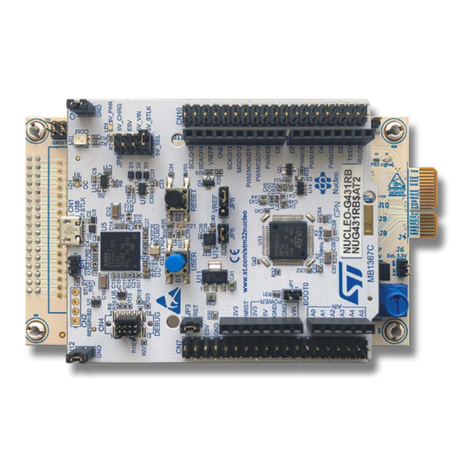
Shuttle HOT-679V User manual

HOT-679V
Pentium™II processor
BasedAGP MAINBOARD
User's Manual

- 2 -
FCC Notice:
This equipment has been tested and found to comply with the limits for a Class B digital device, pursuant to Part 15 of FCC
Rules. These limits are designed to provide reasonable protection against harmful interference in a residential installation.
This equipment generates, uses and can radiate radio frequency energy. If not installed and used properly, in strict accor-
dance with the manufacturer’s instructions, may cause harmful interference to radio communications. However, there is no
guarantee that interference will not occur in a particular installation. If this equipment does cause interference to radio or
television reception, which can be determined by turning the equipment off and on, the user is encouraged to try to correct
the interference by one or more of the following measures :
Reorient or relocate the receiving antenna.
Increase the separation between the equipment and receiver.
Connect the equipment into an outlet on a circuit different from that to which the receiver is connected.
Consult the dealer or an experienced radio/television technician for help and for additional suggestions.
The user may find the following booklet prepared by the Federal Communications Commission helpful “How to Identify
and Resolve Radio-TV Interference Problems.” This booklet is available from the U.S. Government Printing Office.
Washington, DC 20402, Stock 004-000-00345-4
FCC Warning
The user is cautioned that changes or modifications not expressly approved by the manufacturer could void the user’s
authority to operate this equipment.
Note : In order for an installation of this product to maintain compliance with the limits for a Class B device, shielded
cables and power cord must be used.
CE Notice:
Following standards were applied to this product, in order to achieve compliance with the electromagnetic
compatibility :
- Immunity in accordance with EN 50082-1: 1992
- Emissions in accordance with EN 55022: 1987 Class B.
NOTICE
Copyright 1999.
All Right Reserved
Manual Ver 1.0
All information, documentation, and specifications contained in this manual are subject to change without prior
notification by the manufacturer.
The author assumes no responsibility for any errors or omissions which may appear in this document nor does
it make a commitment to update the information contained herein.
TRADEMARKS
Intel is a registered trademark of Intel Corporation
VIA is a registered trademark of VIA Technologies, Inc.
PentiumII Processor is a registered trademark of Intel Corporation
PC/AT is a registered trademark of International Business Machine Corporation.
PS/2 is a registered trademark of IBM Corporation.
All other brand and product names referred to in this manual are trademarks or registered trademarks of their
respective holders.

- 3 -
T
T
PREFACE ............................................................................................................. 4
CHAPTER 1 INTRODUCTION ...................................................................................... 5
Introduction ................................................................................................................................5
Accessories of HOT-679V..........................................................................................................7
CHAPTER 2 HARDWARE CONFIGURATION ................................................................... 8
The Pentium II & Celeron Processor...........................................................................................8
What does the URM (Universal Retention Mechanism) consist of..............................................9
Install the Universal Retention Mechanism.................................................................................9
Install Pentium II Processor ......................................................................................................11
Celeron Processor S.E.P.P only RM Assembly Procedure.........................................................12
Install Celeron Processor ..........................................................................................................13
Install S.E.C.C.2 Processor .......................................................................................................14
Jumpers ....................................................................................................................................15
CPU Clock Speed Selection - JP2 and JP9 ................................................................................15
Flash EEPROM Vpp.................................................................................................................18
Keyboard & PS/2 Mouse Power-on Setting - JP1......................................................................18
On Board Audio Controller Setting - JP6 ..................................................................................19
Connectors................................................................................................................................19
CHAPTER 3 MEMORY CONFIGURATION ..................................................................... 22
CHAPTER 4 FLASH UTILITY ................................................................................... 23
CHAPTER 5 AWARD BIOS SETUP .......................................................................... 25
The Main Menu ........................................................................................................................26
Standard CMOS Setup ..............................................................................................................28
BIOS Features Setup.................................................................................................................30
Chipset Features Setup..............................................................................................................33
Power Management Setup.........................................................................................................36
PCI Configuration Setup...........................................................................................................39
Integrated Peripherals ...............................................................................................................41
Password Setting.......................................................................................................................44
CHAPTER 6 ONBOARD AUDIO CONTROLLER ............................................................ 45
Introduction ..............................................................................................................................45
General Specifications ..............................................................................................................46
Connecting Audio Devices to 679V ..........................................................................................47
Auto-installing Applications and Drivers ..................................................................................49
TABLE OF CONTENTS

- 4 -
P
P
HOT-679V is a highly integrated IBM PC/ATX compatible system board designed to
meet the industry's most demanding desktop applications.
Based on the VIA VT82C692 chipset which support up to 500MHz PentiumTM II proces-
sor with MMX technology.
HOT-679V is equipped with an Accelerated Graphics Port (A.G.P.), a high-performance
interconnect for graphic-intensive application, such as 3D applications. The A.G.P. is
independent of the PCI bus and is designed to exclusively use with graphical-display
devices. The HOT-679V supports 3.3 V A.G.P. devices with data transfer rates up to 133
MHz, allowing data throughput of 500 MB/sec.
The VIA's VT82C692 AGPset chipset provides an integrated Bus Mastering IDE
controller with two high performance IDE interfaces which allows up to four IDE
devices connection and up to 33 MB/sec of data transfer rates.
The on-board I/O controller provides standard PC I/O functions:
floppy drive interface, two FIFO serial ports, an InDA device port and a SPP/EPP/ECP
capable parallel port.
HOT-679V is built with three PCI local bus slots providing a high bandwidth data path
for data-movement intensive functions such as graphics, and with one ISA slot.
HOT-679V provides the foundation for cost effective, high performance and highly
expandable platforms, which delivers the latest in the Intel PentiumTM II processor and
new advanced chipset technology.
PREFACE

- 5 -
1
1
The HOT-679V Mainboard is carefully designed for the demanding PC user who wants high perfor-
mance and many intelligent features in a compact package:
Chipset:
Features VIA Apollo Pro with I/O subsystems.
CPUSupport:
Intel Pentium IITM processor 233/66 ~ 400/66 MHz and 350/100 ~ 500/100 MHz.
CeleronTM processor 266/66 ~ 400/66 MHz.
Versatile Memory Supports:
Supports three banks of normal or PC/100 SDRAMmaximum memory size up to 768MB.
Configurable support for ECC (Error Checking and Correcting)
PCI and ISA Expansion Slots:
Provides three 32-bit PCI slots and one 16-bit ISA slot.
Onboard I/O:
Provides one Floppy port; one PS/2 mouse connector; two high-speed UART compatible serial
ports and one parallel port with ECP and EPP capabilities. Serial Port 2 can also be directed from
COM2 to the Infrared Module for wireless connections.
Onboard PCI Bus Master IDE Controller:
Two Ultra DMA/33 Bus Master IDEPorts supports four IDE devices up to 33 MB/sec IDE trans-
fers and supports Enhanced PIO Modes 3 and 4 and Bus Master IDE DMA Mode 2 devices.
Onboard 20-pin ATX Power Supply:
Provides ATX power connector onboard supports soft-on/off function.
System BIOS:
Provides licensed Award V4.51PG BIOS on Flash EEPROM.
Supports Green PC, DMI and Bundled with NCR SCSI BIOS.
ACPI:
Support ACPI (Advanced Configuration and Power Interface)function. ACPI provide more
Energy Saving Features for the future operating system supporting OS Direct Power Management
(OSPM) functionality.
INTRODUCTION

- 6 -
On Board Graphics Accelerator:
Intel740 AGP accelerator chip.
Onboard 4MB high speed 64-bit SGRAM.
On Board Audio Controller:
Creative ES1371 AC97 digital controller
Advanced 64 polyphonic wavetable synthesis with additional DOS support
Full-Duples Record/Playback at up to 48KHz
Supports Microsoft DirectSound 3D
Digital effects engine for reverb, chorus, tone control
Board Size:
MicroATX form factor 244mm x 199mm.
Advanced Features:
CPU Plug & Play -- HOT-679V featuring CPU Plug & Play function, the user needn't to adjust
onboard system clock and CPU multiplier. When the system first power-on, BIOS will set CPU
clock speed to 233 MHz or 350 MHz (depend on CPU external frequency) automatically. If your
CPU speed higher than 233 MHz or 350 MHz, one thing you only have to do is entry BIOS to set
CPU speed to the higher one.
Low EMI -- Spread Spectrum built in - ±0.5% or ±0.3% modulation and automatic clock shut-off
of unused PCI/SDRAMS slots to reduce the EMI.
Dual Function Power Button -- The system can be one of two states, one is Suspend mode and
the other is the Soft-off mode. Pushing the power button for less than 4 seconds will place the
system into Suspend mode. When push the power button for more than 4 seconds, the system
enters the Soft-off mode.
Wake-On-LAN -- The system will power-on automatically by activating of LAN.
(This function support Intel LAN card only).
Modem Ring Power-on -- The system will power-on automatically by activating of modem ring.
PS/2 Keyboard & Mouse Power-on -- The system will power-on automatically by stroke key-
board or double click PS/2 mouse.
Voltages Monitoring -- System voltages levels are monitored to ensure stable current to main
board components.
System voltages include VCORE and VTT for CPU, and +5V, +12V, -5V, -12V for system.
FAN Status Monitoring -- To prevent CPU overheat, CPU fans is monitored for RPM and failure.
(CPU Cooling FAN with RPM sensor is required)

- 7 -
ACCESSORIES OF HOT-679V

- 8 -
2
2HARDWARE CONFIGURATION
The Pentium™ II Processor
Figure 2-1
Figure 2-2 Figure 2-3
The Pentium™ II and Celeron™ processor is the next member of the P6 processor family.
It combines the architectural advances in the Pentium Pro processor with the instruction set
extensions of MMX technology. It is fully compatible with the huge base of Intel architec-
ture-based PC software. Additional, the Pentium™ II processor delivers new levels of
performance for advance media and communications software including powerful, realistic
graphics and imaging capabilities, video conference, and the ability to run full-screen, full-
motion video. The combination of these advanced technologies makes the Pentium™ II
processor the ideal choice foe executing modem 32-bit compute-intensive and multimedia-
enhanced application work loads using advanced 32-bit operating systems.
The Pentium™ II and Celeron processor both have a separate, 32KB, on-chip, non-blocking
L1 cache which run at the processor frequency, Pentium™ II processor also has a 512KB or
256KB on-board L2 non-blocking cache runs at half the processor speed.
The Pentium™ II processor using Single Edge Contact Cartridge (S.E.C.C.) and S.E.C.C.2
packaging technology which enables high volume availability, improved handling protec-
tion.
The Celeron™ processor using Single Edge Processor Package. ( S.E.P.P.)
Figure 2-1 shows the front, rear and top views of Pentium™ II processor (without heat sink
mounted).
Figure 2-2 shows the S.E.C.C.2 package of Pentium™ II processor.
Figure 2-3 shows the primary and non-primary side of Celeron™ processor without heat
sink mounted and with heat sink mounted.

- 9 -
What does the URM (Universal Retention Mechanism) consist of
Pentium II processor requires the Retention Mechanism (RM) and optional Heat Sink
Support (HSS) to hold the base processor in the S.E.C. cartridge.(or SECC 2)
Following installation procedure will display how to install these mechanism.
Retention Mechanism package consists of 2 separate parts and optional Heat Sink Support
consists of 3 separate parts.
Normally, depend on the type of heat sink, Heat Sink Support is not always available. For
some heat sink attached on pentium II processor might not fit to install the Heat Sink
Support. The introduction of Heat Sink Support installation on this manual only for your
reference.
Universal Retention Mechanism (URM) -
Plastic Guide with captive nuts that hold the
S.E.C. Cartridge in the Slot1 connector.
(Refer to Figure 2-4)
URM Attach Mount (URMAM) -
Bolt/Bridge assemblies inserted up through
the bottom of the mainboard. Then secures the
URM to URMAM (two URMAM required per URM).
(Refer to Figure 2-5)
Figure 2-4
Figure 2-5
Install the Universal Retention Mechanism
Place the mainboard on a workbench (not in a chassis). Be sure that the mainboard is bare
(that is, no DIMMs, cables, or cards are installed).
Install the Retention Mechanism :
1. Finds out the Universal Retention
Mechanism (URM) Mounting Holes
of Slot1 on HOT-679V main board.
(Refer to Figure 2-6)
2. Install two Universal Retention
Mechanism Attach Mounts (URMAM)
with Bolt/Bridge assemblies inserted
up through the bottom of the
mainboard. (Notice the URMAM's
bridge orientation as Figure 2-7)
Figure 2-6
Figure 2-7

- 10 -
Figure 2-8 Figure 2-9
Install the Heat Sink Support: (optional)
If your Heat Sink comes with the Heat Sink suport then install it according to the instruction
comes with your Heat Sink.
Figure 2-8 and Figure 2-9 shows some Heat Sink examples.
Table of contents
Other Shuttle Motherboard manuals

Shuttle
Shuttle MK35V User manual

Shuttle
Shuttle FB61 User manual

Shuttle
Shuttle ME21 User manual

Shuttle
Shuttle FV25 User manual

Shuttle
Shuttle AB60/R User manual

Shuttle
Shuttle AV49V User manual

Shuttle
Shuttle FV24 User manual

Shuttle
Shuttle HOT-579 User manual

Shuttle
Shuttle AV64 User manual

Shuttle
Shuttle MB48 User manual

Shuttle
Shuttle MV43V User manual

Shuttle
Shuttle AK32E User manual

Shuttle
Shuttle MS11 User manual

Shuttle
Shuttle MN31 User manual

Shuttle
Shuttle FN41U User manual

Shuttle
Shuttle FB75 User manual

Shuttle
Shuttle MS52P User manual

Shuttle
Shuttle Spacewalke AK21 User manual

Shuttle
Shuttle FS58 User manual

Shuttle
Shuttle AV11 User manual