4
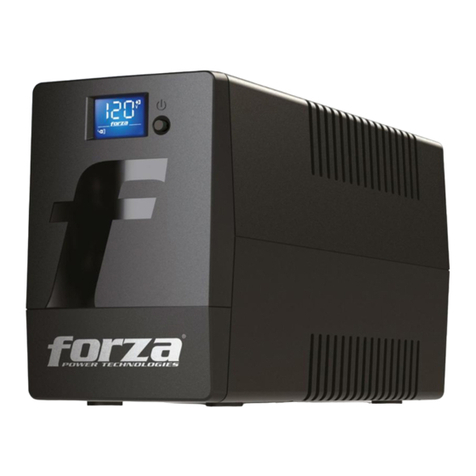
1. Power On/O buon: Master ON/OFF for the UPS.
2. Funcon Buons: Scroll up, scroll down, select and cancel LCD menu
in seng mode.
3. LCD Display: Indicate status informaon, sengs and events.
4. Input Circuit Breaker: The circuit breaker provides opmal overload
protecon.
5. AC Input Inlet: Connect the AC Power cord to a properly wired and
grounded outlet.
6. Baery Backup & Surge Protected Outlets: Provide baery backup
and surge protecon. They ensure power is provided to connected
equipment over a period of me during a power failure.
Crical / Non-crical outlets: Allows the creaon of load priories to
ensure that baery power reserves are transferred to specied outlets
during a power outage. The unit can be programmed to provide
addional runme for equipment connected to the “CRITICAL”
outlets, while stopping the power supply to equipment connected to
“NON-CRITICAL” outlets aer a designated period of me.
7. Extended Runme Baery Module Connector: Connect to
addional external baery modules.
8. SNMP/HTTP Network slot: Slot to install the oponal SNMP card
for remote network control and monitoring.
9. EPO (Emergency Power O) Connector: Enable Power-O in
emergency from a remote locaon.
10. Serial Port: Serial port provides communicaon between the UPS
and the computer. The UPS can control the computer’s shutdown
during a power outage through the connecon while the computer
can monitor the UPS and alter its various programmable parameters.
11. HID USB port: Allows the UPS to appear in Windows like a baery
icon. When the power is out, you can sll see the baery level and
adjust its sengs. Also Windows power management opons are
available. In case you need more advanced local management we
recommend you to install and use “PowerMonitor” soware.
12. Output Circuit Breaker: Provide overload and fault protecon.