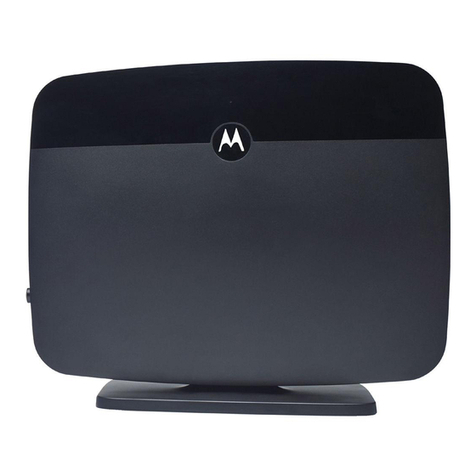
Abocom WR5502 User manual

802.11b/g/n
Wireless Broadband
Router
User’s Manual


Table of Contents
CHAPTER 1: INTRODUCTION ............................................................................................ 3
FEATURES ................................................................................................................................3
PACKAGE CONTENTS ............................................................................................................... 3
PHYSICAL DETAILS .................................................................................................................. 4
ABOUT THE OPERATION MODES .............................................................................................. 6
CHAPTER 2: INSTALLATION ............................................................................................. 8
REQUIREMENTS........................................................................................................................ 8
PROCEDURE ............................................................................................................................. 8
CHAPTER 3: CONFIGURATION VIA WEB..................................................................... 10
OVERVIEW ............................................................................................................................. 10
CONFIGURATION PROGRAM ................................................................................................... 10
SETUP WIZARD ...................................................................................................................... 12
OPERATION MODE ................................................................................................................. 17
WIRELESS .............................................................................................................................. 18
TCP/IP SETTINGS................................................................................................................... 29
FIREWALL .............................................................................................................................. 33
QOS ....................................................................................................................................... 39
MANAGEMENT ....................................................................................................................... 40
LOGOUT ................................................................................................................................. 46
CHAPTER 4: PC CONFIGURATION................................................................................. 47
OVERVIEW ............................................................................................................................. 47
WINDOWS CLIENTS ................................................................................................................ 47
MACINTOSH CLIENTS............................................................................................................. 52
LINUX CLIENTS ...................................................................................................................... 52
OTHER UNIX SYSTEMS........................................................................................................... 52
WIRELESS STATION CONFIGURATION .................................................................................... 53
APPENDIX A: TROUBLESHOOTING.............................................................................. 54
OVERVIEW ............................................................................................................................. 54
GENERAL PROBLEMS ............................................................................................................. 54
INTERNET ACCESS.................................................................................................................. 55
WIRELESS ACCESS ................................................................................................................. 56
APPENDIX B: ABOUT WIRELESS LANS........................................................................ 57
MODES ................................................................................................................................... 57
BSS........................................................................................................................................ 57
CHANNELS ............................................................................................................................. 57
SECURITY............................................................................................................................... 58
WIRELESS LAN CONFIGURATION .......................................................................................... 59
APPENDIX C: SPECIFICATIONS ..................................................................................... 60
802.11N/B/G WIRELESS BROADBAND ROUTER ...................................................................... 60

2
Federal Communication Commission
Interference Statement
This equipment has been tested and found to comply with the limits for a Class B
digital device, pursuant to Part 15 of the FCC Rules. These limits are designed to
provide reasonable protection against harmful interference in a residential installation.
This equipment generates uses and can radiate radio frequency energy and, if not
installed and used in accordance with the instructions, may cause harmful interfer-
ence to radio communications. However, there is no guarantee that interference will
not occur in a particular installation. If this equipment does cause harmful interference
to radio or television reception, which can be determined by turning the equipment off
and on, the user is encouraged to try to correct the interference by one of the following
measures:
- Reorient or relocate the receiving antenna.
- Increase the separation between the equipment and receiver.
- Connect the equipment into an outlet on a circuit different from that to which the
receiver is connected.
- Consult the dealer or an experienced radio/TV technician for help.
This device complies with Part 15 of the FCC Rules. Operation is subject to the follow-
ing two conditions: (1) This device may not cause harmful interference, and (2) this
device must accept any interference received, including interference that may cause
undesired operation.
FCC Caution: Any changes or modifications not expressly approved by the party
responsible for compliance could void the user's authority to operate this equipment.
IEEE 802.11b or 802.11g operation of this product in the U.S.A. is firmware-limited to
channels 1 through 11.
IMPORTANT NOTE:
FCC Radiation Exposure Statement:
This equipment complies with FCC radiation exposure limits set forth for an uncon-
trolled environment. This equipment should be installed and operated with minimum
distance 20cm between the radiator & your body.
This transmitter must not be co-located or operating in conjunction with any other
antenna or transmitter.
The availability of some specific channels and/or operational frequency bands are
country dependent and are firmware programmed at the factory to match the intended
destination. The firmware setting is not accessible by the end user.

3
Chapter 1: Introduction
The 802.11b/g/n Wireless Broadband Router is a draft 802.11n/b/g compliant Wireless
Broadband Router with 4-port Fast Ethernet Switch. With the advanced MIMO technology, it
can support the data transmission rate 6 times more (up to 300Mbps) and the coverage 3 times
more than IEEE 802.11b/g devices. 802.11b/g/n Wireless Broadband Router enables your
whole network sharing a high-speed cable or DSL Internet connection. The incredible speed of
802.11b/g/n Wireless Broadband Router makes it ideal for media-centric applications like
streaming video, gaming, and Voice over IP technology, ensure optimum performance and
maximum coverage with two external antennas.
With 802.11b/g/n Wireless Broadband Router, you can share a high-speed Internet connec-
tion, files, printers, and multi-player games at incredible speeds, without the hassle of stringing
wires. 802.11b/g/n Wireless Broadband Router offers easy configuration for your wireless
network in the home and presents wireless network to you home of high functionality, security,
and flexibility.
Features
•Support the IEEE 802.11b/g/n standard, high speed date rate up to 300Mbps.
•Support WPS (Wi-Fi Protected Setup) with physical reset button.
•High security with built-in Security: WEP 64/128 bits, WPA, WPA2, 802.1x and
802.11i.
•Support Router, AP, WDS (Bridge + Repeater) and Client.
•Advanced Quality of Service (QoS) - 802.11e, WMM.
•Easy configuration for home user setup.
Package Contents
The following items should be included:
•The Wireless Router Unit
•Power Adapter
•Quick Installation Guide
•CD-ROM containing the on-line manual
If any of the above items are damaged or missing, please contact your dealer immediately.

4
Physical Details
Front-mounted LEDs
Figure 1: Front Panel
LED Printed Color Behavior Indication
N/A Off No power
Green On System powered on
Power
Orange Blinking Booting
Power/ WPS
WPS Green Blinking WPS link (Duration 2 min)
N/A Off WLAN Disabled
Wireless LAN WLAN
Green Blinking WLAN Enabled
N/A Off Link failed, or not linked
Green On Link active
10/100 WAN Internet
Green Blinking Traffic transmitting
N/A Off Link failed, or not linked
Green On Link active
10/100M Switch n (n=1~4)
LAN/Activity
Green Blinking Traffic transmitting

5
Rear Panel
Figure 2: Rear Panel
Power port Connect the supplied power adapter here.
LAN 1~4 ports Use standard LAN cables (RJ45 connectors) to connect your PCs to
these ports.
If required, any port can be connected to another hub. Any LAN port
will automatically function as an "Uplink" port when necessary.
Internet port Connect the DSL or Cable Modem here. If your modem came with a
cable, use the supplied cable. Otherwise, use a standard LAN cable.
WPS Button To enable the WPS function, keep pressing the Reset Button more
than 2 seconds, until the GREEN LED has flashed.
Reset Button This button has two (2) functions:
•Reboot
When holding the button for 2 seconds, the power LED blinks
in ORANGE, the Wireless Router will reboot (restart) auto-
matically.
•Restore Factory Default Setting
This button can also be used to clear all data and restore all set-
tings back to the factory default values.
To Clear All Data and restore the factory default values:
1. After Power On.
2. Press the Reset Button.
3. Keep pressing the Reset Button more than 5 seconds, until the
GREEN LED has flashed.
4. Release the Reset Button. The Wireless Router is now using the
factory default values.

6
About the Operation Modes
Gateway Mode
In this mode, the device is supposed to connect to internet via ADSL/Cable Modem. The NAT
is enabled and PCs in LAN ports share the same IP to ISP through WAN port. The connection
type can be setup in WAN page by using PPPOE, DHCP client, PPTP client or static IP.
Bridge Mode
The WDS (Wireless Distributed System) function lets this access point act as a wireless LAN
access point and repeater at the same time. Users can use this feature to build up a large wire-
less network in a large space like airports, hotels and schools and so on. This feature is also
useful when users want to bridge networks between buildings where it is impossible to deploy
network cable connections between these buildings.
In this mode, all Ethernet ports and wireless interface are bridge together and NAT function is
disabled. All the WAN related function and firewall are not supported.
Wireless Distribution System uses wireless media to communicate with other APs, like the
Ethernet does. To do this, you must set these APs in the same channel and set MAC address of
other APs which you want to communicate with in the table and then enable the WDS.

7
Wireless ISP Mode
In this mode, all Ethernet ports are bridged together and the wireless client will connect to ISP
access point. The NAT is enabled and PCs in Ethernet ports share the same IP to ISP through
wireless LAN. You must set the wireless to client mode first and connect to the ISP AP in Site-
Survey page. The connection type can be setup in WAN page by using PPPOE, DHCP client,
PPTP client or static IP.

Chapter 2: Installation
Requirements
•Network cables. Use standard 10/100BaseT network (UTP) cables with RJ45 connectors.
•TCP/IP protocol must be installed on all PCs.
•For Internet Access, an Internet Access account with an ISP, and either of a DSL or Cable
modem (for WAN port usage.)
•To use the Wireless Access Point, all wireless devices must be compliant with the
IEEE802.11b or IEEE802.11g specifications.
Procedure
1. Choose an Installation Site
Select a suitable place on the network to install the Wireless Router.
Ensure the Wireless Router and the DSL/Cable modem are powered OFF.
2. Connect LAN Cables
Use standard LAN cables to connect PCs to the switching hub ports on the Wireless
Router. Both 10BaseT and 100BaseT connections can be used simultaneously.
If required, connect any port to a normal port on another hub, using a standard LAN cable.
Any LAN port on the Wireless Router will automatically function as an "Uplink" port
when required.
Table of contents
Other Abocom Network Router manuals

Abocom
Abocom UPA 200Mbps 802.11b/g AP/Router PLAR32 User manual

Abocom
Abocom WR5207 User manual

Abocom
Abocom AR3000 Advanced User manual

Abocom
Abocom SW800 User manual

Abocom
Abocom PL1000 User manual

Abocom
Abocom WBA580 User manual

Abocom
Abocom WBR480 User manual

Abocom
Abocom WR104 User manual

Abocom
Abocom WR5208 User manual

Abocom
Abocom CAS1040 User manual

Abocom
Abocom ARM804 User manual

Abocom
Abocom PLS342 User manual

Abocom
Abocom WR5503U User manual

Abocom
Abocom M73-APO07-300 User manual

Abocom
Abocom WR5205G User manual

Abocom
Abocom HSM1402 User manual

Abocom
Abocom Wireless Router FSM612 User manual

Abocom
Abocom ARM904 User manual

Abocom
Abocom PLC342 User manual

Abocom
Abocom PLS485 User manual