iDVTEL 9420 User manual

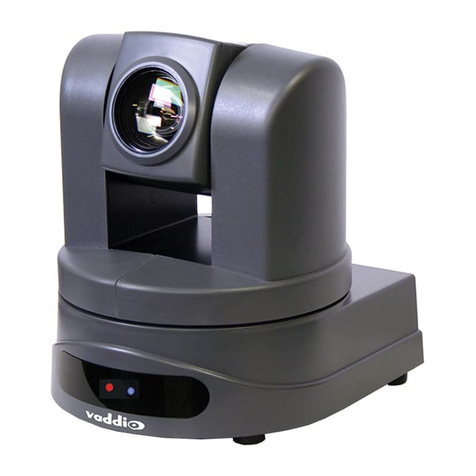
9420 Network Camera
User Manual

- 1 -
Before You Use This Product
The use of surveillance devices may be prohibited by law in your country. The
Network Camera is not only a high-performance web-ready camera, but also can be
part of a flexible surveillance system. It is the user’s responsibility to ensure that the
operation of such devices is legal before installing this unit for its intended use.
It is important to first verify that all contents received are complete according to the
list in the "Package Contents" chapter. Take notice of the warnings in “Quick
Installation” guide before the Network Camera is installed, then carefully read and
follow the instructions in the “Installation” chapter to avoid damages due to faulty
assembly and installation. This also ensures the product is used properly as
intended.
The Network Camera is a network device and its use should be straightforward for
those who have basic network knowledge. The “Troubleshooting” chapter in the
Appendix provides remedies to the most common errors in set up and configuration.
You should consult this chapter first if you run into a system error.
The Network Camera is designed for various applications including video sharing,
general security/surveillance, etc. The “How to Use” chapter suggests ways to best
utilize the Network Camera and ensure proper operations. For the creative and
professional developers, the "URL Commands of The Network Camera" manual
serves as a helpful reference to customize existing homepages or for integrating with
the current web server.
For paragraphs preceded by the reader should use caution to completely
understand the warnings. Ignoring the warnings may result in serious hazards or
injuries.

- 2 -
Table of Contents
Before You Use This Product..................................................................1
Table of Contents...................................................................................2
Package Contents ..................................................................................3
Installation............................................................................................3
Hardware Installation .........................................................................3
Network Installation ...........................................................................5
Software Installation ..........................................................................5
Initial Access to the Network Camera....................................................6
Field Installation ................................................................................7
Installing plug-in..............................................................................10
User Interface .................................................................................11
System parameters..........................................................................16
Security Settings .............................................................................17
Network settings..............................................................................19
DDNS.............................................................................................21
Access List......................................................................................23
Audio and Video...............................................................................24
Motion detection..............................................................................30
Application......................................................................................32
Recording .......................................................................................37
System log......................................................................................40
Viewing system parameters...............................................................40
Maintenance....................................................................................41
Appendix .............................................................................................43
A. Troubleshooting ...........................................................................43
B. Technical specifications .................................................................44

- 3 -
Package Contents
•DVT9420
•Power adapter
•CD
•Quick Installation guide
•Security Screw Driver
•Mounting Template
Installation
In this manual, "User" refers to whoever has access to the Network Camera, and
"Administrator" refers to the person who can configure the Network Camera and grant
user access to the camera.
Hardware Installation
Please verify that your product package
contains all the
accessories listed in the foregoing
Package Contents. The Ethernet cable
should meet the specs of UTP Category 5
or better and not exceed 100 meters in
length.
The 9420 Network Camera can be powered with either the 12VDC power supply
(included) or with an 802.3af compliant Power Over Ethernet (PoE) source.
The Network camera can operate in two network modes, DHCP (default) or Fixed IP
address.
Upon powering up, the LED will light up and the device will go through the booting
Connect the power adapter jack to the Network
Camera before plugging in to the power socket. This will
reduce the risk of accidental electric shock.

- 5 -
process. The LED will be steady amber while booting up and acquiring an IP address.
After getting an IP Address and completing the boot process, the LED will blink green
every second to indicate proper operation (heartbeat).
It is highly recommended to set-up up the Network Address prior to site installation.
Network Installation
Make sure the network cable is firmly connected to both the camera and the network
switch. After attaching the Ethernet cable, plug in the power adapter. If the LED blinks
green, go to the next paragraph, “Software installation.”
Software Installation
Before installing your Network Camera, install the DVTel Device Wizard program included
in the product CD-ROM. Refer to the Wizard manual for installation requirements.
Use the device Wizard to locate the Network Camera. There may be many Network
Cameras in the local network. Users can differentiate the Network Cameras using the
serial numbers (same as mac address). The serial number is printed on the labels on the
carton and on the back of the Network Camera body. Please refer to the Wizard manual
for details.

- 6 -
Once installation is complete, the Administrator should proceed to the "Initial
Access to the Network Camera" section for necessary checks and
configurations.
Initial Access to the Network Camera
Configure IP address
The Network Camera can be connected either before or immediately after software
installation onto the Local Area Network. If DHCP is not used to assign an IP address,
use the DVTel Device Wizard to assign the fixed IP address and complete the network
settings, including the correct subnet mask and IP address of gateway and DNS. Ask
your network administrator or Internet service provider for the detail information. By
default, the Network Camera requires the Administrator to run installation every time
it reboots. If the network settings are to remain unchanged, disable the Install option.
Refer to “Network Settings” on the System Configuration page for details. If any setting
is entered incorrectly and cannot proceed to setting up the Network Camera, restore
the factory settings by following the steps in the “Troubleshooting” chapter of the
Appendix.
Password Protection to prevent Unauthorized Access
The default Administrator’s password is blank and the Network Camera will not initially
ask for any password. The Administrator should immediately implement a new
password as a matter of prudent security practice. Once the Administrator’s password
is saved, the Network Camera will ask for the user’s name and password before each
access. The Administrator can set up a maximum of twenty (20) user accounts. Each
user can access the Network Camera except to perform system configuration. Some
critical functions are exclusive for the Administrator, such as system configuration, user
administration, and software upgrades. The user name for the Administrator is
permanently assigned as “root.” Once the password is changed, the browser will
display an authentication window to ask for the new password. Once the password
is set, there is no provision to recover the Administrator’s password. The
only option is to restore to the original factory default settings.

- 7 -
Field Installation
Surface Mount
The 9420 camera can be surface mounted on any indoor surface. Use the template
supplied to locate the mounting hole positions.
Wires for Ethernet, Power (if not using PoE), Audio In/Out and Digital I/O can be
brought into the camera from either side. Use the built in wire management to route
the wires out the desired side. Removable conduit “mouse holes” are provided for easy
wire access or the wires can be routed from below the unit.
Digital Input/Output
This Network Camera provides a general I/O terminal block with one digital input and
one digital output device control.

- 8 -
The following is the connection diagram for the DI/DO.
Once all wires are connected, the camera can be powered up and the video viewed
from a local system monitor or web browser interface. Position the camera, and zoom
and focus to the desired scene. Lock the position of the camera gimbal and lens with
the locking screws.
Position the camera shroud and install the Surface Shell/Bubble by tightening the
captive screws with the wrench provided. This is a security screw head (Torx with pin)
so the supplied tool must be used.
9420 Shell with Conduit “Mouse hole” Built in Wire Management

- 9 -
How to Use
A PC with a Windows operating system can use Internet Explorer (IE) to connect to the
Network Camera. A plug-in will be installed into IE when it is connected for the first
time. A PC with a Linux operating system can connect to the camera using a browser
like Firefox. QuickTime must first be installed to view streaming.
Authentication
After opening the Web browser and typing in the URL of the Network Camera, a
dialogue window pops up requesting a username and password. Upon successful
authentication, the following figure is displayed:
The foreground is the login window and the background shows the message if
authentication fails. The user may check the option box to save the password for future
convenience. This option is not available to the Administrator for obvious reasons.

- 10 -
Installing plug-in
For initial access to the Network Camera in Windows, the web browser may prompt for
permission to install a new plug-in for the Network Camera when using Internet
Explorer. Permission request depends on the Internet security settings of the user’s PC
or notebook. If the highest security level is set, the computer may prohibit any
installation and execution attempt. This plug-in, which has a registered digital
certificate, is used to display the video in the browser. Users may click on to
proceed. If the web browser does not allow the user to continue to install, check the
Internet security option and lower the security levels, or contact your IT or networking
supervisor for help.
Table of contents