
Everflo EF1000 User manual

Owner’s Manual
Instructions for Assembly, Testing, Operation, Servicing, and Storage
12V Diaphragm Pump: For use with agricultural pesticides and other
liquids**
WARNING
READ and UNDERSTAND the Owner’s Manual completely before using this
pump. Assemble, test, and use only in accordance with the Owner’s Manual
instructions.
READ and FOLLOW chemical safety instructions. Pesticides are hazardous
chemicals.
KNOW emergency procedures BEFORE handling chemicals. Pump leaks, bodily
chemical contact, poisoning, and spills require immediate response.
AVOID inhaling, ingesting, or coming into contact with any chemicals.
WEAR personal protective gear when operating, cleaning, and servicing the
pump.
KEEP pump and spray materials away from children and pets. Pesticides are
especially toxic to them.
DO NOT TURN ON POWER to pump until ready to spray in order to avoid
unintentional spray release.
Improper use of the pump or handling of chemicals could result in serious
injury or illness to the operator or nearby persons/animals, or could cause
damage to the environment.
** This pump is recommended for use in spraying non-flammable liquids such as pesticides, water
for plants/trees or dust control, ice control chemicals, or water-based non-flammable sealants or
stains for outdoor wood surfaces. However, WE RECOMMEND THAT THE PUMP NOT BE
USED FOR OTHER PURPOSES ONCE IT HAS BEEN USED FOR SPRAYING PESTICIDES.
Any chemical will leave some residual in the pump, even after the pump has been properly cleaned.
These residual chemicals can have unexpected effects on future uses. For example, spraying water
or other liquids that are contaminated with residual pesticide may result in unforeseen hazards to
plant or animal life.
Any Questions, Comments, Problems, or Parts Orders
Call EverFlo Product Support 1-800-864-1649
ITEM NUMBERS:
EF1000 1.0 GPM
EF2200 2.2 GPM
EF2200-QA 2.2 GPM
EF3000 3.0 GPM
EF3000-QA 3.0 GPM
EF4000 4.0 GPM
EF4000-QA 4.0 GPM
EF5500 5.5 GPM
EF5500-QA 5.5 GPM
(Includes Boxed Models)
SERIAL NUMBER: __________

Hazard Signal Word Definitions
2

Table of Contents
3
Intended Use ........................................................................................................................................ 4
Summary of Important Safety Information ...................................................................................... 5
During Assembly
During Operation
General Chemical Safety
Chemical Applicator Safety
Chemical Accident Procedures
Installation
Step One: Mounting ........................................................................................................................ 7
Step Two: Plumbing ........................................................................................................................ 7
Step Three: Connect pump to vehicle battery ................................................................................. 8
Step Four: Check and test completed assembly ............................................................................. 9
Operation
Important Safety Information - Operation .............................................................................. 11
General Chemical Safety
Chemical Applicator Safety
Chemical Accident Procedures
Preparing the Pump for Each Use ............................................................................................. 14
Using the Pump
Step One: Assess wind conditions and clear work area ........................................................ 15
Step Two: Operate the pump ................................................................................................. 15
Step Three: Clean pump and decontaminate after use .......................................................... 17
Storage ................................................................................................................................................. 18
Preparing for storage
Removing from storage
Troubleshooting .................................................................................................................................. 19
Specifications ....................................................................................................................................... 21
Parts Breakdown –Exploded View .................................................................................................. 22

Intended Use
4
The pump is intended for use in spraying agricultural pesticides and other non-flammable
liquids.
SPRAYING PESTICIDES:
Pesticides are hazardous chemicals that must be handled with caution as directed
throughout this manual and on the pesticide label. Pesticides are regulated by the United
States Environmental Protection Agency (EPA) and defined as:
Any substance or mixture of substances intended for preventing, destroying,
repelling, or mitigating any pest. Though often misunderstood to refer only
to insecticides, the term pesticide is a comprehensive term that applies to
insecticides, herbicides, fungicides, and various other substances used to
control pests.
The pump is intended for use in spraying pesticides in liquid form only. The pump is
NOT intended for use in spraying pesticides in dry or aerosolized form, or for use with
fumigants.
SPRAYING OTHER LIQUIDS:
In addition to spraying pesticides, this pump may be used to spray other non-flammable
liquids. Example uses include: watering plants/trees or spraying water for dust control,
applying ice control chemicals, or applying water-based, non-flammable sealant or stain
to outdoor wood surfaces.
However, WE RECOMMEND THAT THE PUMP NOT BE USED FOR OTHER
PURPOSES ONCE IT HAS ALREADY BEEN USED FOR SPRAYING
PESTICIDES. Any chemical will leave some residual in the pump, even after the pump
has been properly cleaned. These residual chemicals can have unexpected effects on
future uses. For example, spraying water or other liquids that are contaminated with
residual pesticide may result in unforeseen hazards to plant or animal life.
Contact EverFlo Product Support at 1-800-864-1649 for any questions
about the appropriate use of the pump and/or optional accessories.

Summary of Important Information
5
WARNING
Read and understand this owner’s manual completely before using the pump. Read each
chemical label’s instructions before handling the chemical.
Improper use of the pump or handling of chemicals could result in serious injury or illness
for the operator or nearby persons/animals, or cause damage to the environment.
LISTED BELOW is a summary of safety information of particular importance. See individual
sections of this owner’s manual for more details.
------------------------------------ DURING ASSEMBLY-------------------------------
EXERCISE CAUTION when attaching remote switch to battery terminals. Follow the steps
listed in the Assembly section of this manual in exact sequence when connecting the pump to battery
terminals. Caution must be exercised to avoid contact with battery acid and to prevent sparking.
CHECK and TEST completed assembly as directed in this manual. Serious injury could result from
chemical leaks if pump is improperly assembled.
DO NOT MODIFY pump design.
------------------------------------DURING OPERATION------------------------------
General Chemical Safety
READ and FOLLOW each chemical label’s instructions and warnings.
AVOID inhaling, ingesting, or coming into contact with any chemicals.
KNOW applicable licensing and regulatory requirements for the chemical you plan to use.
KNOW emergency procedures before handling chemicals. Carefully review “Chemical Accident
Procedures” listed below and later in this manual. Also see First Aid instructions on the chemical
label.
WEAR protective clothing, eye protection, and chemical resistant gloves when operating the
pump. Wear additional protective gear, such as facemask or apron, as recommended on the chemical
label.
EXERCISE EXTRA CAUTION around children and pets. Pesticides are especially toxic to them.
Keep pump and spray materials away from them at all times.
DO NOT MIX OR POUR chemicals in an enclosed, unventilated area
DO NOT USE flammable or corrosive chemicals in the pump.
FLUSH the pump before switching chemicals in order to prevent dangerous chemical interactions.
STORE pesticides in a correctly labeled container and in a secure location.
MONITOR the health of operators frequently exposed to pesticides, as recommended by the
chemical label or local/federal regulations.
Chemical Application Safety
Before Spraying
INSPECT and PREPARE pump before each use as directed in this manual.
DO NOT TURN ON POWER to pump until ready to spray in order to avoid unintentional spray
release.
DO NOT SPRAY when wind speed exceeds 4 MPH in order to minimize spray drift.
CLEAR work area of people/ pets and POST warning notices to restrict access for the period
recommended on chemical label.
KEEP pump and spray materials away from children/pets. Pesticides can be especially toxic to
children and animals.
DO NOT ALLOW anyone younger than 16 to operate the pump since pesticides are especially
toxic to children.
During Spraying
DO NOT OVERAPPLY pesticide. Apply at rate recommended by chemical manufacturer. Excess
pesticide can be dangerous to humans/animals, damage desirable plants, and contaminate soil and
water sources.

Summary of Important Information
6
DO NOT EAT, DRINK, SMOKE, RUB YOUR EYES, or TOUCH YOUR BARE SKIN while
handling chemicals and spraying.
NEVER POINT A SPRAY GUN at people or animals.
EXERCISE EXTRA CAUTION when spraying near areas accessible to children and pets.
CLEAN up spills immediately per instructions on the chemical label.
TURN OFF power to pump, and RELIEVE system pressure before leaving pump unattended.
SEE Troubleshooting section of this manual before attempting any repairs. Wear personal
protective equipment and follow safety instructions.
After Spraying
CLEAN pump immediately after use according to the directions provided in this manual.
DECONTAMINATE yourself after you are done spraying and have cleaned the pump. Wash all
exposed areas of the body with soap and water, and remove and launder clothing.
DISPOSE OF or STORE remaining chemicals in secure storage with correctly marked
container.
Chemical accident procedures
Immediate response is necessary in the event of pump leaks, bodily chemical contact, poisoning, or
spills. See instructions below:
Pump leak
If the pump develops a leak, immediately stop spraying. Turn off power to the
pump and follow directions below, as applicable.
Bodily
chemical
contact
Personal contamination can occur when chemicals splash, spill, or spray
directly onto a person.
1. Immediately follow First Aid instructions on chemical label.
General procedures can include:
a) Eyes – immediately flush with water.
b) Skin – wash all contaminated skin surfaces with soap and water.
c) Clothing – remove contaminated clothing. Dispose of heavily
contaminated clothing per chemical label instructions.
2. Seek medical advice if instructed on the label or the victim experiences
symptoms of harmful effects. Bring the chemical label for reference.
Poisoning by
ingestion or
inhalation
In case of poisoning from ingestion or inhalation:
If the victim has collapsed or is not breathing, call 911. Otherwise:
1. If you are the victim, immediately seek assistance from nearby personnel
because you may become incapacitated.
2. Immediately follow first aid instructions on chemical label.
3. Call a poison control center for further advice. In the U.S., call 1-800-222-
1222. Have the chemical label available for reference.
Chemical
spills
Chemical spills must be quickly contained and properly cleaned up.
Refer to the chemical label for any specific clean-up instructions.
General procedures include:
1. Controlling the spill by stopping the source of the spill.
2. Containing the spill so that it does not spread and get into water sources.
3. Cleaning up the spill immediately.
4. Seeking additional advice from:
- Chemical manufacturer. See chemical label for contact information.
- State pesticide regulatory agency. In the U.S., call the National Pesticide
Info. Ctr. at 800-858-7378 for assistance in contacting your state’s agency.

Installation
7
Step One: Mounting
This EverFlo pump is self-priming.
The pump should be located in an area that is dry and provides adequate ventilation.
The pump may be mounted in any position. However, if mounting the pump vertically the
pump head should be in the down position so that in the unlikely event of a leak, fluid will
not enter the motor.
Secure the rubber feet with #10 fasteners. DO NOT compress the feet, doing so will
reduce their ability to isolate vibration/noise.
Step Two: Plumbing
See table below for port size and recommended hose sizes. For pumps with female NPT
ports, use plastic male NPT (Tapered pipe thread) fittings to connect flexible high-pressure
tubing to the pump. For pumps with QA ports use EverFlo QA fittings.
Pump Model
Ports
Minimum inlet hose size
Minimum outlet hose size
EF1000
3/8” Hose barb
3/8” (9.5mm) Inside diameter
3/8” (9.5mm) Inside diameter
EF2200
3/8” Female NPT
3/8” (9.5mm) Inside diameter
3/8” (9.5mm) Inside diameter
EF2200-QA
QA
3/8” (9.5mm) Inside diameter
3/8” (9.5mm) Inside diameter
EF3000
1/2” Female NPT
1/2” (13mm) Inside diameter
1/2” (13mm) Inside diameter
EF3000-QA
QA
1/2” (13mm) Inside diameter
1/2” (13mm) Inside diameter
EF4000
1/2” Female NPT
1/2” (13mm) Inside diameter
1/2” (13mm) Inside diameter
EF3000-QA
QA
1/2” (13mm) Inside diameter
1/2” (13mm) Inside diameter
EF5500
1/2” Female NPT
1/2” (13mm) Inside diameter
1/2” (13mm) Inside diameter
EF5500-QA
QA
1/2” (13mm) Inside diameter
1/2” (13mm) Inside diameter
NOTE: EverFlo does not recommend the use of metal fittings or rigid pipe to plumb the inlet/outlet
ports. Standard plastic threaded fittings are available by calling EverFlo Product Support
at 1-800-864-1649.
In some cases, the ports may require a suitable thread sealer applied sparingly. DO NOT
over-tighten, maximum torque is 45 in/lb [5 N-m].
Tubing should be compatible with the spraying fluid. At least 18” [450mm] length is
suggested to minimize stress on the fitting/ports and reduce noise. Allow for the shortest
possible tubing route and avoid sharp bends that may kink over time.
Installation of a 50-mesh strainer is recommended to prevent foreign debris from entering
the system. Failures due to foreign debris are not covered under the warranty.
NOTE: Restrictions on the inlet may cause a loss in performance. Inlet pressure must not exceed 30
psi [2.1 bar]
If a check valve is installed in the plumbing, it must have a cracking pressure of no more
than 2 psi [.14 bar].
CAUTION
DO NOT locate the motor near low temperature plastics or combustible material. The surface
temperature of the motor may exceed 250°F [121°C].
CAUTION
Sealers and Teflon tape may act as lubricant causing cracked housings or stripped threads due to
over tightening. Care should be used when applying sealers; it may enter the pump inhibiting
valve action, causing no prime or no shut-off. Failures due to foreign debris are not covered
under the warranty.

Installation
8
Step Three: Connect pump to battery or 12V supply
WARNING
Batteries are hazardous because they contain caustic acid, can emit explosive gases, and can
cause electric shock.
Caution must be exercised when making connections to a battery to avoid shock and contact with
the acid, and to prevent any sparking that could lead to an explosion.
ALWAYS follow the safety instructions and steps listed below in exact sequence when
connecting the pump to the battery terminals.
1. Preparatory
safety
Preparatory safety steps:
ALWAYS use eye protection
NEVER smoke or work near sparks or other sources of ignition.
NEVER touch both battery terminals at the same time or with any
non-insulated tools.
If battery acid contacts skin or clothing, flush immediately with water
and neutralize with baking soda.
2. CE
requirements
The pump should be on a dedicated (individual) circuit, controlled
with a double pole switch (UL/CSA certified) rated at or above the
fuse ampere indicated by the pump motor label. Depending on
distance of the power source from the pump and ampere load on the
circuit, wire may need to be heavier than indicated by the chart.
For the pump to meet CE requirements the circuit MUST be
protected with a slow blow fuse (UL/CSA certified) or equivalent
circuit breaker as indicated on the motor label. Use an approved wire
of the size specified or heavier.
Voltage
Model
Fuse (amp)
Wire Leads
Wire Size
12 VDC
EF1000
10.0
RED (positive +)
BLACK (negative -)
#14 AWG
(2.5Mm2)
(or heavier)
12 VDC
EF2200
EF3000
EF4000
15.0
RED (positive +)
BLACK (negative -)
#14 AWG
(2.5Mm2)
(or heavier)
12 VDC
EF5500
20.0
RED (positive +)
BLACK (negative -)
#14 AWG
(2.5Mm2)
(or heavier)

Installation
9
3. Connect pump
to battery
Connect the pump to a vehicle battery using the following procedure:
a) Disconnect the vehicle battery ground wire.
b) Connect the pump’s red wire to the positive (+) terminal of the battery.
c) Connect the pump’s black wire to the negative (-) terminal of the
battery.
d) Reconnect the vehicle battery ground wire.
Note: Skip steps (a) and (d) if battery is not in a vehicle.
WARNING: Always connect in this sequence to avoid possible shock.
4. Disconnect
after use
AFTER EACH USE, disconnect power to the pump using the following
procedure:
a) Disconnect the vehicle battery ground wire.
b) Disconnect the pump’s black wire from the negative (-) terminal of
the battery.
c) Disconnect the pump’s red wire from the positive (+) terminal of the
battery.
d) Reconnect the vehicle battery ground wire.
Note: Skip steps (a) and (d) if battery is not in a vehicle.
WARNING: Always disconnect in this sequence to avoid possible shock.
NOTE: It is important to disconnect power to the pump when not in use for
safety reasons. ALWAYS verify that the power has been disconnected
before adding chemicals or servicing.
A remote switch is recommended for temporarily shutting off the pump’s operation.
Call EverFlo Product Support at 1-800-864-1649to order EverFlo Item #33-103233.
Step Four: Check and test completed assembly.
WARNING
Check and test completed assembly
Serious injury could result from chemical leaks if pump is improperly assembled or the design
of the pump is modified.
Follow the steps below to ensure the pump is properly assembled. Never modify the pump
design.
1. Check
Check assembly to assure the pump is properly assembled and in safe
Negative
Positive

Installation
10
assembly
working condition:
2. Test with
water
Test the system for leaks with water:
a) Fill the tank with water.
b) The pump is an “on demand” pump. When turned on, the pump will
prime itself, then turn off once reaching pressure. When the flow
continues, the pump will automatically re-start.
c) Check for leaks throughout the system. If a leak is detected, fix the leak
and re-test the system with water.
Other manuals for EF1000
1
This manual suits for next models
10
Table of contents
Other Everflo Water Pump manuals


Popular Water Pump manuals by other brands







Sykes AmeriPumps
Sykes AmeriPumps GP100M Operation and maintenance instructions

DUROMAX
DUROMAX XP WX Series user manual
BRINKMANN PUMPS
BRINKMANN PUMPS SBF550 operating instructions
Franklin Electric
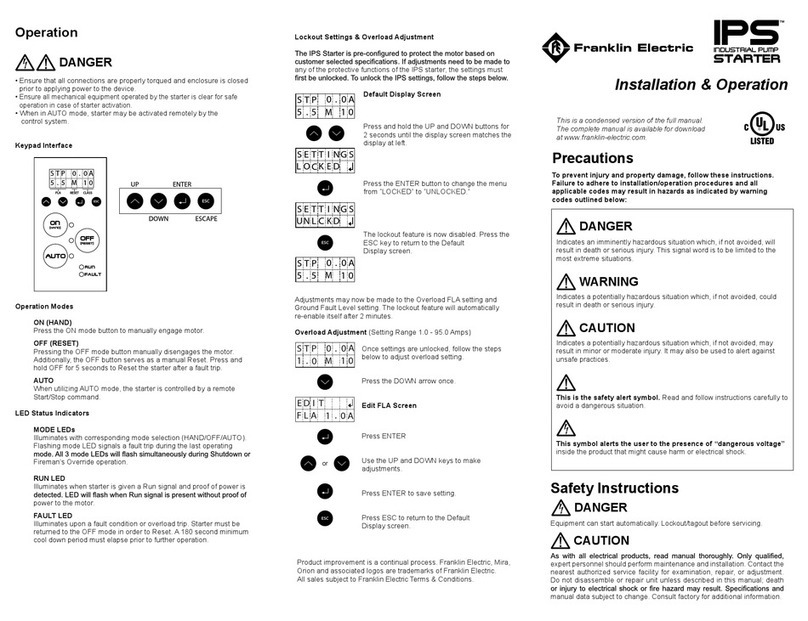
Franklin Electric IPS Installation & operation manual

Xylem
Xylem e-1532 Series instruction manual

Milton Roy
Milton Roy PRIMEROYAL instruction manual