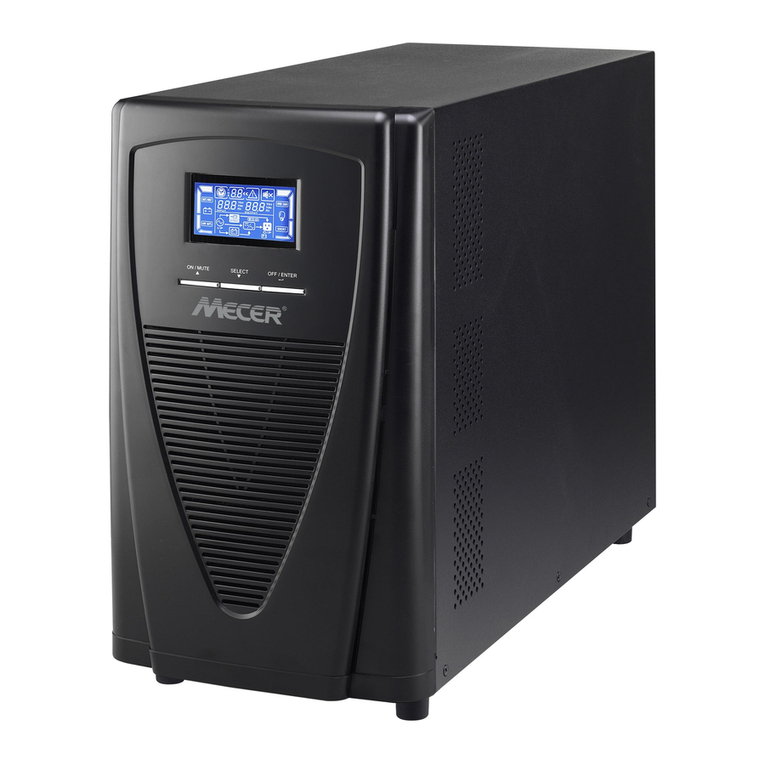
Zlpower CX Series User manual

USER
MANUAL
CX Series
CX1-3K UPS

Ϯ
6DIHW\QRWHV
2SHUDWLQJVDIHW\
5HDGVDIHW\QRWHVFDUHIXOO\DQGWKRURXJKO\EHIRUHRSHUDWLRQHQVXUHFRUUHFWO\XVHDQGVDYHWKLVPDQXDOSURSHUO\
3D\DWWHQWLRQWRDODUPWDEOHRQWKH836DQGRSHUDWLQJDFFRUGLQJWRLW
$YRLG LQVWDOOLQJWKH836LQORFDWLRQXQGHUGLUHFWVXQOLJKWUXQQLQJZDWHURUH[FHVVLYHKXPLGLW\
'RQRWLQVWDOOWKHGHYLFHLQWKHHQYLURQPHQWZKHUHFORVHWRKHDWLQJIDFLOLWLHVVXFKDVVSDFHKHDWHUVRUIXUQDFHV
3ODFHWKH836LQDURRPZLWKJRRGYHQWLODWLRQDQGVDIHGLVWDQFH5HIHUWRPDQXDOWRSHUIRUPLQVWDOODWLRQ
&OHDQLQJZLWKGU\VWXIIGRQRWXVHOLTXLGRUVSUD\GHWHUJHQW
,QWKHHYHQWRIILUHDODUPRFFXUULQJLQWKHYLFLQLW\SOHDVHXVHGU\SRZHUILUHH[WLQJXLVKHUV7KHXVHRI OLTXLGILUH
H[WLQJXLVKLQJDJHQWVPD\FDXVHVHOHFWULFVKRFN
(OHFWULFVDIHW\
9HULI\WKDWFDEOLQJDQGEDWWHU\FDEOHSRODULW\DUHFRUUHFWDQGHDUWKFRQQHFWLRQZHOOEHIRUHVZLWFKLQJRQWKH836
%HIRUHPRYLQJRUUHZLULQJWKH836SOHDVHGLVFRQQHFWWKHPDLQVVRXUFHDQGPDNHVXUHWKH836LVFRPSOHWHO\VKXW
GRZQ2UHOVHWKHRXWSXWWHUPLQDOPD\FDUU\OLYHYROWDJHWKXVSUHVHQWLQJHOHFWULFVKRFNULVN
3OHDVHXVHWKHDWWDFKHGGHYLFHVDQGDWWDFKPHQWVVSHFLILHGE\WKHFRPSDQ\
,QRUGHUWRPHHWWKHUHTXLUHPHQWVRI836WKHOHQJWKRIWKHRXWSXWOLQHRIWKH(0&VKRXOGEHZLWKLQPHWHUV
%DWWHU\VDIHW\
+LJKDPELHQWWHPSHUDWXUHVKRUWHQVWKHEDWWHU\ OLIHWLPHVVRWKHEDWWHU\VKRXOGEHUHSODFHGSHULRGLFDOO\WRHQVXUH
QRUPDO836RSHUDWLRQDQGIRUDGHTXDWHDXWRQRP\WLPH
6HUYLFH RIEDWWHU\VKRXOGEHSHUIRUPHGRUVXSHUYLVHGE\SHUVRQQHONQRZOHGJHDEOHRIEDWWHU\
,QUHSODFHPHQWRIEDWWHU\SOHDVHXVHWKHVDPHQXPEHUDQGW\SHRIEDWWHU\
$EDWWHU\FDQSUHVHQWDULVNRIHOHFWULFDOVKRFNDQGKLJKVKRUWFLUFXLW FXUUHQW7KHIROORZLQJSUHFDXWLRQVKRXOGEH
REVHUYHGZKHQZRUNLQJRQEDWWHULHV
$5HPRYHZDWFKHVULQJVRURWKHUPHWDOREMHFWIURPWKHKDQGV
%8VHWRROVZLWKLQVXODWHGKDQGOHV
&:HDUUXEEHUJORYHVDQGERRWV
''RQRWOD\WRROVRUPHWDOSDUWVRQWRS RIEDWWHULHV
('LVFRQQHFWWKHORDGEHIRUHRSHUDWHWKHWHUPLQDORIEDWWHU\
'RQRWGLVSRVHRIEDWWHULHVLQDILUHDVWKH\PD\H[SORGH
'RQRWRSHQRUPXWLODWHWKHEDWWHU\,WPD\FDXVHDQHOHFWURO\WHOHDNDJHWKDWLVWR[LFDQGKDUPIXOWRWKHVNLQDQGH\HV
,IHOHFWURO\WHFRPHVLQWRFRQWDFWZLWKWKHVNLQZDVKWKHDIIHFWHGDUHDZLWKSOHQW\RIFOHDQZDWHULPPHGLDWHO\DQGJR
WRWKHKRVSLWDOIRUDFKHFN
'RQRWPDNHWKHSRVLWLYHDQGQHJDWLYHWHUPLQDOVRIWKHEDWWHU\VKRUWFLUFXLWRWKHUZLVHLWPD\FDXVHHOHFWULFVKRFNRU
ILUH
0DLQWHQDQFH
7KHRSHUDWLQJHQYLURQPHQWDQGVWRUDJHPHWKRGDUHWZRPDLQIDFWRUVDIIHFWLQJWKHOLIHWLPHDQGUHOLDELOLW\RIWKH836
+HQFHLWLVDGYLVDEOHQRWXVHWKHGHYLFHLQWKHIROORZLQJHQYLURQPHQWV
$:KHUHWKHWHPSHUDWXUHDQGUHODWLYHKXPLGLW\DUHRXWVLGHWKHVSHFLILFDWLRQVWHPSHUDWXUHććUHODWLYH
KXPLGLW\
%:KHUHYLEUDWLRQVRUVKRFNVDUHH[LVWHG
&'XVWFRUURVLYHDJHQWVRUVDOWVRULQIODPPDEOHJDVDUHSUHVHQW
,IWKH836ZLOOUHPDLQLGOHIRU DORQJSHULRGLWPXVWEHVWRUHGLQDGU\HQYLURQPHQW7KHVWRUDJHWHPSHUDWXUHVKRXOG
UDQJHEHWZHHQˉćˇćZLWKRXWEDWWHU\0DNHWKHDPELHQWWHPSHUDWXUHRYHUćDQGNHHSDSHULRGRIWLPH
EHIRUHSRZHURQWKH836

3
Content
1. Introduction..............................................................................................................................
.......
04
2. Product description.......................................................................................................................
..
05
2.1 System type and configuration......................................................................................
.......
05
2.2 The appearance of UPS....................................................................................................
....
05
3. Installation......................................................................................................................................07
3.1 Unpacking inspection.....................................................................................................
.....
07
3.2 Installation notes..................................................................................................................07
3.3 Cable connection.............................................................................................................
.....
07
3.3.1 Connecting input and output cables.....................................................................
....
07
3.3.2 Operation procedure of external battery for long backup time UPS........................09
4. Operation......................................................................................................................................
..
10
4.1 Introduction of display panel..........................................................................................
...
..
10
4.2 Operation mode..................................................................................................
..................
11
4.2.1 Line mode....................................................................................................
........
...
..
11
4.2.2 Battery mode................................................................................................
..........
...
11
4.2.3 Bypass mode..................................................................................................
...........
12
4.3 Operating instructions...............................................................................................
...........
12
4.3.1 The operation of boot and shutdown UPS......................................................
..........
12
4.3.2 Battery self check operation...................................................
..................................
13
4.3.3 LCD display and alarm sound............................
.......................................................
13
4.3.4 Parameter setting........................................................
.................................
..............
14
5. Maintenance...........................................................................................................................
.........
15
5.1 Battery maintenance......................................................................................................
.......
15
5.2 Checking UPS function.............................................................................................
.
..........
15
6. Trouble shooting.......................................................................................................................
......
16
7. Product specifications and performance......................................................................................
...
17
7.1 Basic electrical properties.................................................................................................
...
17
7.2 Size and weight.................................................................................................................
...
18
7.3 Environmental..........................................................................
............................................
18
7.4 EMC........................................................................................
.............................................
18
8. Warranty.......................................................................................................................................
..
19

4
1. Introduction
Description of Commonly Used Symbols
Some or all of the following symbols may be used in this manual and may appear in your application process.
Therefore, all users should read the form carefully and thoroughly.
Symbol & Description
Symbol Description
Caution, danger
Danger electric shock
Alternating current (AC)
Direct current (DC)
Protective ground
Recycle
Do not dispose with ordinary trash
!

5
2. Product description
The CX1-3KVA series UPS is an uninterruptible power supply incorporating double-converter technology. It
provides perfect protection specifically for strict load.
The double-converter principle eliminates all mains power disturbance. A rectifier converts the alternating current
from the socket outlet to direct current. This direct current charges the batteries and powers the inverter. On the basis of
this DC voltage, the inverter generates a sine wave AC power, which permanently supplies the loads.
Designed with the proven on-line, double conversion architecture, this series of UPS offers the greatest degree of
availability in power protection and provides continuous, high-quality AC power to connect strict load, especially for the
basic equipments in some areas as: finance, communications, government, traffic, manufacture, education and so on.
2.1 System type and configuration
According to the different configurations of the parts of the battery in the machine, CX series UPS can be divided
into two categories: standard type and long backup time type; According to different power points, it divided into: 1KVA,
2KVA and 3KVA.
Table 2.1-1 UPS types and configurations
Type model remarks
Standard
1KVA CX1K with 1A internal charger, 2 batteries
2KVA CX2K with 1A internal charger, 4 batteries
3KVA CX3K with 1A internal charger, 6 batteries
Long backup
time
1KVA CX1KL with 5A internal charger, external 3 batteries
2KVA CX2KL with 5A internal charger, external 6 batteries
3KVA CX3KL with 5A internal charger, external 8 batteries
Note: "L" represents a long backup time
2.2 The appearance of UPS
Figure 2.2-1 The rear panel of CX1KL
Computer Interface
Breaker
Surge Protection
Input
Intelligent Slot
Extemal Battery
Connector
Output

6
Figure 2.2-2 The rear panel of CX2KL
Figure 2.2-3 The rear panel of CX3KL
The output socket is divided into German socket,universal socket and
IEC socket,which is not shown in the diagram.
The appearances above make example with the long backup time type,
The standard corresponding is without the “External Battery connector”
Intelligent Slot
Extemal Battery
Connector
Output
Computer Interface
Breaker
Input
Intelligent Slot
Extemal Battery
Connector
Output
Terminal Block Cover
Terminal Block
Computer Interface
Breaker
Input
Note
:

ϳ
,QVWDOODWLRQ
8QSDFNLQJLQVSHFWLRQ
2SHQWKH836SDFNDJLQJ DQGWDNHLWRXWYLVXDOO\ H[DPLQHWKHXQLWIRUWUDQVLWGDPDJH
&KHFNDJDLQVW WKHDFFHVVRU\OLVWWKDWWKHDFFHVVRULHVRIWKH836DUHSUHVHQW WDEOH
,IWKH836DUULYHVGDPDJHGRUWKHUHLVDQ\PLVVLQJDFFHVVRU\SOHDVHFRQWDFWWKHGLVWULEXWRULPPHGLDWHO\
7DEOH836VKLSSLQJDFFHVVRULHVOLVW
PRGHO $FFHVVRU\ TXDQWLW\ 8QLW
VWDQGDUG
XVHUPDQXDO 3&6
4& FHUWLILFDWH 3&6
3URGXFWDIWHUVDOHVVHUYLFHJXDUDQWHH 3&6
&' 3&6
ORQJEDFNXSWLPH
XVHUPDQXDO 3&6
4&FHUWLILFDWH 3&6
3URGXFWDIWHUVDOHVVHUYLFHJXDUDQWHH 3&6
&' 3&6
([WHUQDOEDWWHU\FRQQHFWLQJZLUH 3&6
,QVWDOODWLRQ1RWHV
:KHQORFDWLQJWKH836PDNHVXUHWKHUHLVQRKD]DUGRXVREMHFWVDURXQGWKH836DQGWKDWWKHLQVWDOODWLRQ
HQYLURQPHQWPHHWVWKHVSHFLILFDWLRQV
7KH836VKRXOGQRWEHWLWOHG7KHDLULQOHWSRUWDWWKHIURQWSDQHODQGWKHRXWOHWSRUWRQWKHUHDUSDQHODQG
WZRVLGHSDQHOVVKRXOGQRWEHEORFNHGVRDVWRHQVXUHJRRGYHQWLODWLRQ
,QFDVHLIWKH836LVXQSDFNHGLQVWDOOHGDQGXVHGDWYHU\ORZWHPSHUDWXUHVFRQGHQVDWLRQVRIZDWHUGURSV
PD\DSSHDU,WLVQHFHVVDU\WRZDLWXQWLOWKH836IXOO\GULHGLQVLGHRXWEHIRUHSURFHHGLQJWRLQVWDOODWLRQDQG
XVH2WKHUZLVHWKH\PD\EHDULVNRIHOHFWULFVKRFN
3ODFHWKH836QHDUWKHXWLOLW\SRZHUVRXUFHRXWOHWZKLFKVXSSOLHVSRZHUWRWKH836,QDQ\HPHUJHQF\
VZLWFKRIIWKHPDLQLQSXWVRFNHWFXWRIIWKHEDWWHU\YROWDJHLQSXW$OOSRZHUVRFNHWVPXVWEHFRQQHFWHGZLWK
JURXQGSURWHFWLRQ
&DEOHFRQQHFWLRQ
&RQQHFWLQJLQSXWDQGRXWSXWFDEOHV
,QSXWFDEOHFRQQHFWLRQ
,I7KH836LVFRQQHFWHGYLDWKHSRZHUFDEOHSOHDVHXVHDSURSHUVRFNHWZLWKSURWHFWLRQDJDLQVWHOHFWULF
FXUUHQWDQGSD\DWWHQWLRQWRWKHFDSDFLW\RIWKHVRFNHWRYHU$IRU&;./RYHU$IRU&;./DQG
&;./7KHZLULQJFRQILJXUDWLRQLVVKRZQLQWKHIROORZLQJGLDJUDP

8
Figure 3.3-1 Connection method of input for CX1KLCX3KL
2. UPS output cable connection
Table 3.3-1 Output way of UPS
Rating Model Quantity of output socket Output Terminal Block
1KVA CX1K/CX1KL 2 Nil
2KVA CX2K/CX2KL 4 Nil
3KVA CX3K/CX3KL 3 Available
The output of CX1K (L)/ CX2K (L)/ CX3K (L) all available to uses sockets. The total output power shall not
exceed 1KVA/ 0.8KW, 2KVA/ 1.6 KW, 3KVA/ 2.4 KW. Simply plug the load power cable to the output
sockets of UPS to complete connection as shown in the following diagram
Figure 3.3-2 Connection method of output for CX1K(L)~CX3K(L)
Apart from using the socket for output, CX3K(L) has the terminal block available for output as well when the
Output current over 10A recommended. The wring configuration is shown in the following diagram.
1. Remove the cover of the terminal block;

9
2. Use AWG14 (2.1mm²) wires for wiring configuration;
3. Upon completion of the wiring configuration, please check whether the wires are securely affixed;
4. Put back the terminal block cover to the rear panel.
Figure 3.3-3 Connection method of terminal block for CX3K (L)
Note: Do not connect the loads with terminal block by the personal without qualified training
3.3.2 Operation procedure of external battery for long backup time UPS
The battery connection procedure is very important. Any incompliance may result in the risk of electric
Shock. Therefore, the following steps must be strictly complied with:
1. First connect in series the batteries of the pack to ensure proper battery voltage that CX1KL for 36VDC,
CX2KL for 72VDC, CX3KL for 96VDC.
2. Take out the battery cable delivered with the UPS, one end of the external battery cable is a plug for
Connecting the UPS; the other end has 3 open wires for connecting the battery pack.
3. Connect the external battery cable to the battery terminal (DO NOT connect the battery socket of the UPS
First. Otherwise, it may cause electric shock). Connect the red wire to the “+” terminal of the battery. The
Black wire is connected to the “-” terminal of the battery. The green/yellow wire is grounded for protection
Purpose.
4. Connect the plug of the external battery cable to the external battery socket on the rear panel of the UPS to
Complete the connection procedure.

10
Figure 3.3-4 Battery connection diagram for Long Backup time models
Note
˖
The length of the external battery cable is normal, If users need a
Longer one, please consult the distributor. There is a limit to the length
Of the external battery cable to ensure normal operation of the UPS
4. Operation
4.1 Introduction of Display Panel
Note: The function button of “ENTER” only eliminate battery mode alarm,
The elimination of other UPS fault alarms is invalid
Status Diaplay
Battery Capacity
Input Voltage
/Frequency
Load Capacity
Output Voltage
/Frequency
This manual suits for next models
1
Table of contents
Other Zlpower UPS manuals