Health & Safety Guidelines
Danger: Electrical & Fire Hazard
The electric vehicle cable needs to be properly connected to the vehicle charging inlet. Incorrect connection can lead
to electric shock or fire during charge.
• Only use a fully compliant vehicle charging station
• You must comply with the safety instructions written in your vehicle manual and in this document
General Safety
• Do not slide the cable over any sharp edges.
• Never kink the charging cable.
• Do not drive over the plug or cable.
• Always handle the cable with care. Never exert any unnecessary force or strain on the cable.
• Do not coil the cables.
• Do not use the cable outside of the operating temperature range from -30oC to 50oC.
Danger: Electrical shock, short circuit, fire or explosion
• If either the product is damaged/faulty or the socket is damaged/faulty, do not use the product. Failure to comply
can lead to either a short-circuit, electrocution, explosion, fire or burns.
• Never use the charging cable if it is damaged.
• Always ensure the cable is properly connected to the socket.
• Operating the cable using a damaged socket can result in a serious injury or fire.
• Never attempt to open the cable’s casing on either end of the cable. Please seek a qualified professional for any
servicing or repairs.
• Always use the correct voltage when using the cable.
• Never attempt to modify or repair the electrical component of this product.
• Never touch any of the electric components of the vehicle charging inlet or the electrical vehicle cable.
• Keep sockets, plug connection and the electric cable away from the moisture, water, snow, ice and other liquid. Do
not immerse any of the components of the cable in water. Even though the cable does come with a IP55 rating,
the health & safety measures outlined in this point are imperative.
• In the event of a thunderstorm, never attempt to charge your vehicle.
• Never insert any object into either the vehicle charging inlet or into the plugs of the cable.
• Only use a dry cloth when cleaning.
• Only clean the cable if it is fully disconnected from both the vehicle and grid socket.
• This charging cable should not be operated by a person(s) who is not familiar with the product’s use or those who
have not read this document.
• This product is not a toy and should be kept away from children. If the cable is in use and children are near it, they
must be supervised at all times.
Operating Instructions
Charging Times
Preliminary Measures Prior To Charging
To use the electric vehicle cable, please follow the instructions below:
1. Before using the cable, please refer to your vehicle manual and familiarise yourself with instructions on how to
charge your vehicle.
2. Completely unravel the charging cable, taking care the cable is fully grounded to prevent tripping over the cable.
3. Plug the cable into your vehicle’s charging inlet.
4. Then insert the other end of the charging station’s inlet/socket.
5. Ensure both plugs are securely in place.
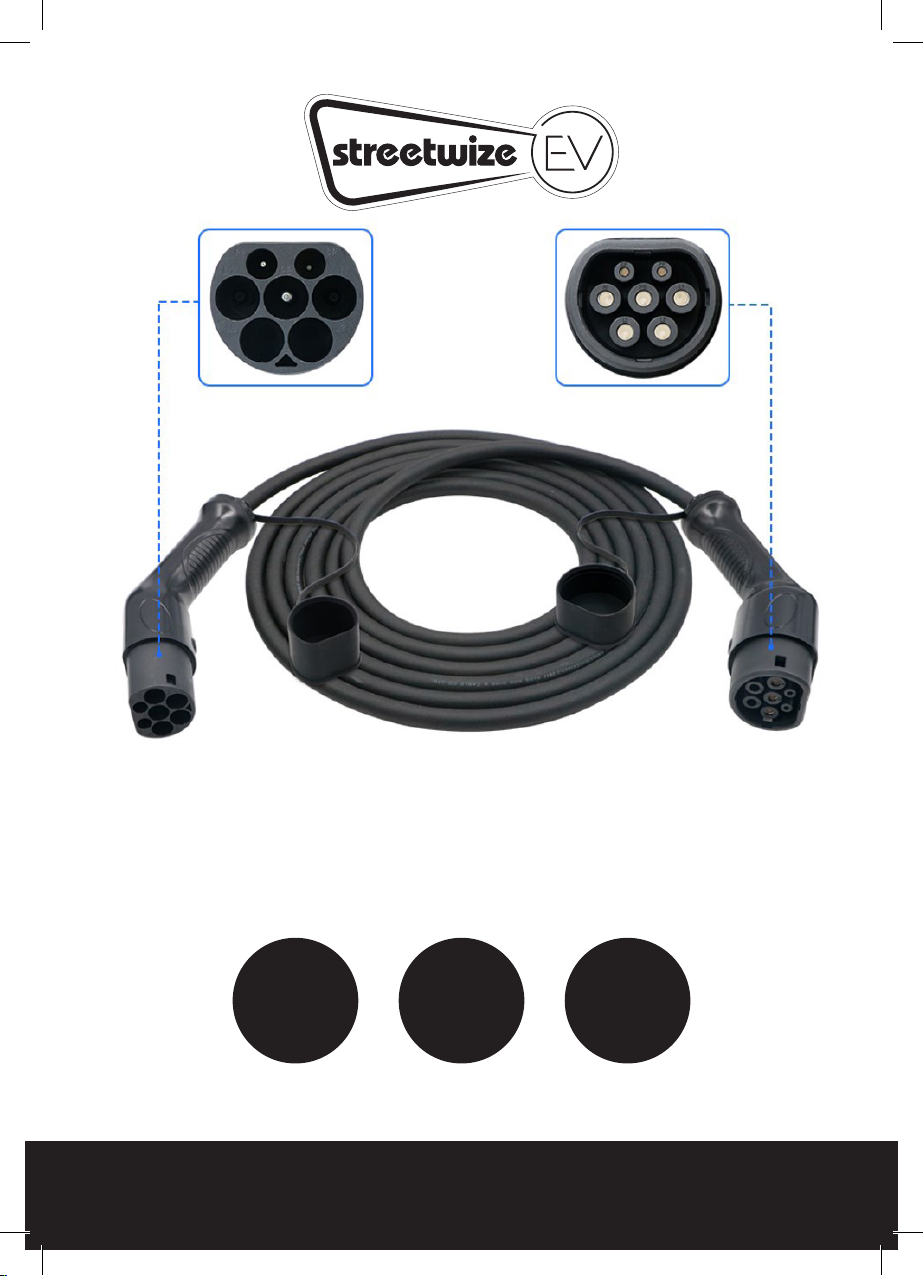
Please note, for Type 2 sockets, you can secure in place using the lock-and-key mechanism.
With Type 1 sockets, you can use the latch to secure in place.
6. Once the connection between the power station and vehicle has been made, you can turn on the power supply at
the power station to commence charging.
7. You can monitor the charge status either via your vehicle (refer to your vehicle’s manual) or via the charge station.
8. Once charge is complete, turn off the power supply at the power station first.
9. Then disconnect the electric vehicle cable from the power station, and then disconnect the cable from your
vehicle’s charging inlet.
10. Place the cable back into the provided storage bag.
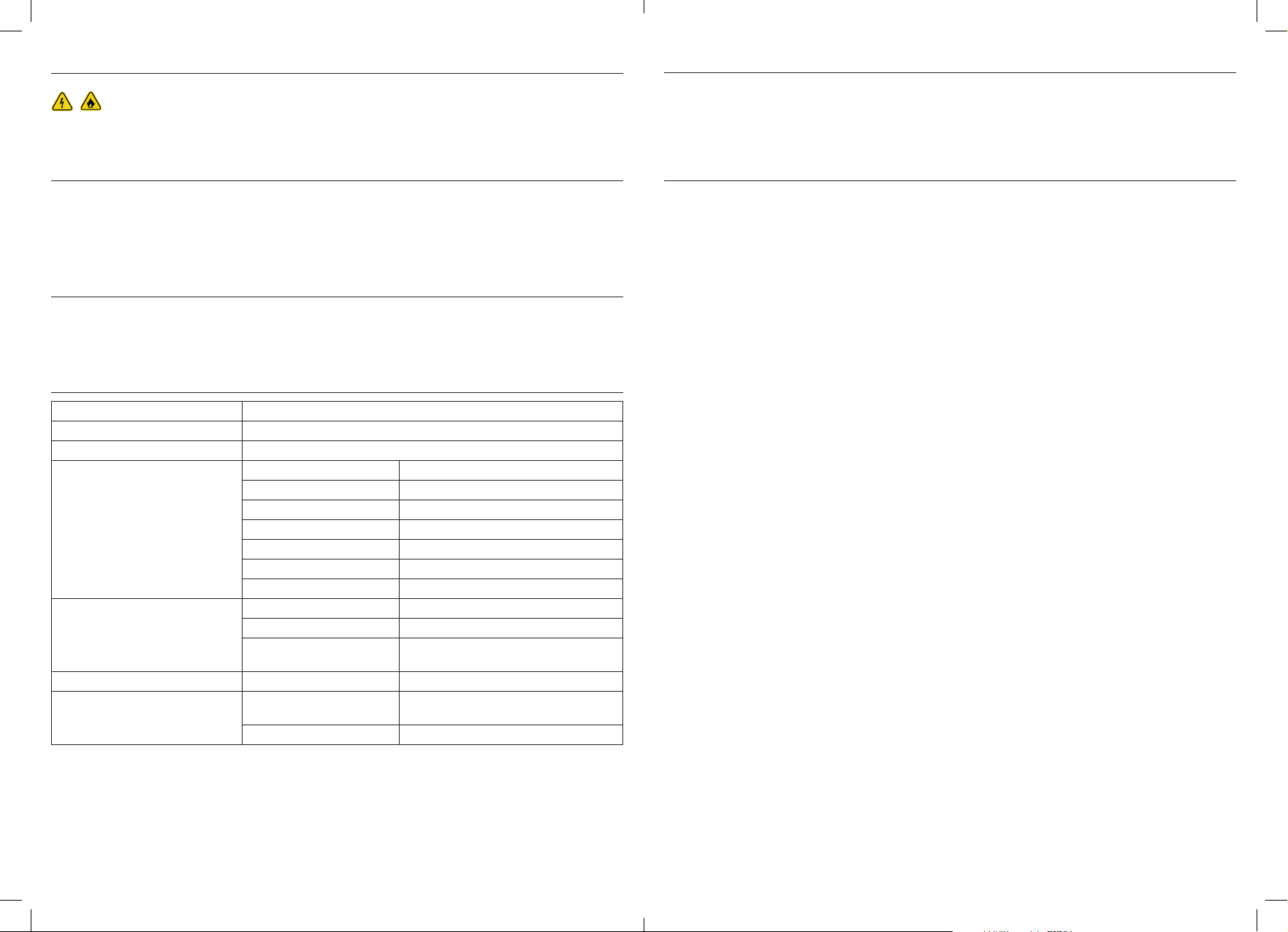
The table below shows the average charge times for our current electric vehicle charging cable range. Please note, the
charge times are based on a 24kWh battery being charged to 80%.
Before using this cable to charge your vehicle, please follow the steps below to ensure safe use of the product.
• Ensure the charging cable is free from damage, rust and any other abnormality. If it has damage, rust or any other
abnormality, please do not use it.
• Check to see if the cable has any moisture. If so, please wipe dry with a clean & dry cloth and allow it to fully dry.
• Make sure you have the correct cable for your vehicle.
• Never use the cable in an environment where there is flammable substances
SKU Cable Type Ampage kW Phase Suitable For Charge Time (approx)
SWEV1 Type 1 to Type 2 32A 7.4kW Single Phase Home charging &
charging at public
station
2hr 35mins
SWEV2 Type 2 to Type 2 32A 7.4kW Single Phase Home charging &
charging at public
station
2hr 35mins
SWEV3 Type 2 to Type 2 32A 22kW 3 Phase
(Fast)
Commercial 55mins
SWEV4 Type 2 to UK 3Pin 10A 3.7kW Single Phase Home Charging 5hrs 15mins
SWEV5 Type 1 to Type 2 16A 3.7kW Single Phase Home charging via
personal charging
station
5hrs 15mins
SWEV6 Type 2 to Type 2 16A 3.7kw Single Phase Charging at public
station
5hrs 15mins
*Please note, the charge times are based on a 24kWh battery being charged to 80%