1
1 Background
Heat pump water heaters (HPWHs) promise to significantly reduce energy consumption for domestic
hot water (DHW) over standard electric resistance water heaters (ERWHs). Water heater efficiency
is usually described by the energy factor (EF). Typical electric resistance water heaters have EFs of
0.9 or above, which means that the heaters are over 90% efficient in converting electricity into
thermal energy in the water heater. New HPWHs have EFs of 2.0 to 2.5, meaning that HPWHs can
use less than half the energy that a standard electric tank would require. High energy factors in
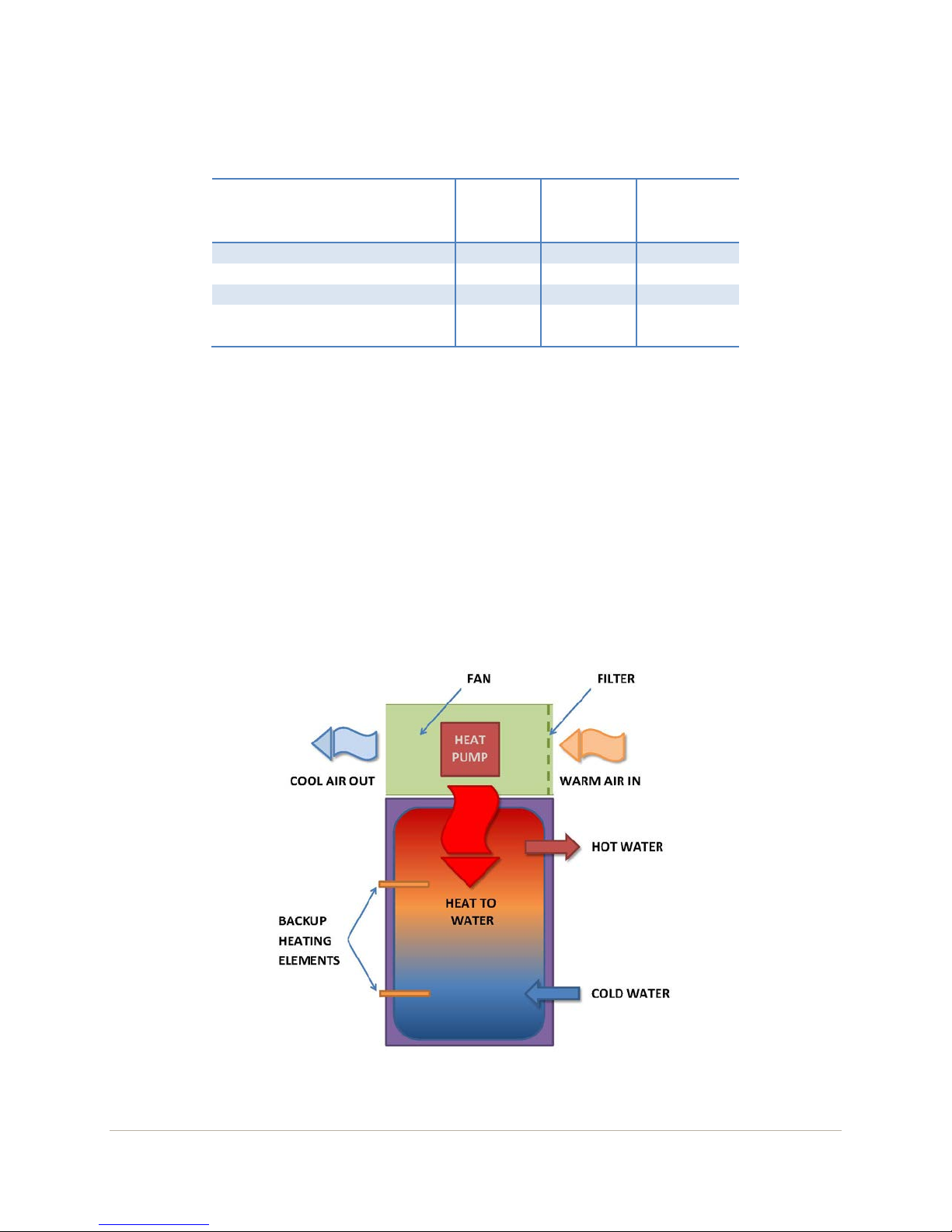
HPWHs are achieved by combining a vapor compression system, which extracts heat from the
surrounding air at high efficiencies, with electric resistance element(s), which are able to help meet
larger hot water demands.
In New England homes, water heating is responsible for 17% of total energy consumption – the
largest energy use in homes after space heating. In the Northeast, 1.4 million households (26%) use
electricity as their primary water heating fuel1and consume – on average – over 2,600 kWh each
year to heat water.2In many cases, switching to a HPWH can cut this consumption in half, saving
several hundred dollars per year in the “average” home. Although HPWHs cannot be installed in all
locations, they do offer significant energy saving potential.
Although HPWHs were first commercialized in the 1980s, they were typically add-ons to existing
water heaters (i.e. a heat pump would pump water from a tank water heater, heat it outside the tank,
and pump it back into the tank). These systems required specialized knowledge for installation and
sometimes required both an HVAC contractor and a plumber to install the system. The development
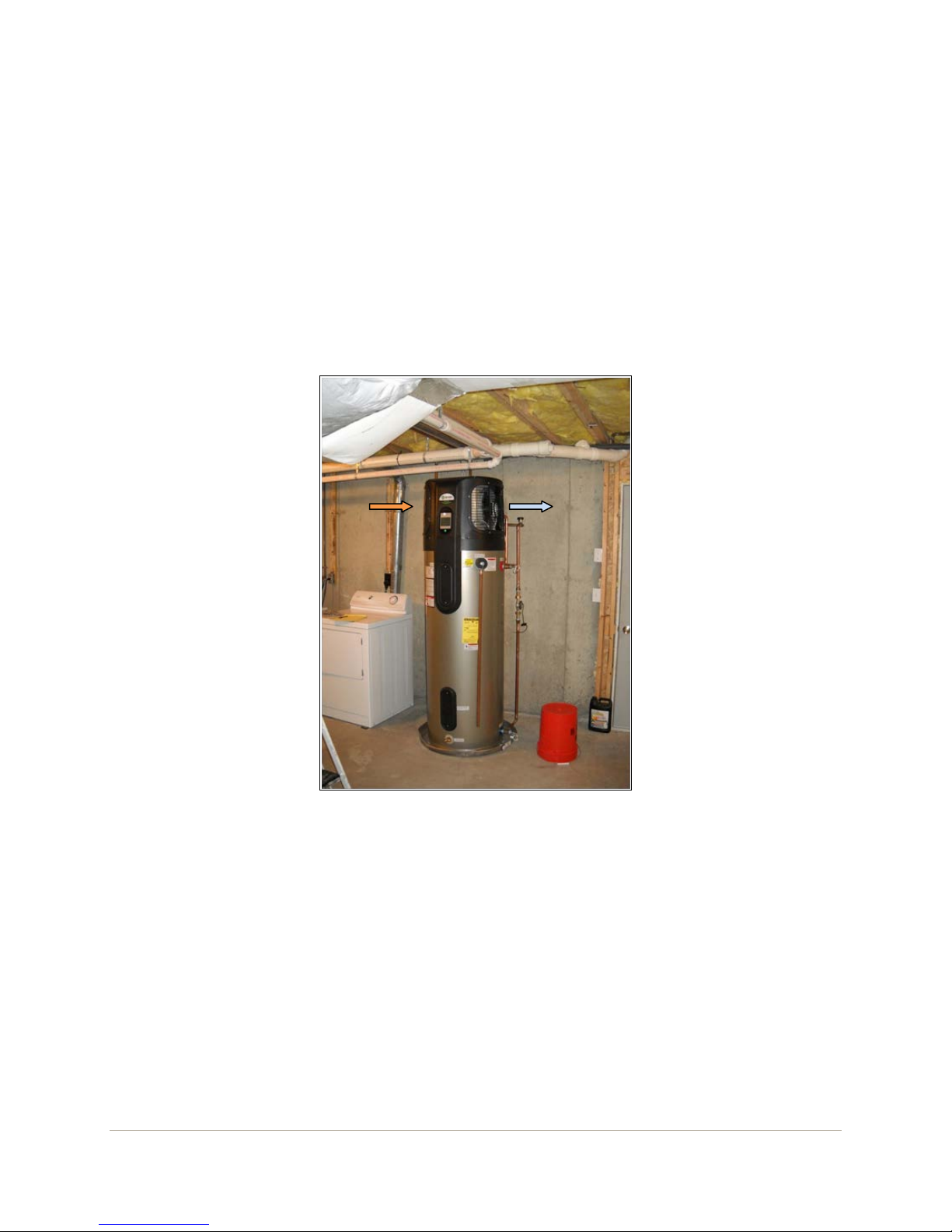
of integrated or “drop-in” HPWHs (where the heat pump and tank are integrated within a single
appliance) allowed for easy installation by a single trade (Tomlinson 2002). While integrated
HPWHs are not entirely new, earlier residential products (available around 2000) achieved minimal
market penetration and experienced reliability issues
Recently several manufacturers, including General Electric (GE),
Rheem, AO Smith, Stiebel Eltron, and Air Generate, have
introduced integrated HPWHs (Table 1). Integrated refers to the
fact that the units are packaged replacements for conventional
ERWH tanks; they include the hot water tank, heat pump, backup
resistance heating elements, and all controls.
The demand for these integrated HPWHs has been fueled by higher
electricity rates and the availability of various incentives (state,
federal, local, utility, etc.) that promote the installation of more
efficient equipment. Furthermore, the new Federal water heater
standard, which takes effect in 2015, mandates EFs around 2.0 for
all new electric storage water heaters with capacities greater than 55
gallons (Federal Register 2010). This regulation will effectively
mandate the use of HPWHs in applications with large hot water
demands and where electricity will be used to heat water.
1http://38.96.246.204/emeu/recs/recs2005/c&e/waterheating/pdf/tablewh2.pdf
2http://www.eia.gov/consumption/residential/data/2005/c&e/waterheating/pdf/tablewh6.pdf
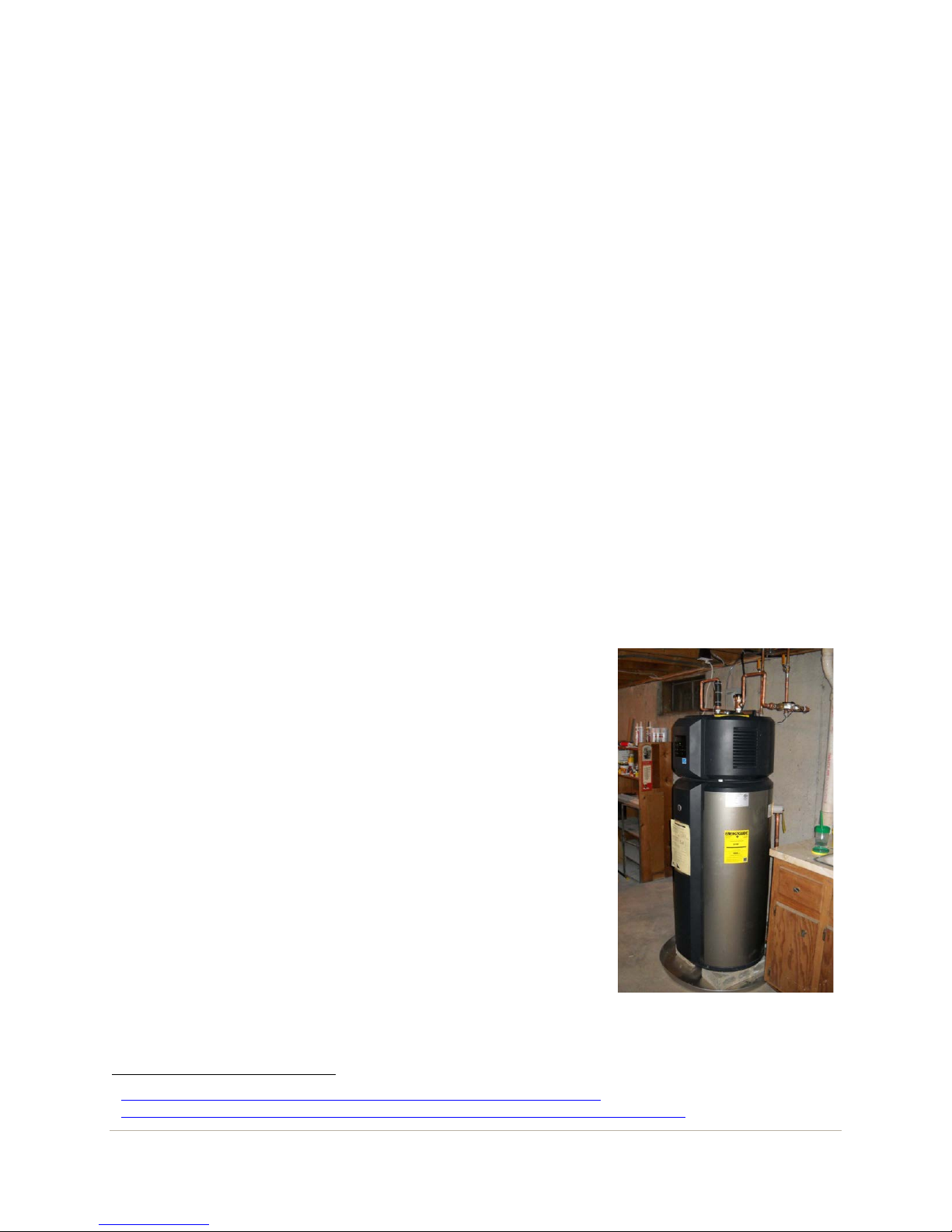
Figure 1. An integrated HPWH
installed in a basement.