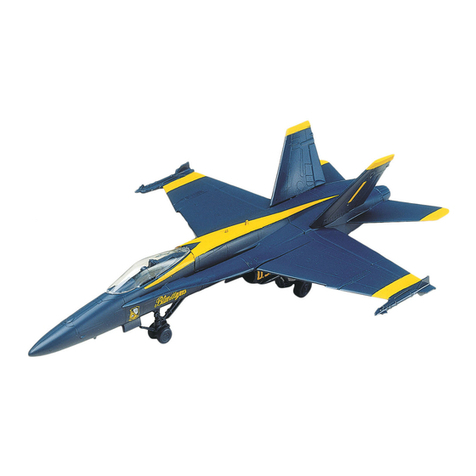
Royal-model Manta Instruction Manual

Manta
royal
-
model
Building instructions
RC
aerobaticelectric plane
Manta is a sport airplane powered
by
an electric motor Speed
400
-
500
or
brushless, that likes to
fly
fast and perform aerobatics. Manta is designed for the
experienced pilots.
1140mm 700
g
840 mm
type
400
-
500,
brushless
18dm
2
7
-
8NiCd
Eppler
mod. 4
ch.
Kit includes:
Epoxy glass fuselage with a white epoxy gelcoat, wings and tail unit balsa
construction, covered with Oracover, landing gear, hardware, instructions
Tofinish the model you need:
*
cyanoacrylate adhesive
5
-
min epoxy glue
common modeller's tools (sharp knife, drilling machine, screwdriver, fine round ie,sandpaper)
Tofly you need:
4
channel
RC
set and
4
microservos
*
E
-
motor
*
propeller
*
speed controller equipped with
BEC
7
-
cell battery pack
500
-
1
000
mAh
*
charger
WARNING
Improper use of thisproduct can
lead
to bodily
harm
or
property
damage
You
cr
are
fully responsiblefor safetywhen using
this
model
Fly
it
far
enough from
built
up
areas
Be
sure
nobody
else
uses thesamefrequency
as
you
SPEED
JES
-
1
10
JES
-
180
.
JES-250
JESi3
0-3
P
ACU
500mAh
500-800mAh
1000-
1
250mAh
1000-1250mAh
-
-
POWER
MIG
400
7.2V
MIG
480BB
MIG
500
Phasor
15/3
PROPELLER
5x5
7x6
7x4
7x4

FINISHING THE
MODEL
The main parts of your new model are already assembled and covered, your job is only the final
assembly and the
RC
set installation.
1.
Rudder and elevator control bowden installation
Using a file or
a
drilling machine make the outlet in the fuselage for the rudder and elevator
control bowden. Cut the bowden tube to the proper length, insert it into the fuselage. Check if all
bends are smooth and glue the bowden in several points. Push in the steel wire of 0.8mm
diameter, cut to the proper length. Remove the wire again, solder the brass metal ending and
screw in the link, which will be later connected to the rudder and elevator horn.
2.
Stabilizers installation
Begin with glueing the horizontal stabilizer to the slot in the fuselage. First carefully cut and
remove the foil from both the top and the bottom surface of the stabilizer in the area which will
be attached to the fuselage. Glue the stabilizer in place, making sure that it is perpendicular to the
fuselage sides. The balsa piece fits into the rear open side ofthe vertical stabilizer. Make slots for
hinges in both the stabilizer and the rudder
-
the rudder must fit to the stabilizer. Glue the hinges
into the stabilizer and then glue the rudder to the hinges
-
mounting the rudder to the stabilizer
this way. Find the position of the rudder control horn so that the straight line connecting the
holes in the horn and the axis of rotation of the control surface is perpendicular to the surface of
the stabilizer and the horn itself is in the same level as the control wire coming from the fuselage.
Drill two
2
mm holes for the fixing screws and fix the horn. Insert the previously prepared wire
into the bowden and connect it to the horn.
3.
Fixing thewing
Attach the wing to the fuselage so that the central wing rib is exactly centered in respect to the
fuselage. Glue pin into the wing hole. Drill another hole close to the trailing edge perpendicular
to the fuselage. Glue a nut into the fuselage just below the hole.
4.
Aileron controls
Install the extension servo cables into the wing. Connect the extension cables to the servos
(connectors or soldering
-
in this case isolate the wires using the heat shrinking tube). Attach the
control horns to the ailerons. Fix the ailerons in the neutral position using pieces of a self-
adhesive tape. Install single levers to the servos, adjust them to the neutral position and insert the
servos into the holders
-
without fixing them now. Prepare
2
rods made of lmm diameter wire
with
"Z"
bend on one end ,measure and cut the wires to the proper lengths and solder the brass
endings. Screw in the clevises. Remove the servos, insert the "Z"-bendinto the servo lever, and
fix the servos in the holders using a quality double
-
side self adhesive tape. Connect the pushrods
to the control horns.
5.
Landing
gear
installation
Fix
the
landing
gear.


6.
Power unit installation
Drill holes in the front fuselage former according to the used motor. Fix the power unit to the
motor mount. Connect the speed controller. Install the propeller set and the spiner.
7.
RC
equipment installation
First, cut the openings to the servo holder plate so that intended servos could be fixed to the
plate, drill the holes for the screws and slightly adapt the plate shape, if necessary. Glue the plate
into the fuselage. Mount the servos to the servo plate in the fuselage. Cut the rudder and elevator
control wires to the appropriate lengths. Solder the brass endings on both wires, screw in the
links and connect them to the servos. Check that both control surfaces are in neutral positions
when servos in neutral positions are connected and adjust, if not. Make an opening for the RC
receiver switch and install it. Insert the receiver and the battery into the fuselage. Use foam to
protect them from vibrations and impacts. Connect all components as necessary.
FLYING
Assemble the model.
Check the centre of gravity position,
add some lead if necessary
(eventually move the battery), don't forget to check the symmetry of the whole model. Once on
the field, first check the function of your RC set and check the range, too. Calm weather is the
best for the first flights. Provided that everything is in order, you can go for the maiden flight,
with a charged receiver or power battery, of course.
Have
a
lot of fun and many happy landings with your Manta.
Table of contents
Other Royal-model Aircraft manuals