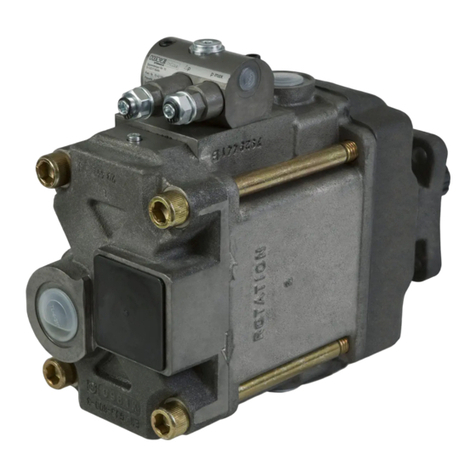
PMP PMP-06 User manual

Operations Manual
The Prophet (PMP-06) & The Prodigy (PMP-04)
Please read/understand entire manual prior to use.

P a g e 2 | 8
Safety
Warning: Never modify the pump or any of the safety relief systems.
Warning: Pump should never be operated above 150psi.
Warning: It is strictly forbidden to let liquid enter the compressor; otherwise, it will cause serious
damage to the compressor and possible safety issues. Pump creating knocking noises is an indication
that it has sucked liquid into the system, discontinue use immediately.
Warning: Never operate pump without safety belt cover in place. Even with cover in place there are
moving components, never touch moving components while in motion. Keep hands, feet, appendages,
wiring, plumbing, clothing, pets, small children, large children, and other objects clear of moving parts at
all times.
Warning: Pump should be isolated from gas supply when not in use. Isolate pump (close valves) and
relieve pressure in cylinders. Never leave pump unattended while pressurized or in use.
Notice: Pump is originally shipped from factory with oil installed. Oil should be replaced after the first
100hrs of use and again after every 400hrs of use or every 6 months; failure to do so will damage pump
and void warranty. Pump oil is synthetic AW-46.
Foreword
This instruction manual provides you with the basic methods for correct installation, commissioning,
use, maintenance and maintenance of the compressor. Our company does not assume any
responsibility for damage to the machine due to violation of the provisions of the instruction manual,
incorrect operation, maintenance or failure to use our accessories.
This compressor is a device used to transport toxic, harmful and flammable gases. On-site staff must be
trained and abide by the relevant safety regulations. Must establish sound and effective rules and
regulations and operating procedures. Violation of safety laws, regulations and rules may cause serious
consequences.
The oil-free lubrication mentioned in this compressor means that the cylinder does not need to be
lubricated with oil, but the crankshaft connecting rod and other moving mechanisms must be oil-
lubricated. The compressor will be seriously damaged due to lack of oil.
When overhauling the compressor, it must be stopped and carried out under no pressure. When
disassembling, the gas inside the machine should be completely evacuated before proceeding.
This compressor is dedicated to liquified gas, and cannot be used as other gas compressors, otherwise it
will cause damage to the seal and cause air leakage. When the compressor is tested for air tightness, it
shall not exceed the rated discharge pressure of the compressor of 10 Bar.

P a g e 3 | 8
Installation
Electrical
Pumps should be wired in accordance with local governing jurisdictions and abide by all laws and safe
use practices. Wiring should be done by a trained certified professional electrician.
Safety cut-off switch must be installed at the location of the pump within reach to allow operator to
shut down pump operation immediately should a problem occur. Safety switch must be of code and
approved for use where needed in C1D1 environments. (Available with installation package from PMP).
Due to high capacity of the motor, these pumps are designed to be used with a contactor relay.
Contactor relay must be installed outside of C1D1 environments. For single phase locations phase
inverter may be used. Wire the switch, contactor and pump motor as shown below:
Check wiring of pump by running pump. If pump runs in reverse direction, switch any two legs of the
wiring going to the pump. Pump must run in dedicated direction.
For proper coil wiring and amperage rating please see motor nameplate.

P a g e 4 | 8
Plumbing
PMP-04 “The Prodigy”
The Prodigy pump has inlet and outlet on opposing sides of the pump. Inlet side is the 1.5” tri-clamp
connection closet to the end of the pump (furthest from the motor). The outlet of the pump is on the
opposite side (closest to the motor).
Make connections using standard 1.5” Tri-clamp style seals and clamps. Make sure seals and clamps are
rated for both pressure and solvents intended for use with your system. For LPG gas Viton or PTFE
gaskets are recommended, and clamps with a minimum rating of 250psi.
Tighten clamps using proper torque recommendation by clamp manufacture. Be sure not to over
torque the clamps as this may cause damage.
Inlet
Outlet

P a g e 5 | 8
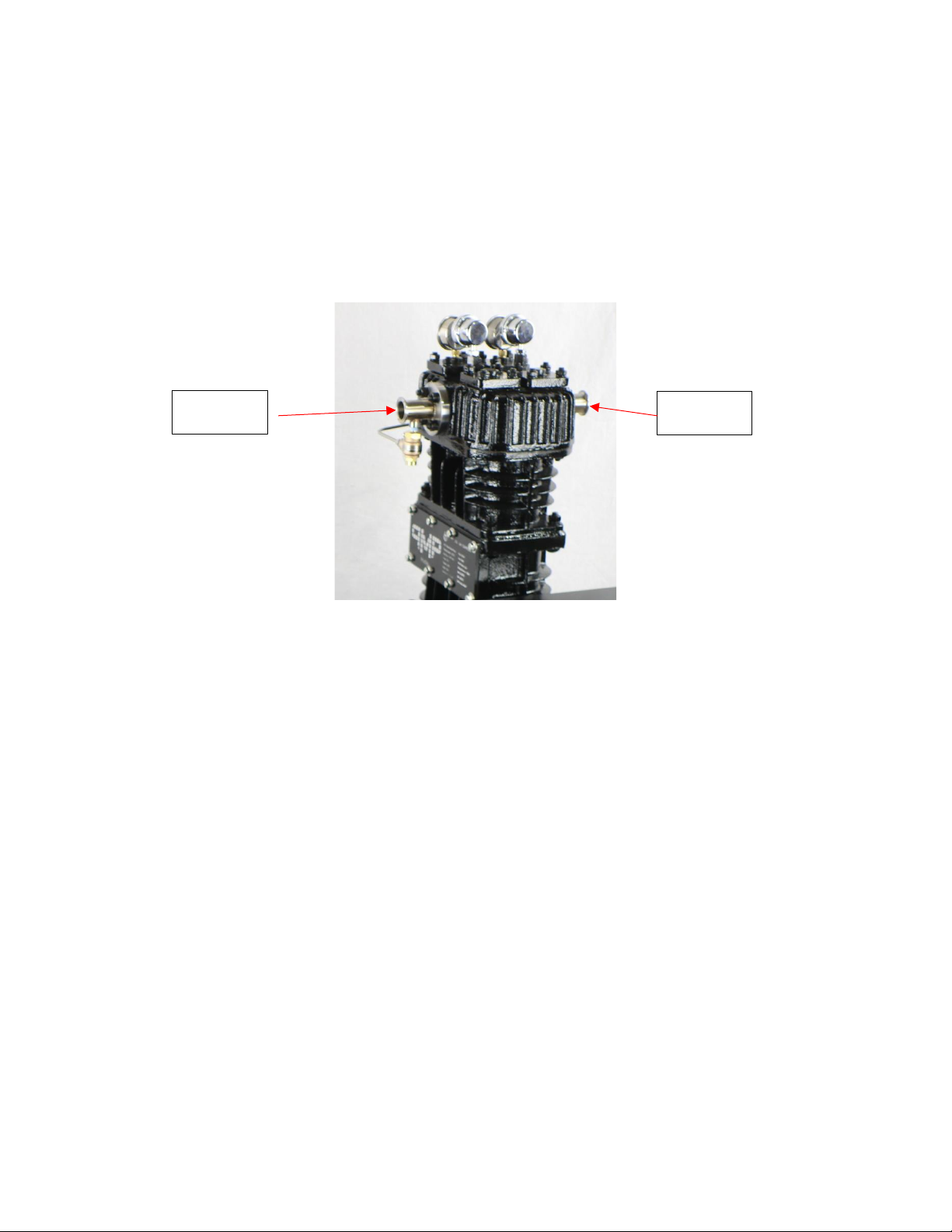
PMP-06 “The Prophet”
The Prophet pump has inlets and outlets on the same side of the pump. While looking at the end of the
pump with the open connections, the inlet is on the left, the outlet is on the right. The outlet will also
be noted as the side which has the pressure relief valve mounted.
Make connections using standard 1.5” Tri-clamp style seals and clamps. Make sure seals and clamps are
rated for both pressure and solvents intended for use with your system. For LPG gas Viton or PTFE
gaskets are recommended, and clamps with a minimum rating of 250psi.
Tighten clamps using proper torque recommendation by clamp manufacture. Be sure not to over
torque the clamps as this may cause damage.
Disconnect
It is important to have service disconnects (valves) on either side of the pump allowing isolation of the
pump in the event of a problem, and for isolation when not in use (over-night). When pump is not to be
used for a period of time, close the valves on both sides of the pump, and relieve the pressure in the
cylinders. This helps prevent unnecessary loading on piston seals as well as prevents a continuous leak
in the event of an unnoticed seal.
If piston seals should start to leak, pump will vent gas through the crank case vent port. Any indication
of gas leaking through the crank vent port; discontinue use immediately and have pump serviced by
certified repair personnel.
Location
Pump should be installed in a well-ventilated room with adequate fire protection in accordance with all
local jurisdictions and laws regarding storage/use of LPG gases.
Inlet
Outlet

P a g e 6 | 8
Usage
To begin pumping of LPG gasses open the valves on the inlet side the pump, then the valve on the outlet
side of the pump. Activate switch to start motor. When motor activates it should reach operational
speed (1800RPM) relatively quickly. If motor/pump seems to be operating slowly or struggling to
achieve speed in a timely manner, stop the pump and check outlet pressures/outlet blockages
preventing the pump from starting.
Once the pump is running it is important to monitor the pump to ensure it stays within operational
boundaries regarding temperature, pressure, and pressure differential.
Temperature:
Inlet temperature should not exceed 104°F
Outlet temperature should not exceed 266°F
Pressure:
Outlet pressure should not exceed 150psi
Outlet pressure is limited by a recirculating pressure safety valve. If pressures are continuously at or
near 150psi the pump will not operate with any efficiency. In normal operation pump should not be
continuously run above 100psi for a long period of time.
Pressure Differential (PMP-04 The Prodigy Only)
Because the Prodigy pump is only single stage compression, it should not be continuously run above 4x
pressure differential for a period greater than 60 minutes or run above 8x pressure differential ever.
For example, if inlet pressure on the pump is 20psi, outlet should be limited to 80psi for continuous use
or a maximum of 150psi for no more than 60 minutes.
If inlet pressure is vacuum (-14.5psi) outlet of pump should be limited to 43.5psi for continuous use or a
maximum of 101.5 psi.
In the event differential pressure is exceeding limitations, stop the pump and remedy the pressure
differential. This can be done by either increasing the pressure at the inlet (heating/evaporating gasses
more quickly), or by decreasing the pressure at the outlet (bleeding pressure or cooling the outlet vessel
to a lower temperature).

P a g e 7 | 8
Failure to comply with pressure differential limitations will cause premature damage to the pump and
motor.
Completion
When finished with the pumping process shut off the pump using the power switch. Close both valves
(inlet/outlet) isolating the pump and if possible, release the pressure on the unit, discharging in a safe
manner in accordance with all local governing regulations.
Maintenance/Care
Pump crankcase contains oil that must be routinely changed out every 200hrs. Because there is no run-
time indicator, it is imperative that operators keep detailed documentation regarding usage/time. To
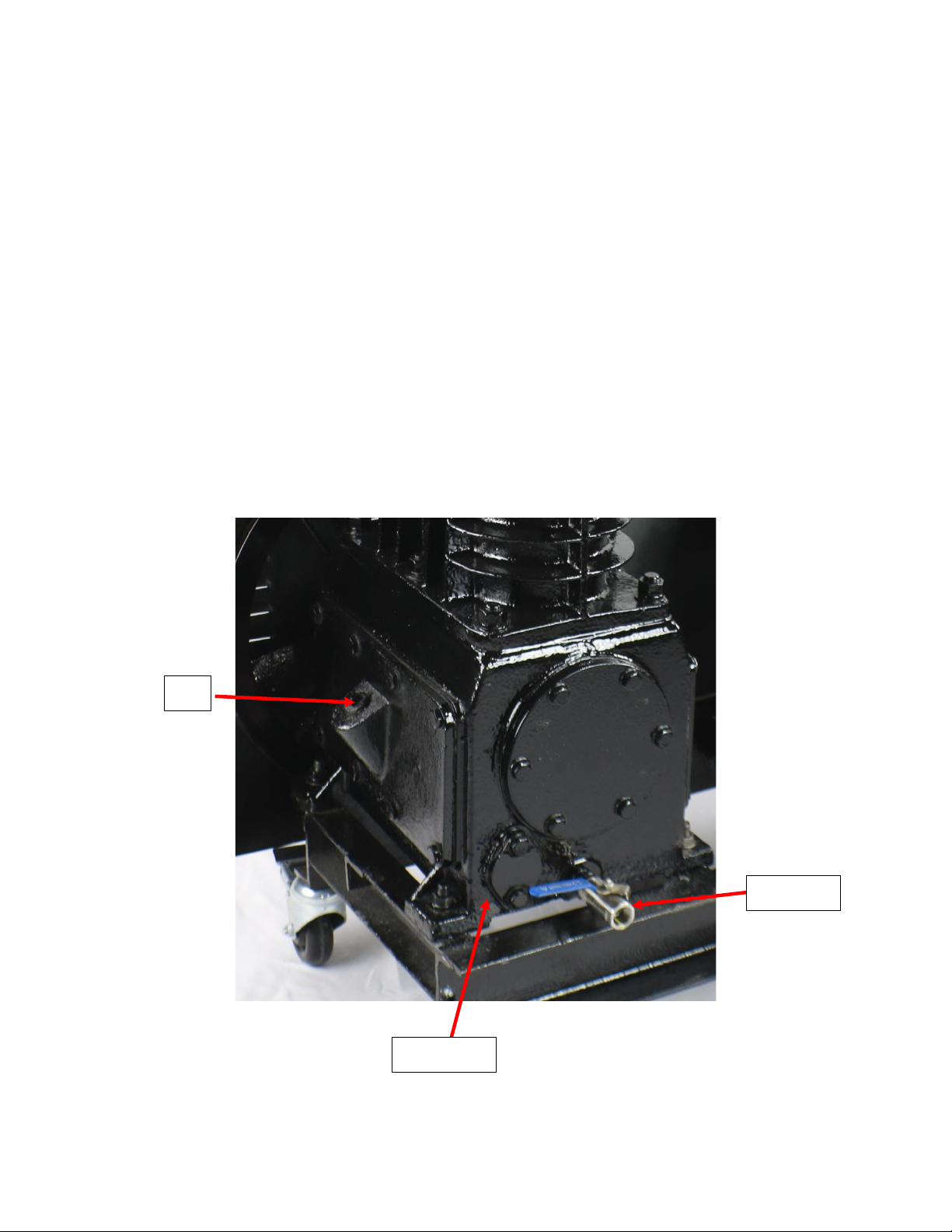
change the oil open the ball valve on the lower section of the crank case and drain oil into an approved
container. Dispose of according to local governing regulations. Refill the crank case by removing the fill
plug on the side of the crank case and filling with synthetic AW-46 oil. Fill with oil until the oil level is ½
the distance on the sight glass.
Drain
Sight Glass
Fill

P a g e 8 | 8
PMPumps features a dry seal cylinders which require no oil lubrication. Because of this there will be
noticeable wear over time. If pumping becomes substantially less efficient (taking longer to run a
process) it is most likely time for a rebuild.
Additionally, if gasses are ever present seeping from the crank case vent a rebuild is necessary. The
crank case vent helps ventilate pressures inside the crank case. If piston rings/seals become worn over
time they may allow for gasses to seep into crank case where they will be vented through the port into
the environment. This can provide cause for an unsafe working environment, so care must be taken to
check this port for signs of gasses daily. Furthermore, the vent fitting in this port can be removed and
replaced with an external ventilation routing directing leaking gasses to a safer location outside the
building if desired or required by local governing regulations.
Rebuilding of pumps should only be performed by a qualified trained professional. Failure to do so
could result in damage to pump or hazardous working conditions.
Vent Port
This manual suits for next models
1
Table of contents
Other PMP Water Pump manuals
Popular Water Pump manuals by other brands

Sykes AmeriPumps
Sykes AmeriPumps GP100M Operation and maintenance instructions

DUROMAX
DUROMAX XP WX Series user manual

BRINKMANN PUMPS
BRINKMANN PUMPS SBF550 operating instructions

Franklin Electric
Franklin Electric IPS Installation & operation manual

Xylem
Xylem e-1532 Series instruction manual

Milton Roy
Milton Roy PRIMEROYAL instruction manual