NUI NCCD User manual
1
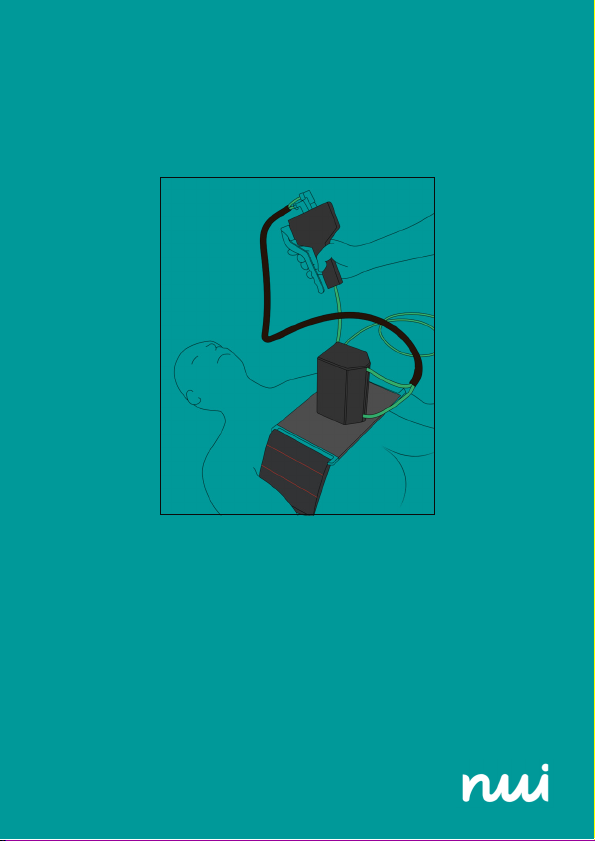
NCCD is a compact, lightweight chest
compression device to be used as a substute
to manual chest compression during CPR.
NCCD is powered by compressed gas, and
designed for use in hyperbaric environments.
NUI COMPACT CHEST COMPRESSION DEVICE (NCCD)
USER MANUAL
nui.no/nccd
Sept 2022
2
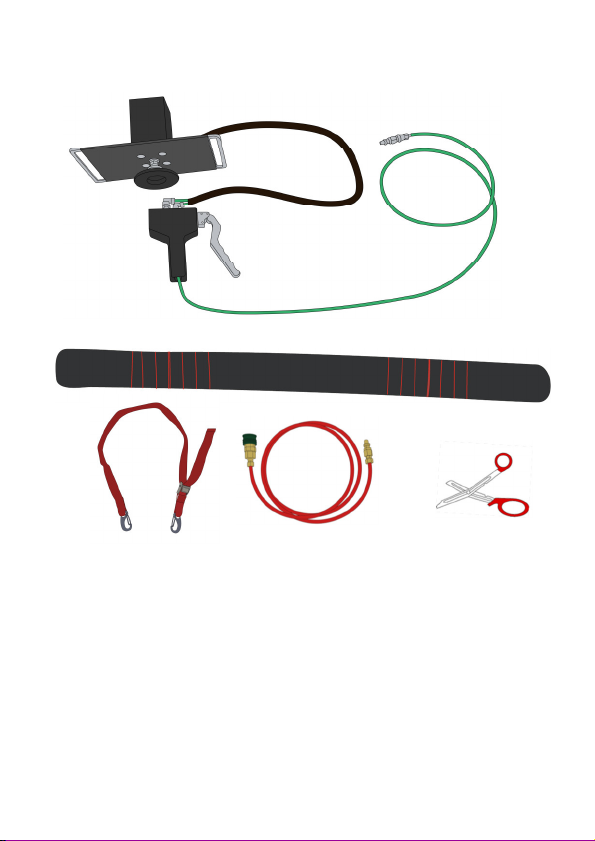
8. Hanson 600 series, 1/4” male
coupling
9. Chest belt
10. Velcro
11. Red markings on chest belt
12. Adjustable support strap
13. Extension hose (150 cm)
14. Scissors for cung fabric
NCCD COMPONENTS
1
2
3
4
6
5
7
8
9
10 11 10
13
Parts:
1-3. Compression unit
1. Piston house
2. Boom plate
3. Piston foot
4. Hand control unit
5. Compression release handle
6. Pressure hoses (100 cm)
7. Pressure hose (200 cm)
12 14

3
SAFETY
NCCD is only to be used by trained personnel with competence
in CPR and with experience in handling of pressurised gas.
Incorrect use may cause injury to the paent and user.
Use of NCCD can increase ppO2 and atmospheric pressure in
closed systems.
Do not use oxygen (>22%), or gas mixture with a O2 content
over 22% as supply gas.
Do not obstruct the equalisaon holes in the NCCD storage box
on units that is exposed to increased atmospheric pressure.
Make sure not to stretch or pull hoses [6-7] to and from the
hand control unit [4].
Do not compress the hand control unit [4-5] while connecng
gas. The NCCD piston foot [3] can move and cause a pinching
hazard. Apply NCCD before gas is connected.
Incorrect positioning will reduce quality of compressions and
may cause injury to the patient.
MALFUNCTION
If proper applicaon and use of NCCD is not possible,
start manual CPR immediately.
Recommended checks and acons when possible:
1. Verify 10 bar supply pressure.
2. Check unit for damage or loose couplings.
3. Tell us about your experience: [email protected]
Please include NCCD serial number (SN08…..), found
on the back of the piston house [1], with correspondence.

4
USE OF NCCD
NCCD is only to be used when CPR is initiated on adult
patients, and only by personnel that have sufficient CPR
training.
NCCD is not to be used if trauma is suspected or during
pregnancy.
Your gas outlet connection needs to be Hanson 600 series, ¼“
female coupling. If your gas connection is of a different model,
please contact NUI.
Do not modify the NCCD in any way.
Do not use NCCD if the case seal is broken or missing. Does not
apply to the training- and school units.
The NCCD will function while submerged in water.
INSTRUCTIONS
For further instrucons, images and videos, please visit:
nui.no/nccd
If proper application and use of NCCD is not possible,
start manual CPR immediately.

5
PRECAUTIONS
Maximum tension on pressurised hoses and fings: 5 kg (49 N).
Max. distance [6] from paent to hand control unit [4-5]: 100 cm.
Maximum distance from paent to gas outlet [6-7] : 300 cm.
Maximum distance from paent to gas outlet using extension
hose [6-7,13]: 450 cm.
When connecng the NCCD QC [8] to gas outlet, make sure the
pressure release handle [5] is not compressed.
NCCD is to be used with pressurised HeliOx as drive gas at depth.
Compressed air can be used at surface. Use of air as drive gas can
significantly limit the NCCD funconality in a hyperbaric
environment.
NCCD can be used along with defibrillator pads from an AED.
Make sure to place the pads under the NCCD chest belt.
Aer use:
Aer use, make sure to disconnect the NCCD from the gas outlet,
and execute a couple of compressions to bleed off pressure from
the system. Be aware of pinching hazard.
6
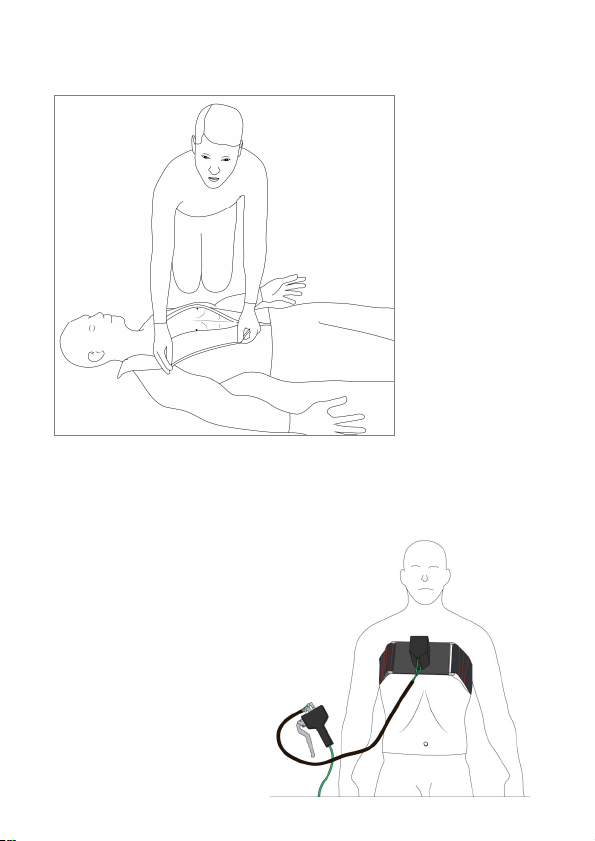
A. Undress the paent’s upper body.
Cut clothes using included scissors [14] if needed.
B. Apply NCCD as instructed
on the following pages.
Image show NCCD applied.
APPLICATION OF NCCD
7
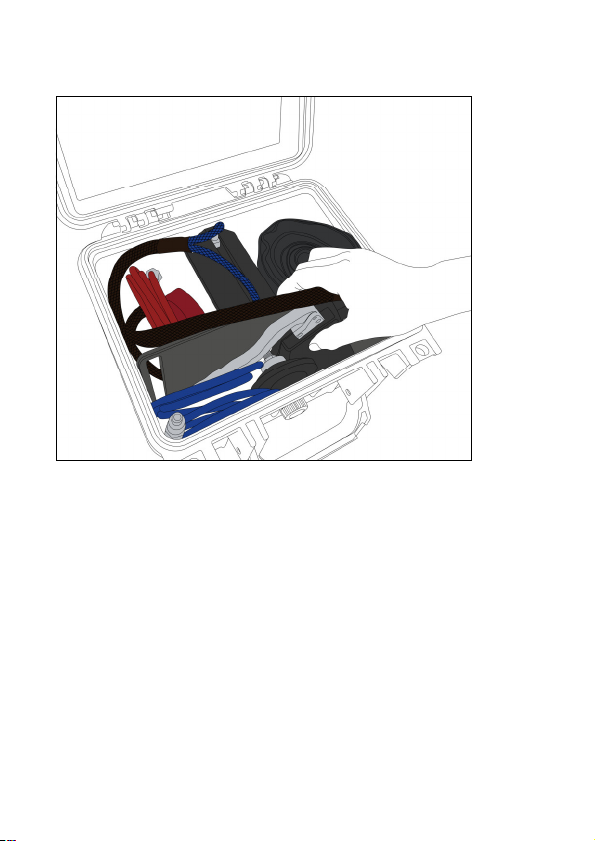
1. OPEN NCCD CASE
Break sealing. It requires 6 kg of force.
2. TAKE OUT NCCD
Remove the NCCD with chest belt [9] (black) from the
case. The belt is pre-aached to the right side of the
boom plate [2].
APPLICATION OF NCCD

8
3. BELT UNDER PATIENT CHEST
Place chest belt centered under
the paent’s back. Center of the
belt should be placed posterior in
the middle of the back, between
the shoulder blades. The top edge
of the belt should be located high
up in the armpits (3a).
4. PLACE NCCD ON THE
PATIENT’S CHEST
Place the NCCD compression unit
1-3 on paent chest so that
the piston foot 3 is located
where your hands would have
been placed during manual CPR.
Make sure not to place the piston
foot to far down towards the
p of the sternum or too high up
on the chest. This could cause
injury to the paent or/and
cause insufficient compressions.
APPLICATION OF NCCD
3)
4)
3a)
9
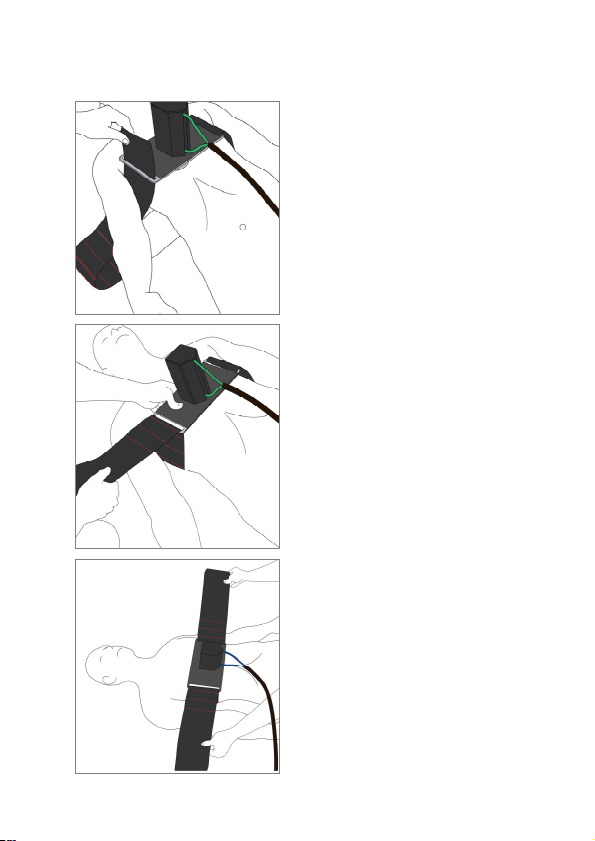
5. FASTEN BELT
a) Thread chest belt through slot
in the boom plate 2
b) Tighten the belt so the
compression unit is secured
on the chest.
Fasten the Velcro 10, and make
sure it’s firmly fastened on both
sides. Use red markings 11 to
center the belt.
c) Adjust both sides if necessary.
Confirm that the NCCD is firmly
applied to the paent’s chest.
The NCCD shall not compress
the chest by applicaon.
Confirm correct placement of the
piston foot [3] according to the
hand placement used when
you are preforming manual CPR.
APPLICATION OF NCCD
a)
c)
b)

10
NCCD can provide sufficient
compressions when the
paent is in a vercal posion
when the NCCD is secured by the
adjustable support strap 2.
Remove clothes from the paent
upper body, and fasten the NCCD,
skin ght around the chest (do not
compress the chest with the belt).
a) Remove the adjustable support
strap 2 from the package, and
hang it around the paent neck.
b) Aach the carabiner hooks to
the slots in the NCCD plate 2 as
shown in image b) and c).
The strap length and tension needs
to be adjusted so that it supports
the NCCD, not causing an angle
(perpendicular to paent frontal
plane), or causing a rotaon of
the NCCD.
c) Verify that the adjustable strap
is aached as shown in the image.
a)
c)
b)
APPLICATION OF NCCD - VERTICAL PATIENT
12
Other manuals for NCCD
1
Table of contents
Other NUI Medical Equipment manuals