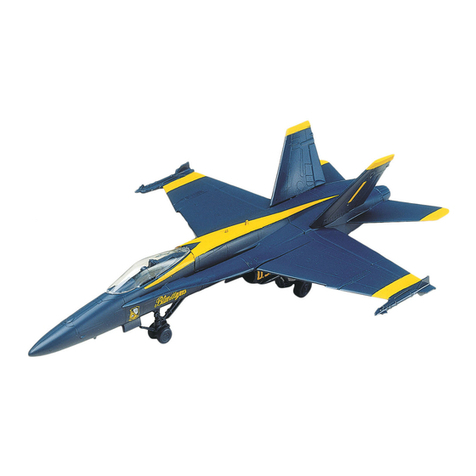
Micron Wings MINI DELTA V2 User manual

Version 2
Specifications
Wingspan: 46cm
Airframe Bare Weight: 31 grams
Flying Weight:
60 grams (With 750mah battery)
65 grams (With 950mah battery)
Max Flying Weight: 85 grams
Channels: 3 (aileron elevator throttle)
Suggested Receiver: 4Ch Micro
Suggested Motors:
Brushless AP03
Brushless D1103-8,200kv or 10,000kv
Included Components
* Airframe Parts Sheets (Depron)
* Airframe Bracing Parts (Balsa / Ply)
* Wing Rib Sheets (Paulwonia Wood)
* Carbon Struts / Supports
* Control Linkages + Pushrods
* Sandpaper Sheet
* Decal Stickers
Electronics Required
* Micro Receiver (< 2.5 gram)
* Two Micro Servos (5320 / 5330 Servos)
* Brushless Motor / Propeller
* Transmitter
* Battery (500 –950 Mah 1S)
* Battery Charger
Tools / Supplies Required
* Soldering Iron with Fine Tip
* 1.2mm Drill Bit
* Tweesers
* Sanding Block
* Hobby Knife
* Steel ruler (or plastic)
* White PVA Glue or Wood Glue
* UHU Por Expanded Polystyrene Glue (link)
* Blenderm Hinge Tape (Link)
* Modelling Tape (Product Link)
The new Mini Delta V2 is designed for stable long duration
flight at relatively slow speeds. While not being suitable for
aerobatics, this airframe excels in its stability and straight
tracking. Designed with micro FPV setups in mind, this
airframe features two component bays (top and bottom)
which give ample room for large batteries, multiple batteries
and FPV gear.
With a wingspan of just 46cm (18 inches), the Mini Delta is
suitable for outdoor flight in calm conditions with no wind or
indoor stadium flight in the hands of an experienced pilot.
The two videos below cover the complete build process as
set out in this manual. At stages throughout this manual
there are links to the relevant position in the build videos.
Build Video –Part 01
Build Video –Part 02

Included Parts - Your kit includes the following parts.
Depron sheets
Wooden parts sheets Sticker decals and paper reinforcing sheets
Additional parts and fittings

Before You Start
The Mini Delta is supplied as a kit and needs to be constructed. You will need intermediate level
model building skills to complete this kit. You may also require micro soldering skills to solder the
battery leads and motor leads to your chosen receiver.
Suggested RC Gear
The kit does not include any receiver, servos, ESC, motor or propeller. Please see the list below of
suggested parts available from the MicronWings website.
Micro Receiver 2 x 5320 Servos 3 Amp Brushless ESC 500–950mah battery
Brushless AP03 or Brushless 10000 kv 90mm Propeller 1.5mm Prop saver
Control System Configuration
You will need to be able to set up V-Tail / Elevon mixing on your transmitter to fly this aircraft. We
suggest that you test this setup on your transmitter to ensure your transmitter is capable of this
mixing before purchasing. You can test the mixing ability of your transmitter with a standard size
receiver and servos.
Glues
This kit requires foam glue and wood glue.
* Use foam glue for all foam parts, to glue foam and balsa parts together and to glue carbon rods
* Use wood glue to glue all wooden parts together
Recommended Foam Glue –UHU Por Expanded Polystyrene
For most gluing in this kit, we will be bringing the parts together before
allowing the UHU Por glue to dry.

Build Instructions
The sequence of these instructions allows you to work on other parts of the airframe while waiting
for glued previously parts which have been previously glued to dry.
Cut out this piece of foam and insert the balsa wood bulkhead –don’t glue it in.
Then insert the two positioning tubes into the holes as shown (gluing not required)
Apply wood glue to the balsa bulkhead. Use only a
small amount of glue so it doesn’t fill up the holes in
the balsa bulkhead.
Slide the first plywood bulkhead piece over the
positioning tubes and press it down firmly.
Glue in place the 16cm long carbon rods
Apply a thin layer of wood glue all over the bulkhead
and also onto the bottom side of the arms of the
second bulkhead.
Glue the second bulkhead in place as shown and clear
any excess glue from around the edges.
Ensure the carbon wing spars run between the cutout lines.
Secure in place and allow the whole bulkhead to dry.
Apply glue
Cantered
Apply glue
Video Link

Glue the plywood brace to the balsa canopy former
Glue the 2mm plywood brace in place into the balsa base plate and set aside to dry.
Glue the 5320 /5330 servos into the wing ribs (don’t use the servo screws) noting the orientation.
Ensure you have a left and right mirrored set.
Test your radio gear to ensure the servo arm movement is correct.
Cut a bevel into these edges of the control surfaces ensuring you have a left and right pair.
Servo arm toward trailing edge
Mark the ribs as left and right
Up Elevator
Right Aileron
Video Link
Video Link
Video Link
Video Link

Place a steel ruler on top of the control surface and with the knife blade at a 30 degree angle,
undercut a section from the edge.
Sand a bevel on both sides of the edges of the
control surfaces on all the other edges except
the undercut one. For long straight edges it may
be easier to use the edge of a table to support
the foam as you sand.
For the vertical stabilizers sand a bevel
into all edges except on one side at the
bottom where they will be glued to the wings.
Glue the control horns in place ensuring they are on the same side of the control surface as the
bevel. On this airframe the bevel is on the upper surface of the control surface.
Glue the canopy former into the
canopy side pieces and set aside to dry.
Once dry, also glue the
front piece in place. Ensure
all the pieces are at right
angles and the gap between
the sides is uniform.
30 degrees
Except these edges on one side of the stabilizer
Plywood brace at the back
Video Link
Video Link
Video Link
Video Link

Remove the bulkhead from the Depron foam
sheet and use a hobby knife to carefully
scrape away any glue from the gaps.
Set the bulkhead back down onto the foam
sheet with the positioning tubes in the holes
so it sits flat.
Glue this plywood piece into the slot as shown and then glue the base plate to the bulk head.
Set aside to dry ensuring the base plate is at 90 degrees to the bulkhead.
Note the orientation
Brace is on this side
90 degrees
Glue these parts
together. The odd
shaped part in the
middle.
After the glue has
dried, gently sand a
bevel on the edges.
Video Link
Video Link
Video Link

Glue the fiberboard parts to the base hatch
cover. One piece on the bottom of the foam
and one piece on the top as shown here.
Glue these foam supports into the canopy frame.
Glue these balance point supports onto the foam pieces as shown ensuring you have a left
and right set. Use the 50mm long piece 1mm carbon rod to align with the holes.
Build the
display stand
Video Link
Video Link
Video Link
Video Link

Glue the sides of the fuselage to the base plate as shown.
They will sit flush with bulkhead sides and brace and be on a slight angle.
Glue these foam pieces to the bottom
of the base plate. Because the balsa
wood sides are attached at an angle there will
be a small gap between the sides and the foam
pieces.
If you intend installing an FPV camera you can mount the camera at this stage. We recommend
camera systems similar to the one shown here which weighs 4.5 grams. See the MicronWings
website for more info on this FPV setup.
Glue in place the camera supports. The slot allows you to install the camera without unsoldering.
With the canopy in place check that the canopy
former clears the top of the camera.
Also check if you need to add some packing
under the camera to allow the lens to clear the
balsa part at the front of the canopy.
Video Link
Video Link
Video Link

Keep any packing behind these two holes to allow the canopy to slide fully into place.
Secure the FPV transmitter in place under the airframe or cut a slot for it to protrude outside.
Use something with a sharp edge such
as a cutting board and place it flush
with the edge of a table.
Bend the underside fuselage covering along
each half-cut line to an angle of 30 degrees.
Glue the covering in place on the underside of the fuselage working from the front to the back.
The base hatch cover then can be fitted –don’t overtighten the screw.
Packing
Front of canopy
Video Link
Table of contents
Other Micron Wings Aircraft manuals