Network Interface Board—NIB-96 Network Interface Board 7
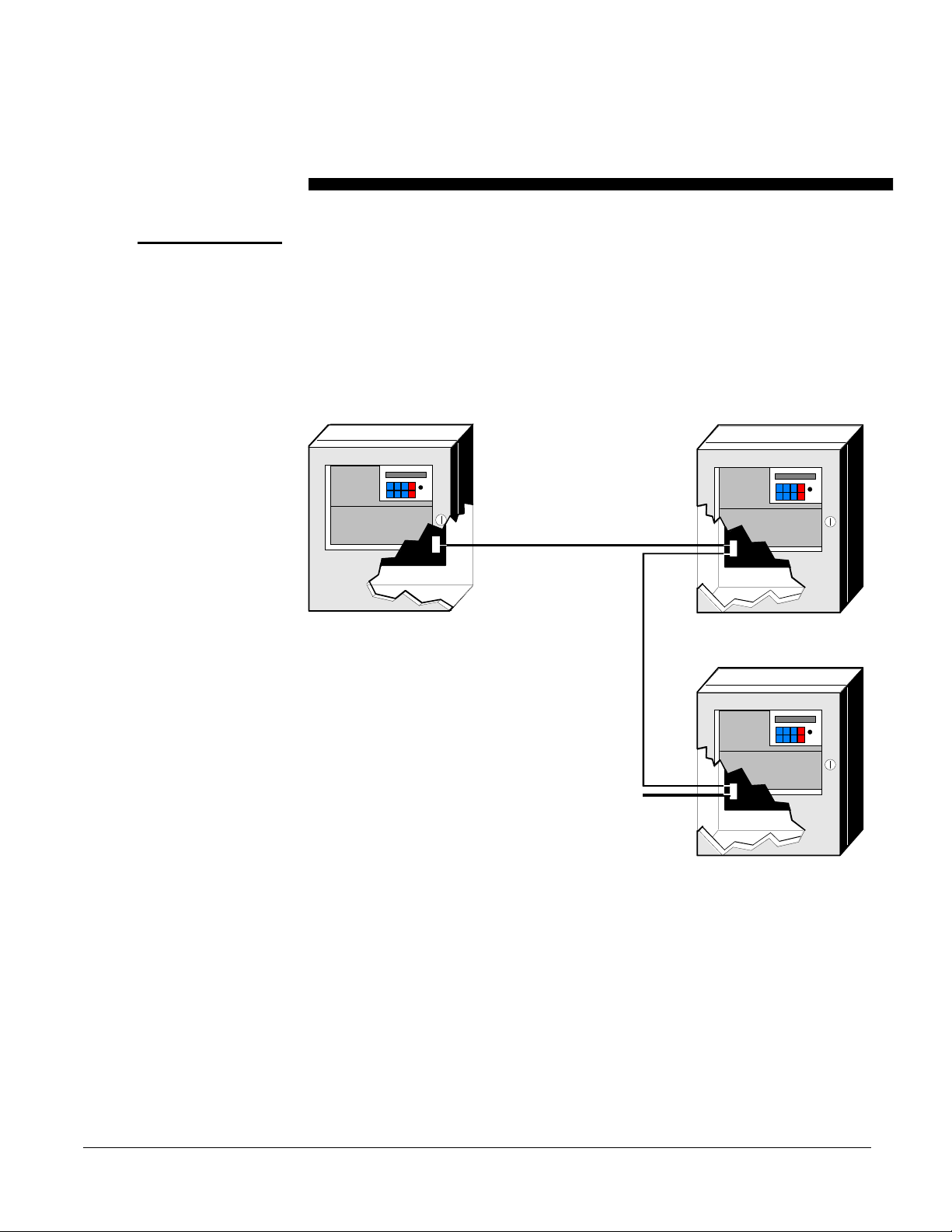
The NIB has two serial interfaces:
•To the central FACP, it communicates using one of the central FACP’s
signaling line circuits. The NIB-96 emulates a group of M500MJ
monitor modules and M500CJ control modules (up to 96), using the
monitor module series (LxMyy) addresses on the SLC.
•To the remote FACP, the NIB communicates using the RS-485
annunciator interface, and emulates one or two ACS annunciators (up
to 128 annunciator points, of which only 96 may be used).
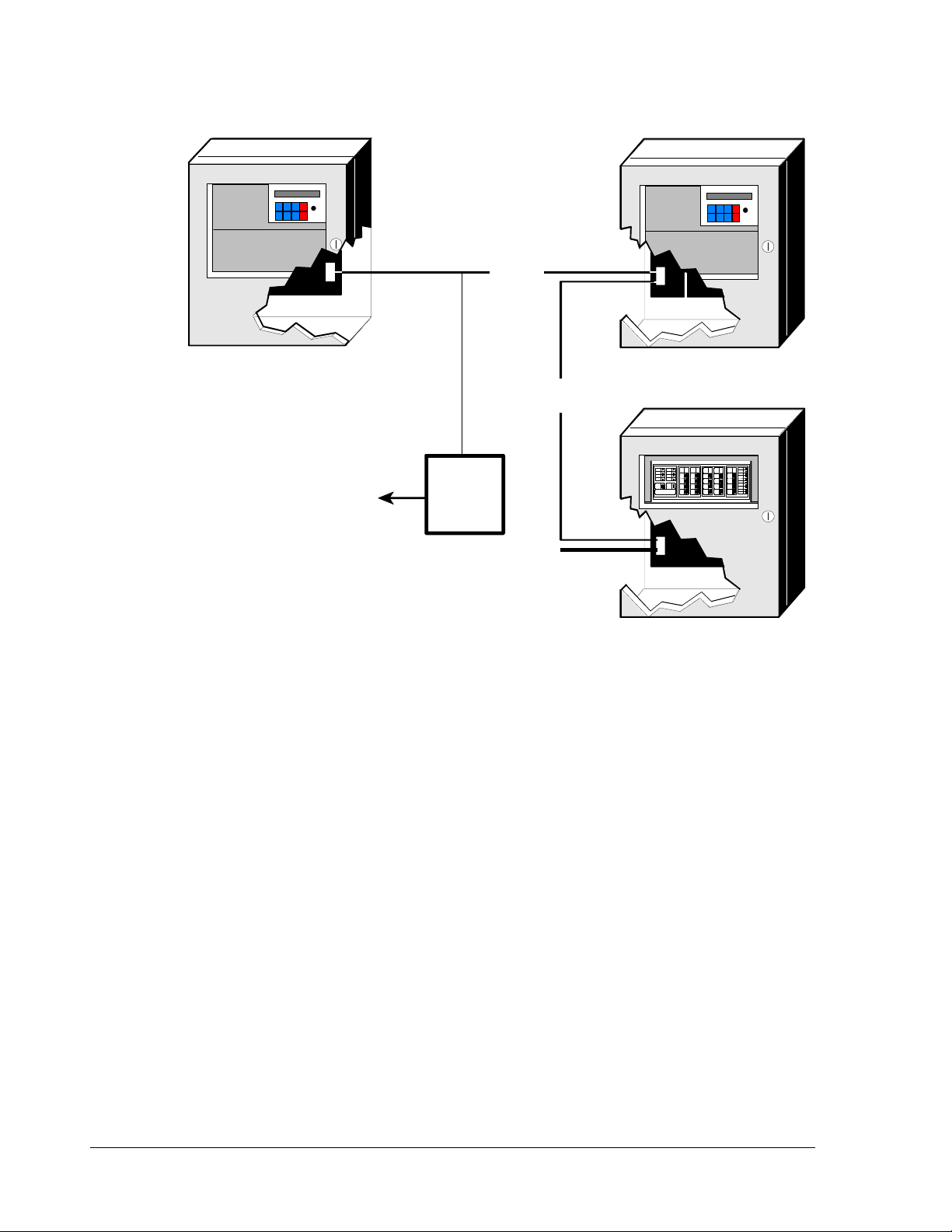
With the NIB at the maximum (96 point) configuration, each central
FACP SLC loop may only support one remote FACP. With the NIBs
configured for minimum size (8 points), 12 remote FACPs can be
supported by one SLC loop. Note that the central FACP can control
additional remote FACPs by installing more SLC loops (more LIB-200s).
The capacity of a 10 loop central station FACP is 960 total remote FACP
points, less four remote FACP CPU points for each NIB connected to the
central FACP.
Monitor module type ID addresses, not used by the NIB-96, can be used
for other purposes, such as M500MJs, M500CJs, etc. Analog detectors
can also be connected to the SLC serving NIB-96 boards.
Networked systems can concentrate large systems by grouping many
remote FACP points together in a software zone and only reporting alarms
and troubles for the software zone as a single NIB point. This technique
allows a very large system point capacity. However, if this zone grouping
of remote FACP addressable device points is employed, the user at the
central FACP does not have the exact location of the event from the
remote FACP. If the remote FACP is connected to a MetasysNetwork,
Metasys can provide the exact location as a secondary alarm reporting
device.
Since the NIB reports remote status as module points, not detectors,
analog information is not available at the central FACP. Analog
information is available only at the remote FACPs or through a Metasys
Network. Sensor Watch and Auto Test errors still reports to the central
FACP as a trouble. If the point is mapped to an annunciator on the remote
panel, then the point shows the trouble. If the point is not mapped to an
annunciator, then a general trouble is produced at the central panel.
The IFC-2020 network has full control-by-event capability. An alarm at
any point on any remote FACP may activate any point(s) on any other
remote FACP(s). The central FACP can be programmed with all
instructions to accomplish this. The central FACP keypad also provides
System Reset to all remote FACPs under its control. Alarm and trouble
acknowledgement is performed at the central FACP. The central FACP
has full Signal Silence capability over any remote FACP output points it
controls.