6 300359027_002_C2 - 05/2020 - © Leybold
Description
1 Description
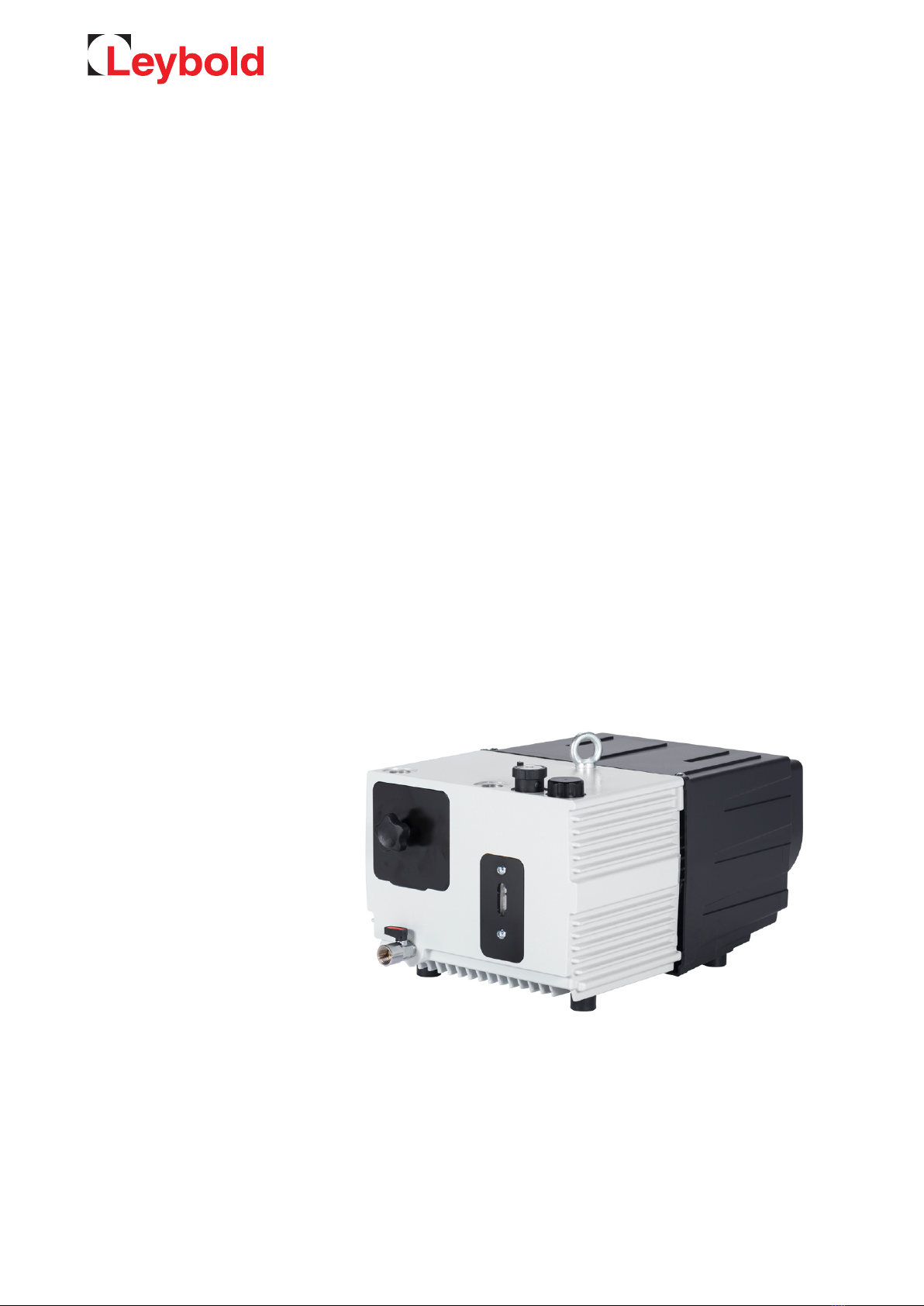
SOGEVAC pumps are designed for pumping of inert gases in the range of
rough vacuum, between atmospheric pressure and end pressure of the
pump, also in continuous duty.
1.1 Principle of operation
The SOGEVAC SV 16 D (I) and SV 25 D (I) are single stage, oil-sealed rotary
vane pumps.
The anti-suckback valve, gas ballast valve and an exhaust filter, oil return
circuit are integrated functional elements of the SOGEVAC. The pump is
driven by a motor directly integrated into the housing.
The rotor, mounted eccentrically in the pump cylinder, has three vanes which
divide the pump chamber into several compartments. The volume of each
changes periodically with the rotation of the rotor.
As the rotor rotates, the intake portion of the pumping chamber expands and
sucks in gas through the intake port. The gas passes through the dirt trap
and the open antisuckback valve and enters the pump chamber. As the rotor
rotates further, the vane separates part of the pump chamber from the intake
port. This part of the pump chamber is reduced, and the gas is compressed,
then the gas is expelled from the chamber via the exhaust valve.
Oil injected into the pump chamber serves to seal, lubricate and cool the
pump.
The oil entrained with the compressed gas is coarsely trapped in the bottom
part of the oil case. Then fine filtering occurs in the integrated exhaust filter
elements. The proportion of oil in the exhaust gas is thus reduced below the
visibility threshold (over 99 % entrapment rate).
The oil trapped in the exhaust filters is returned to the oil cycle at the anti-
suckback valve. The oil return is controlled by a float valve.
Oil from the oil reservoir is injected directly, so as over the end flange
bearings via bores in these end flanges in the pump.The oil flow is ensured
by the difference of pressures within the pump.
By opening the gas ballast valve, a dosed quantity or air - so-called “gas
ballast” - is admitted into the pump chamber. This gas ballast prevents
condensation (up to the vapor tolerance specified in the Technical Data)
when pumping condensable gases or vapors.
Unintentional venting of the vacuum chamber as well as oil suckback when
switching the pump off are prevented by the built-in antisuckback valve.
When the pump is switched off, the pump chamber is vented with gas from
the oil pump via a bore in the exhaust valve. Since a pressure in the inner
pump section is then higher than in the intake line, the anti-suckback valve
closes. The anti-suckback must be clean and in good condition for a tight
closing. The gas flowing into the pump chamber also prevents oil from
entering the chamber when the pump is idle.
The anti suck-back valve is not a safety valve. If oil back flowing is to be
avoided by all means, it is necessary to mount a separate safety valve on the
pump inlet.