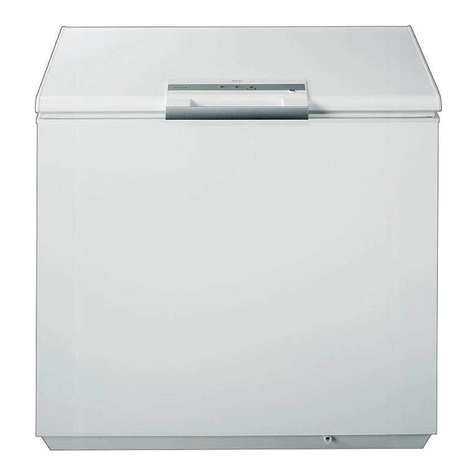
Lab companion FHG-150 User manual

Operation Manual
Laboratory Freezers
Models: FHG-, FMG-,FCG-150/300/650
Manual No.: E2301L002 Version: 1.1

ii
Table of Contents
1 Safety Advice............................................................................................................................................................. 1
1.1 Operation Manual......................................................................................................................................... 1
1.2 Danger/Caution/Notice Alerts ................................................................................................................. 1
1.3 Danger Alerts.................................................................................................................................................. 1
1.4 Caution Alerts ................................................................................................................................................. 3
2 Description................................................................................................................................................................. 4
2.1 Introduction..................................................................................................................................................... 4
2.2 Available Models........................................................................................................................................... 4
2.3 Key Features.................................................................................................................................................... 6
2.4 Construction.................................................................................................................................................... 8
3 Unpacking and Installtion................................................................................................................................10
3.1 Checking Shipment Damage and Unpacking ...............................................................................10
3.2 Checking the Contents of the Package...........................................................................................10
3.3 Preparations before Installation.............................................................................................................11
3.4 Moving and Leveling...............................................................................................................................12
3.5 Power Connection ....................................................................................................................................13
3.6 Operating Conditions..............................................................................................................................14
3.7 Required Checking before Operation ..............................................................................................14
4 Operation................................................................................................................................................................16
4.1 Control Panel..............................................................................................................................................16
4.2 VFD (Vacuum Fluorescent Display) ...................................................................................................17
4.3 Starting and Stopping the Operation ..............................................................................................18
4.4 Adjustment of Control Functions.......................................................................................................19
4.4.1 Temperature Setting....................................................................................................................19
4.4.2 Alarm Setting .................................................................................................................................20
4.4.3 Manual Defrost..............................................................................................................................21
4.4.4 Changing High and Low Temperature Deviations..........................................................22
4.4.5 Temperature Offsetting (Calibration)....................................................................................23
4.5 Safety Alarms..............................................................................................................................................24
4.5.1 Over-temperature and Under-temperature Alarms........................................................24
4.5.2 Open Door Alarms.......................................................................................................................25
4.5.3 Initial Cooling Alarm ...................................................................................................................25
5 Maintenace...............................................................................................................................................................26

iii
5.1 Cleaning........................................................................................................................................................26
5.2 Relocation ....................................................................................................................................................27
5.3 Storage..........................................................................................................................................................27
6 Troubleshooting.....................................................................................................................................................28
6.1 Power Troubles..........................................................................................................................................28
6.2 Malfunctions during Operation...........................................................................................................29
7 Accessories...............................................................................................................................................................31
8 Appendix...................................................................................................................................................................32
8.1 Technical Specifications..........................................................................................................................32
8.2 Equipment Disposal.................................................................................................................................33
8.3 Warranty and Disclaimer .......................................................................................................................33
8.4 After-sales Service and Customer Assistance ...............................................................................35
1
1Safety Advice
1.1 Operation Manual
This manual contains important safety and operation information. You must carefully read,
understand, and follow all the instructions in this manual prior to operating this unit. Keep
this manual in a safe place nearby for reference and make it easily available to all users.
1.2 Danger/Caution/Notice Alerts
This manual highlights Danger/Caution/Notice alerts to prevent injuries or property
damages and also to achieve optimum performance. Ensure to read the danger alerts and
caution alerts in 1.3 and 1.4 carefully before use.
These alerts are classified into three types in this manual depending on the importance and
the risk levels as described below:
Symbols
Meaning
Ignoring this danger alert can cause serious
injury or even fatal accident.
Ignoring this caution alert can cause injury
or property damage.
Ignoring this notice can cause operational
problems.
1.3 Danger Alerts
Ignoring the following warnings could cause serious injuries or even fatal accidents.

2
◆Check the required electrical requirements on the ID plate of this equipment before
use.
◆Connect this equipment to a dedicated power outlet nearby.
◆Make sure to connect this equipment only to properly grounded power outlets to
protect you and your instrument. Do not ground to gas pipes or water pipes.
◆Make sure to use the power cord supplied with this unit.
◆Never install or use this equipment in explosive or flammable atmospheres.
◆Never store flammable or hazardous substances near to this unit.
◆Never expose this equipment to any heat sources including direct sunlight.
◆Never allow water, organic solvents, dust, or corrosive gases to get inside the
equipment
◆Never put or insert any objects (especially if conductive or flammable) inside this unit.
◆If you observe a strange smoke, odor or noise from the equipment, unplug the power
cord immediately and turn off the main power switch. After the smoke or odor
disappears, contact your dealer or Jeio Tech if any repair is required.
◆Never disassemble, repair, or modify this equipment on your own. Doing so will void
your warranty and may result in injuries or product damages.
◆Never move this equipment while under operation.
◆Always wear proper protective gear (such as goggles, gloves, masks or an apron)
when using this unit.

3
1.4 Caution Alerts
Ignoring the following cautions could cause injuries or property damages.
◆Do not place heavy objects, including this equipment, on top of the power cord and
do not strip, scratch, bend, twist, pull, or heat the power cord. A damaged power cord
is a fire and electrical shock hazard.
◆Make sure to set up this equipment on a flat, stable, clean, non-slip, dry, and fireproof
surface inside a lab with proper safety measures.
◆Do not place any device which can be affected by the motor vibrations near this unit.
◆Do not touch the power outlet, power socket, or power cord with wet hands. And
make sure to connect the power cord directly and firmly to the power outlet and
power socket.
◆Beware that mechanical shock or vibration can damage this equipment and pay extra
attention while moving it. Damages caused by mechanical shock or vibration may
result in injury or fire.
◆Do not install this equipment near any device that generates high frequency noise
such as high frequency welding machines, high frequency sewing machines, or SCR
power controllers.
◆Before cleaning, make sure to unplug the power cord to avoid electric shock or fire.
◆Do not use chlorine bleach, ammonia-based cleaners, abrasives, ammonia, or metal
scouring pads. Wipe with a soft damped cloth or a sponge soaked in water or diluted
neutral detergent.
4
2Description
2.1 Introduction
Jeio Tech is introducing nine new models of laboratory freezers with exceptional features
described in 2.3 to provide optimal freezing environments for your various scientific and
clinical applications such as storage of reagents, pharmaceuticals, test samples, plasma, and
other critical laboratory materials.
All FHG, FMG, and FCG Series laboratory freezers are equipped with a high-efficiency low
temperature refrigeration compressor and a directed airflow system ideal for superior
temperature uniformity, temperature stability, and rapid thermal recovery after door
openings.
2.2 Available Models
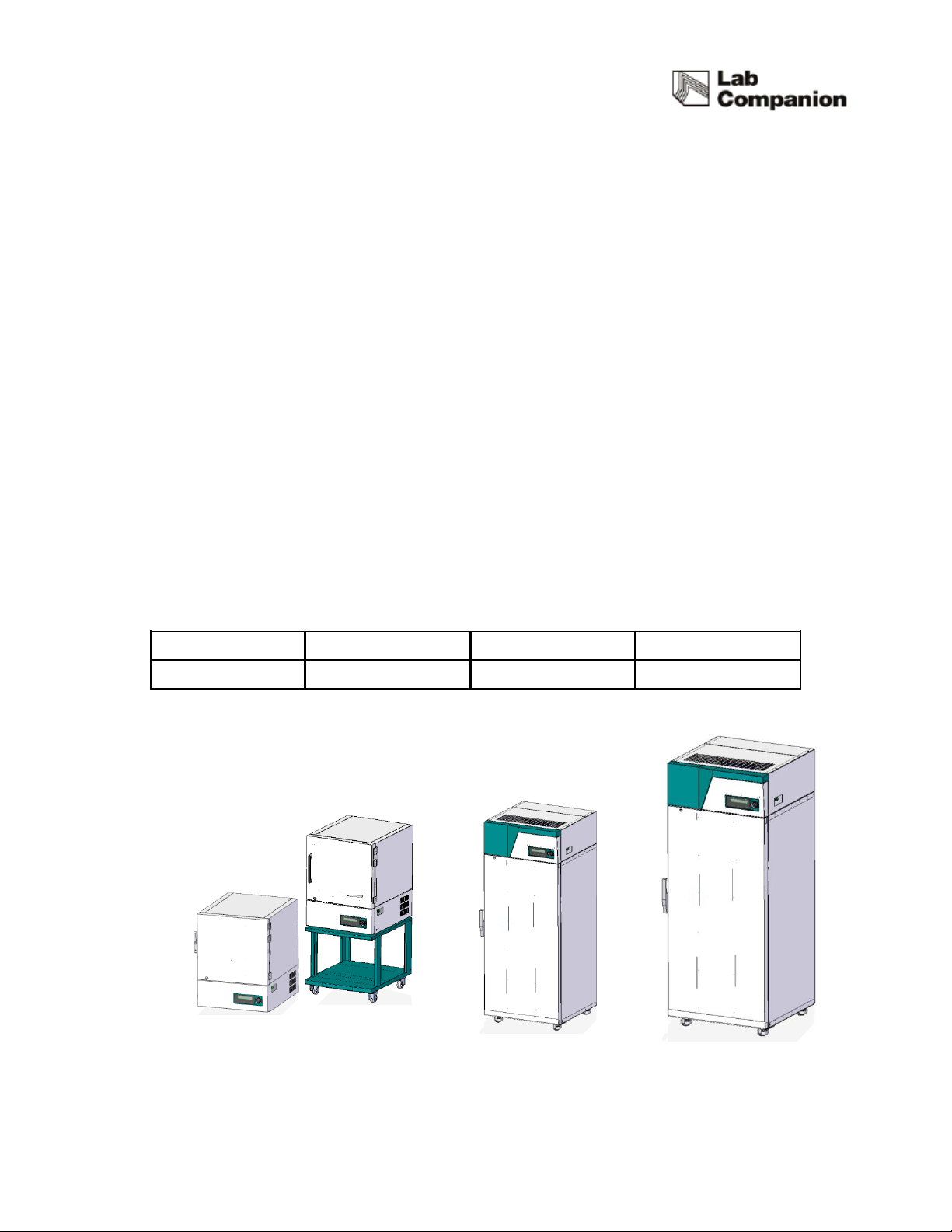
With respect to freezing temperature, three types of laboratory freezers are available:
FHG Series
FMG Series
FCG Series
Temperature Range
-15 to 0℃
-25 to -15℃
-35 to -25℃
FHG/FMG/FCG-150 FHG/FMG/FCG-300 FHG/FMG/FCG-650

5
And each Series offer three different chamber sizes to choose from:
FHG/FMG/FCG-150
FHG/FMG/FCG-300
FHG/FMG/FCG-650
Chamber Size
156L (5.5 ft3)
319L (11.2 ft3)
636L (22.4 ft3)
Dimension
(W x D x H)
763 x 871 x 975 mm
750 x 799 x 1610 mm
950 x 885 x 1980 mm
Therefore, depending on your specific requirements for the freezing temperature or the
chamber size, you can select the most suitable laboratory freezer among the following nine
models:
Temp. Range
Storage Capacity
-15 to 0℃
-24 to -15℃
-35to -25℃
156L
FHG -150
FMG-150
FCG-150
319L
FHG -300
FMG-300
FCG-300
636L
FHG -650
FMG-650
FCG-650

6
2.3 Key Features
Operational Features
⚫Vivid and colorful 5.5”VFD (vacuum fluorescent display), four touch-sensitive buttons,
and a jog dial for easy and intuitive operation
⚫Superior temperature uniformity, temperature stability, and rapid thermal recovery
ensured by the precise microprocessor PID control and the directed airflow system
⚫Optimal freezing conditions and minimized maintenance service provided by dual
advanced defrost sensors and the proprietary defrost controller for both automatic and
manual defrost
⚫Convenient temperature calibration (offsetting) function for accurate temperature control
⚫Significantly reduced temperature change during door openings by stopping fan
operation to prevent unnecessary internal air escape
⚫More precise control of the refrigeration compressor enabled by changing the
temperature deviation settings
⚫Minimized heat transfer between the inner chamber and the outer chamber by
connecting them with extrusion blow-molded parts made of PC and PVC
Constructional Features
⚫Transparent double-pane tempered glass door providing highly efficient insulation and
a clear view of the chamber interior
⚫Built-in wire heater on the walls to prevent external frost
⚫Outstanding insulation achieved by using polyurethane foam

7
⚫Magnetic door packing adopted for tight sealing and also for shock absorbing
⚫Easy leveling adjustment thanks to high-quality level casters (except FHG/FMG/FCG-150)
⚫Two units stackable for space saving (for FHG/FMG/FCG-150 only)
⚫Three types of recorders available as options (See Accessories)
Safety Features
⚫Activation of over-temperature and under-temperature alarms when preset temperature
limit is exceeded
⚫Activation of open door alarms when the door is open
⚫Door key lock for preventing unauthorized door openings
⚫Lock button function for preventing inadvertent or accidental operational changes
⚫Protection of the main body and the circuit board against overheating by automatic
power cutoff.
⚫Protection against over-current
This manual suits for next models
8
Table of contents