Kaelus iPA User manual

2020 | R99-0092RevC
This document contains information which is condential and the property of Kaelus, and which is not to be communicated to any person or
company, or used in any way without the previous authorization of Kaelus.
iPA DUAL BATTERY CHARGING
CRADLE OPERATING MANUAL

Operating Manual | Battery Cradle Operating Manual
2
Document Issue IR Description of Document Change Date Edited By Authorization
Rev A Creation of document by Eng 16/05/2013 MJH
Rev B Implementation of new Kaelus format 10/11/2017 SR LJ
Rev C Removal of Innite Branding 02/18/2020 RA

GENERAL CONDITIONS OF USE
!WARNING:ELECTRICAL HAZARD
Kaelus warranties all of its products¹ and services to be free from defects in material and workmanship for a period of
60 months from rst receipt into customer store. The limit of liability under this warranty shall be to repair or replace any
product, or part thereof, which proves to be defective after inspection by Kaelus provided that:
• The products are returned properly packed, carriage paid, to Kaelus or their agent or distributor, at the customer’s risk
within the warranty period
• An adequate description of fault conditions is included with the returned products
• The products have not been misused, mishandled, overloaded, modied or repaired in anyway, or used for any
purpose other than that for which they were designed
Kaelus shall be responsible for one way freight charges, from Brisbane to customer store destinations within Australia.
Repair and replacement work carried out by Kaelus on products manufactured by them, shall be warranted against the
same defects re-occurring in a period of 60 months, or until the expiration of the original product warranty, which ever
shall be the latter.
Kaelus shall not be liable for any direct or consequential injury, loss or damage incurred through the use, or the inability
to use, any Kaelus product. Kaelus reserves the right to make design changes to Kaelus product without incurring any
obligation to make the same changes to previously purchased products.
¹ This Warranty does not apply: (a) to consumable parts, such as batteries or protective coatings that are designed to
diminish over time, unless failure has occurred due to a defect in materials or workmanship; (b) to cosmetic damage,
including but not limited to scratches, dents and broken plastic on ports; (c) to damage caused by use with another
product; (d) to damage caused by accident, abuse, misuse, liquid contact, re, earthquake or other external cause; (e)
to damage caused by operating the Product outside published guidelines; (f) to damage caused by service (including
upgrades and expansions) performed by anyone who is not a representative of Kaelus or a Kaelus Authorized Service
Provider; (g) to a Kaelus Product that has been modied to alter functionality or capability without the written permission
of Kaelus; (h) to defects caused by normal wear and tear or otherwise due to the normal aging of the Kaelus Product, or
(i) if any serial number has been removed or defaced from the Kaelus Product.
WARRANTY
UNPACKING
Ensure that the total number of boxes of equipment is checked o against the delivery documentation. At the same
time inspect for any obvious transit damage. Should any damage be noted, notify the carrier immediately to le a transit
damage claim. Do not discard any packing material until notied by the carrier or Kaelus Carefully unpack all containers
and check that all items listed on the delivery documentation. Please notify Kaelus of any damaged or missing items from
the shipment.
This unit charges a 25.9V Li-ion battery pack. The unit performs this charging with a supplied smart charger. This charger
is supplied with a protective ground lead for AC supply safety reasons. To maintain this level of protection, the supply lead
must always be connected to the supply via a socket with an earth contact.
Do not remove covers as there are no user serviceable parts inside.
This equipment should be protected from the ingress of liquids and precipitation such as rain and snow. The equipment
must be operated indoors within the environmental conditions specied in Section 1.3. This equipment is not approved for
use in hazardous atmospheres or medical applications.
3
© 2017 Kaelus, Inc., All Rights Reserved.
Precautions

Table of Contents
1. 1. Operating Instructions 5
1.1 1.1 Introduction 5
1.2 1.2 Features 5
1.3 Specications 5
2. 2. Battery Charge Procedure 6
2.1 2.1 Connection Procedure 6
3. LED Panel And Fault Condition 7
3.1 Front Panel LED Display 7
4. General Detail 8
4.1 Getting The Best From The Test Equipment 8
4.2 Safety Features 8
4.3 Handling And Transport 8
4.4 Cleaning The Equipment 9
4.5 Troubleshooting Guide 9
4.6 Declaration Of EC Compliance 9
4.7 End of Life Statement 10
4.8 Contacts 10
List of Figures
Figure 1 R92-1979 Battery Charger 6
Figure 2 iPA Dual Battery Charging Cradle (R92-0443) (Battery Inserted) 6
Figure 3 Battery Charging Cradle Front Panel LED DIsplay 7
Operating Manual | Battery Cradle Operating Manual
4

1. 1. Operating Instructions
1.1 1.1 Introduction
This operating manual is for the IPA Dual Battery Charging Cradle (R92-0443).
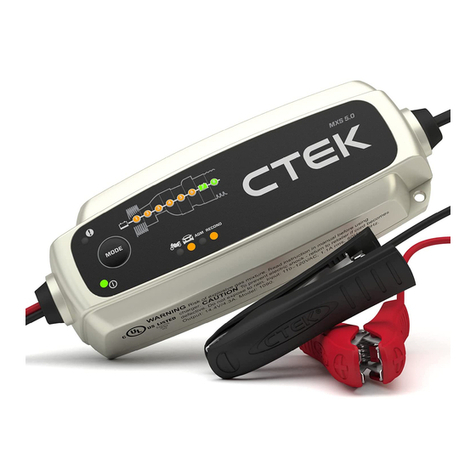
The charging cradle is available as an option and is intended to be used only with the Universal Smart Charger (R92-
1979) supplied with the IPA Portable Intermodulation Test Set analyser.
The charger can house two batteries simultaneously, one in each slot but can only charge one battery at a time. If there is
a battery in each slot the charger will automatically change to the next battery that needs charging.
1.2 1.2 Features
• The charger is designed only to charge authorized batteries with Li-ion chemistry.
• Other types of batteries may not charge or may damage the charger permanently.
• The charger must only be used in a well ventilated and dry area and not be exposed to extreme weather conditions.
• The charger is not suited for outdoor use.
• Care must be taken when charging batteries and they should not be left un-attended for long periods of time.
• Charging time is approximately 2.5 hours.
• It is recommended that the batteries are removed from the charger once fully charged
• Do not open or dismantle the charger.
• There are no service replacement parts inside the charger
• Return to authorized Kaelus service centre for repairs
1.3 Specications
Electrical
Battery Pack 25.9 VDC, 2500mAH Li-ion battery packs (removable)
Battery Charging Time 2.5 hrs min. to 80% charge per battery pack
Battery Charger Output: 29.4 VDC, 1.2 Amp
Mechanical
Dimensions 185 x 135 x 50mm
Weight < 2kg
Cooling Natural Convection
Environmental
Max. Operating Temperature 0°C to +45°C (Operating)
-10°C to +60°C (Storage)
Ingress Protection (IP) IP54.
Relative Humidity 5% to 95% RH non-condensing
Mechanical Shock 40G shock/vibrating rating
5
© 2017 Kaelus, Inc., All Rights Reserved.

2. 2. Battery Charge Procedure
2.1 2.1 Connection Procedure
1. Connect the battery charger (R92-1979) to the charging cradle.
2. Now connect the battery charger to the mains supply.
3. Both the green LED’s should ash alternately.
4. Insert a battery into any one slot. The LED corresponding to that slot will start to ash orange/YELLOW and the other
LED will go out. The Charging Cradle is now charging the battery.
5. When the battery is fully charged, the LED will go solid green. The battery is now ready for use.
6. When a battery is inserted into each slot the charger will charge the battery rst inserted and then automatically
proceed to charging the battery in the second slot once the rst battery is fully charged. If a fault condition is detected
the charger will automatically start charging the next battery.
Figure 1 R92-1979 Battery Charger
Figure 2 iPA Dual Battery Charging Cradle (R92-0443) (Battery Inserted)
Operating Manual | Battery Cradle Operating Manual
6

3. LED Panel And Fault Condition
3.1 Front Panel LED Display
Figure 3 Battery Charging Cradle Front Panel LED DIsplay
LED Indication Description
Both LED’s Flashing GREEN Charger ready to accept battery for charge
One LED ashing ORANGE/YELLOW Battery charging
One LED solid ORANGE/YELLOW Battery in Standby, waiting to charge
One LED solid GREEN Battery fully charged
Both LED’s ashing ORANGE/YELLOW Supply voltage to charger too low
Both LED’s ashing RED Supply voltage to charger too high
One LED ashing RED Battery over/under temperature
LED solid RED Battery fault detected
Both LED’s o No power to charger
Table 1 Condition of Front Panel LED’s
7
© 2017 Kaelus, Inc., All Rights Reserved.

4. General Detail
4.1 Getting The Best From The Test Equipment
There are a number of practices that will allow the best to be gained from the IM test system, especially for taking PIM
measurements.
DC Connector Care
• Take good care of the DC battery connectors on the Cradle.
• Care should be taken when mating a battery to the connector of the Battery Cradle. Ensure the mating surfaces line-
up correctly, and the connector couples smoothly. DO NOT force the battery into the Cradle.
• Ensure that the Battery pack and Cradle connectors are cleaned regularly as lack of cleanliness can cause
connection problems
General Tips and Caution
• To start charging, connect the R92-1979 Charger to the Charging Cradle and then connect the R92-1979 Charger to
the AC supply.
• When charging is complete be sure to remove the batteries from the Charging Cradle.
• When not charging, disconnect the charger from the AC supply.
4.2 Safety Features
There are several features to enhance the Charging Cradle’s safety and prevent damage to the instrument. It is important
that the operator is aware of these built-in features.
Auto-Charging Control
• The Charging current automatically turns o when the charge current drops below 200mA.
• If a second battery is inserted, the charger will automatically begin charging the next battery.
Fuses
• The R92-0443 iPA Battery Charging Cradle has a 2 Amp fuse on the internal DC bus to protect the internal circuitry.
• This fuse is not user-accessible or replaceable.
Battery Over-temperature shutdown
• When the battery temperature rises above 45 °C , the unit shows a battery over-temperature alarm (Red LED, see
Table 1) and will stop charging.
• Charging will automatically restart when the Battery temperature drops below 42 °C.
• For lower temperatures the Battery Cradle will stop charging when the Battery temperature reaches 0°C and will
automatically restart charging when the Battery temperature rises above 3°C.
•
4.3 Handling And Transport
The equipment is designed for rugged handling, but it remains a precision instrument and should be handled with care.
• Do ship the equipment in a padded external box where possible
• Airfreight is allowed as there are no dangerous items contained within the Charging Cradle (but battery packs should
be transported in accordance with Airline Company regulations).
• Transport via road freight is preferred to air freight due to care of handling
Operating Manual | Battery Cradle Operating Manual
8

4.4 Cleaning The Equipment
Before commencing any cleaning, switch o the equipment.
• We recommend that the exterior surface of the Cradle case is cleaned using a soft cloth moistened in water.
• Do not use aerosol or liquid solvent cleaners.
• To prevent damage to the LED display panel, care should be taken not to scratch the surface during use and also
when cleaning.
• To prevent the access of moisture and lint into the device, we recommend that the battery slot area should be cleaned
by wiping with a slightly damp, lint-free cloth gently over the surface.
4.5 Troubleshooting Guide
If the remedies indicated in the chart below do not solve the problem, consult the manufacturer for further instructions.
Power
No Power upon connecting R92-1979 Charger
• Check R92-1979 Charger DC and AC power cables.
• Check AC supply.
• If the above action does not x the problem the Charging Cradle and Charger should both be returned to a Kaelus/
Summitek approved service facility.
Operation
Cradle LED display showing a fault.
• Battery may be defective. Perform Charging test with another Battery pack.
• Charging Cradle may be defective. Perform Charging test with Battery pack in iPA.
• Consult Manufacturer.
4.6 Declaration Of EC Compliance
Hereby, Kaelus at 34 Corporate Drive, Cannon Hill QLD 4170, AUSTRALIA declares that the following products:
Part Number Model Number Description
R92-0443 R92-0443 iPA_Dual Battery Charging Cradle
bearing the “ ” marking rst axed in year 2013 is in compliance with the essential requirements of Directive
2004/108/EC (EMC Directive) and Directive 2006/95/EC (LVD Directive) if installed and operated in accordance with
manufacturer’s instructions.
These products are in conformity with the following European, harmonized and published standards at the date of this
declaration
9
© 2017 Kaelus, Inc., All Rights Reserved.

Refrenced EMC Standard Referenced Safety Standard
EN 61326-1:2006 EN 61010-1
EN 61326-2-1:2006
EN 55011 “Class A”
EN 61000-4-2
EN 61000-4-3
EN 61000-4-4
EN 61000-4-5
EN 61000-4-6
EN 61000-4-11
The design, development and manufacturing of Kaelus products is controlled by an ISO 9001:2008 certied Quality
Management System.
4.7 End of Life Statement
Equipment marked with the symbol below (Crossed Out Wheelie Bin) complies with the European Parliament and Council
Directive 2002/96/EC (the “WEEE Directive”) in the European Union.
Please contact your local Kaelus representative (see next section) at the end of the product’s useful life to arrange its
disposal in accordance with your local regulations.
4.8 Contacts
Kaelus has service center locations globally. Please visit http://www.kaelus.com/Contact-Us/Locations/ to nd the service
center nearest you.
When ringing, ask for IM tester support (technical or otherwise) & quote the relevant part numbers.
Operating Manual | Battery Cradle Operating Manual
10
Table of contents