GE JES1142WPC User manual

www.GEAppliances.ca
Microwave Oven
3540A4502P678 29-5680 11/09 ATS
JES1142WPC
JES1142BPC
Owner’s
Manual
Safety Instructions . . . .2–9
Operating Instructions
Care and
Cleaning . . . . . . . . .25, 26
Changing the
Power Level . . . . . . . . .14
Convenience
Features . . . . . . . . .19–21
Features of Your
Microwave Oven . . .10–13
Microwave Terms . . . . .24
Other Features . . . .22, 23
Time Features . . . .15–18
Troubleshooting
Tips . . . . . . . . . . . . .27, 28
Things That Are
Normal With Your
Microwave Oven . . . . .28
Consumer Support
Product
Registration . . . . . .29, 30
Warranty . . . . . . . . . . . .31
Write the model and serial
numbers here:
Model # ____________
Serial # ____________
Find these numbers on
a label inside the oven.

■Read and follow the specific
precautions in the
Precautions
to Avoid Possible Exposure to
Excessive Microwave Energy
section above.
■This appliance must be
grounded. Connect only
to a properly grounded outlet.
See the
Grounding Instructions
section on page 8.
■Install or locate this appliance
only in accordance with
the provided Installation
Instructions.
■Be certain to place the front
surface of the door three
inches (7.6 cm) or more back
from the countertop edge to
avoid accidental tipping of the
appliance in normal usage.
■
Do Not Attempt
to operate
this oven with the door open
since open-door operation
can result in harmful
exposure to microwave
energy. It is important not
to defeat or tamper with the
safety interlocks.
■
Do Not Place
any object
between the oven front
face and the door or allow
soil or cleaner residue to
accumulate on sealing
surfaces.
■
Do Not Operate
the oven if it
is damaged. It is particularly
important that the oven door
close properly and that there
is no damage to the:
door (bent),
hinges and latches
(broken or loosened),
door seals and sealing
surfaces.
■
The Oven Should Not
be
adjusted or repaired by
anyone except properly
qualified service personnel.
3
2
1
PRECAUTIONS TO AVOID POSSIBLE
EXPOSURE TO EXCESSIVE
MICROWAVE ENERGY
Safety InformationOperating InstructionsTroubleshooting TipsConsumer Support
IMPORTANT SAFETY INFORMATION.
READ ALL INSTRUCTIONS BEFORE USING.
2
For your safety, the information in this manual must be
followed to minimize the risk of fire or explosion, electric
shock, or to prevent property damage, personal injury, or
loss of life.
WARNING!
When using electrical appliances basic safety
precautions should be followed, including the following:
SAFETY PRECAUTIONS
3
Consumer SupportTroubleshooting TipsOperating InstructionsSafety Information
Use this appliance only for its intended purpose as described in this
Owner’s Manual.
■This microwave oven is not approved
or tested for marine use.
■Do not mount this appliance over
a sink.
■Do not mount the microwave oven
over or near any portion of a heating
or cooking appliance.
■Do not store anything directly on top
of the microwave oven surface when
the microwave oven is in operation.
■Do not operate this appliance if it has
a damaged power cord or plug, if it is
not working properly, or if it has been
damaged or dropped.
■Do not cover or block any openings
on the appliance.
■Use this appliance only for its
intended use as described in this
manual. Do not use corrosive
chemicals or vapors in this appliance.
This microwave oven is specifically
designed to heat, dry or cook food,
and is not intended for laboratory or
industrial use.
■Do not store this appliance outdoors.
Do not use this product near water—
for example, in a wet basement, near
a swimming pool, near a sink or in
similar locations.
■Keep power cord away from heated
surfaces.
■Do not immerse power cord or
plug in water.
■Do not let power cord hang over
edge of table or counter.
■To reduce the risk of fire in the
oven cavity:
—Do not overcook food. Carefully
attend appliance when paper, plastic
or other combustible materials are
placed inside the oven while cooking.
—Remove wire twist-ties and metal
handles from paper or plastic
containers before placing them
in the oven.
—Do not use the oven for storage
purposes. Do not leave paper
products, cooking utensils or food
in the oven when not in use.
—If materials inside the oven ignite,
keep the oven door closed, turn the
oven off and disconnect the power
cord, or shut off power at the fuse or
circuit breaker panel. If the door is
opened, the fire may spread.
■See door surface cleaning
instructions in the
Care and cleaning
of the microwave oven
section of
this manual.
■This appliance must only be serviced
by qualified service personnel. Contact
nearest authorized service facility for
examination, repair or adjustment.
■As with any appliance, close
supervision is necessary when
used by children.
www.GEAppliances.ca
Arcing is the microwave term
for sparks in the oven. Arcing is
caused by:
■Metal or foil touching the
side of the oven.
■Foil not molded to food
(upturned edges act like
antennas).
■Metal, such as twist-ties,
poultry pins, or gold-rimmed
dishes, in the microwave.
■Recycled paper towels
containing small metal pieces
being used in the microwave.
■Do not pop popcorn in your
microwave oven unless in a
special microwave popcorn
accessory or unless you use
popcorn labeled for use in
microwave ovens.
■Some products such as whole
eggs and sealed containers—
for example, closed jars—
are able to explode and
should not be heated in this
microwave oven. Such use
of the microwave oven could
result in injury.
■Do not boil eggs in a
microwave oven. Pressure
will build up inside egg yolk
and will cause it to burst,
possibly resulting in injury.
■Operating the microwave with
no food inside for more than
a minute or two may cause
damage to the oven and could
start a fire. It increases the
heat around the magnetron
and can shorten the life of
the oven.
■Foods with unbroken outer
“skin” such as potatoes, hot
dogs, sausages, tomatoes,
apples, chicken livers and
other giblets, and egg yolks
should be pierced to allow
steam to escape during
cooking.
FOODS
Safety InformationOperating InstructionsTroubleshooting TipsConsumer Support
4
WARNING!
If you see arcing, press the STOP/CLEAR pad and correct
the problem.
ARCING
IMPORTANT SAFETY INFORMATION.
READ ALL INSTRUCTIONS BEFORE USING.

Consumer SupportTroubleshooting TipsOperating InstructionsSafety Information
■
SUPERHEATED WATER
Liquids, such as water, coffee or
tea are able to be overheated
beyond the boiling point without
appearing to be boiling. Visible
bubbling or boiling when the
container is removed from the
microwave oven is not always
present. THIS COULD RESULT IN
VERY HOT LIQUIDS SUDDENLY
BOILING OVER WHEN THE
CONTAINER IS DISTURBED OR
A SPOON OR OTHER UTENSIL IS
INSERTED INTO THE LIQUID.
To reduce the risk of injury
to persons:
— Do not overheat the liquid.
— Stir the liquid both before
and halfway through
heating it.
— Do not use straight-sided
containers with narrow necks.
— After heating, allow the
container to stand in the
microwave oven for a short
time before removing the
container.
— Use extreme care when
inserting a spoon or other
utensil into the container.
■Avoid heating baby food in
glass jars, even with the lid off.
Make sure all infant food is
thoroughly cooked. Stir food
to distribute the heat evenly.
Be careful to prevent scalding
when warming formula. The
container may feel cooler
than the formula really is.
Always test the formula before
feeding the baby.
■Don’t defrost frozen
beverages in narrow-necked
bottles (especially carbonated
beverages). Even if the
container is opened, pressure
can build up. This can cause
the container to burst,
possibly resulting in injury.
■Hot foods and steam can
cause burns. Be careful when
opening any containers of hot
food, including popcorn bags,
cooking pouches and boxes.
To prevent possible injury,
direct steam away from hands
and face.
■Do not overcook potatoes.
They could dehydrate and
catch fire, causing damage
to your oven.
■Cook meat and poultry
thoroughly—meat to at least
an INTERNAL temperature of
160°F (70°C) and poultry to at
least an INTERNAL
temperature of 180°F (80°C).
Cooking to these temperatures
usually protects against
foodborne illness.
5
www.GEAppliances.ca

Make sure all cookware used in
your microwave oven is suitable
for microwaving. Most glass
casseroles, cooking dishes,
measuring cups, custard cups,
pottery or china dinnerware
which do not have metallic trim
or glaze with a metallic sheen
can be used. Some cookware is
labeled “suitable for
microwaving.”
■If you are not sure if a dish is
microwave-safe, use this test:
Place in the oven both the
dish you are testing and a
glass measuring cup filled with
1 cup (240 mL) of water—set
the measuring cup either in
or next to the dish. Microwave
1 minute at high. If the dish
heats, it should not be used
for microwaving.
If the dish remains cool and
only the water in the cup
heats, then the dish is
microwave-safe.
■If you use a meat
thermometer while cooking,
make sure it is safe for use in
microwave ovens.
■Do not use recycled paper
products. Recycled paper
towels, napkins and waxed
paper can contain metal flecks
which may cause arcing or
ignite. Paper products
containing nylon or nylon
filaments should be avoided,
as they may also ignite.
■Some styrofoam trays (like
those that meat is packaged
on) have a thin strip of metal
embedded in the bottom.
When microwaved, the metal
can burn the floor of the oven
or ignite a paper towel.
■Do not use the microwave to
dry newspapers.
■Not all plastic wrap is suitable
for use in microwave ovens.
Check the package for proper
use.
■Paper towels, waxed paper
and plastic wrap can be used
to cover dishes in order to
retain moisture and prevent
spattering. Be sure to vent
plastic wrap so steam can
escape.
■Cookware may become hot
because of heat transferred
from the heated food. Pot
holders may be needed to
handle the cookware.
MICROWAVE-SAFE COOKWARE
Safety InformationOperating InstructionsTroubleshooting TipsConsumer Support
6
WARNING!
IMPORTANT SAFETY INFORMATION.
READ ALL INSTRUCTIONS BEFORE USING.

7
Consumer SupportTroubleshooting TipsOperating InstructionsSafety Information
■“Boilable” cooking pouches
and tightly closed plastic bags
should be slit, pierced or
vented as directed by package.
If they are not, plastic could
burst during or immediately
after cooking, possibly
resulting in injury. Also,
plastic storage containers
should be at least partially
uncovered because they form
a tight seal. When cooking
with containers tightly covered
with plastic wrap, remove
covering carefully and direct
steam away from hands and
face.
■Use foil only as directed in
this guide. TV dinners may be
microwaved in foil trays less
than 3/4?(1.9 cm) high;
remove the top foil cover and
return the tray to the box.
When using foil in the
microwave oven, keep the foil
at least 1?(2.5 cm) away from
the sides of the oven.
■Plastic cookware—Plastic
cookware designed for
microwave cooking is very
useful, but should be used
carefully. Even microwave-safe
plastic may not be as tolerant
of overcooking conditions as
are glass or ceramic materials
and may soften or char if
subjected to short periods
of overcooking. In longer
exposures to overcooking,
the food and cookware
could ignite.
Follow these guidelines:
Use microwave-safe
plastics only and use
them in strict compliance
with the cookware
manufacturer’s
recommendations.
Do not microwave empty
containers.
Do not permit children
to use plastic cookware
without complete
supervision.
3
2
1
www.GEAppliances.ca

This appliance must be grounded. In the event of an electrical short
circuit, grounding reduces the risk of electric shock by providing an
escape wire for the electric current.
This appliance is equipped with a power cord having a grounding
wire with a grounding plug. The plug must be plugged into an outlet
that is properly installed and grounded.
Consult a qualified electrician or service technician if the grounding
instructions are not completely understood, or if doubt exists as to
whether the appliance is properly grounded.
If the outlet is a standard 2-prong wall outlet, it is your personal
responsibility and obligation to have it replaced with a properly
grounded 3-prong wall outlet.
Do not under any circumstances cut or remove the third (ground)
prong from the power cord.
We do not recommend using an extension cord with this appliance.
If the power cord is too short, have a qualified electrician or service
technician install an outlet near the appliance. (See
WARNING
—
EXTENSION CORDS
section.)
For best operation, plug this appliance into its own electrical
outlet to prevent flickering of lights, blowing of fuse or tripping
of circuit breaker.
GROUNDING INSTRUCTIONS
Safety InformationOperating InstructionsTroubleshooting TipsConsumer Support
8
Improper use of the grounding plug can result in a risk of
electric shock.
WARNING!
IMPORTANT SAFETY INFORMATION.
READ ALL INSTRUCTIONS BEFORE USING.
Consumer SupportTroubleshooting TipsOperating InstructionsSafety Information
ADAPTER PLUGS
9
www.GEAppliances.ca
Adapter Plugs are not permitted in
Canada.
WARNING!
A short power supply cord is provided to reduce the risks resulting
from becoming entangled in or tripping over a longer cord.
Extension cords may be used if you are careful in using them.
If an extension cord is used:
The marked electrical rating of the extension cord should be
at least as great as the electrical rating of the appliance;
The extension cord must be a grounding-type 3-wire cord and
it must be plugged into a 3-slot outlet;
The extension cord should be arranged so that it will not drape
over the countertop or tabletop where it can be pulled on by
children or tripped over unintentionally.
If you use an extension cord, the interior light may flicker and the
blower sound may vary when the microwave oven is on. Cooking
times may be longer too.
3
2
1
EXTENSION CORDS
READ AND FOLLOW THIS SAFETY
INFORMATION CAREFULLY.
SAVE THESE INSTRUCTIONS
10
Safety InformationOperating InstructionsTroubleshooting TipsConsumer Support
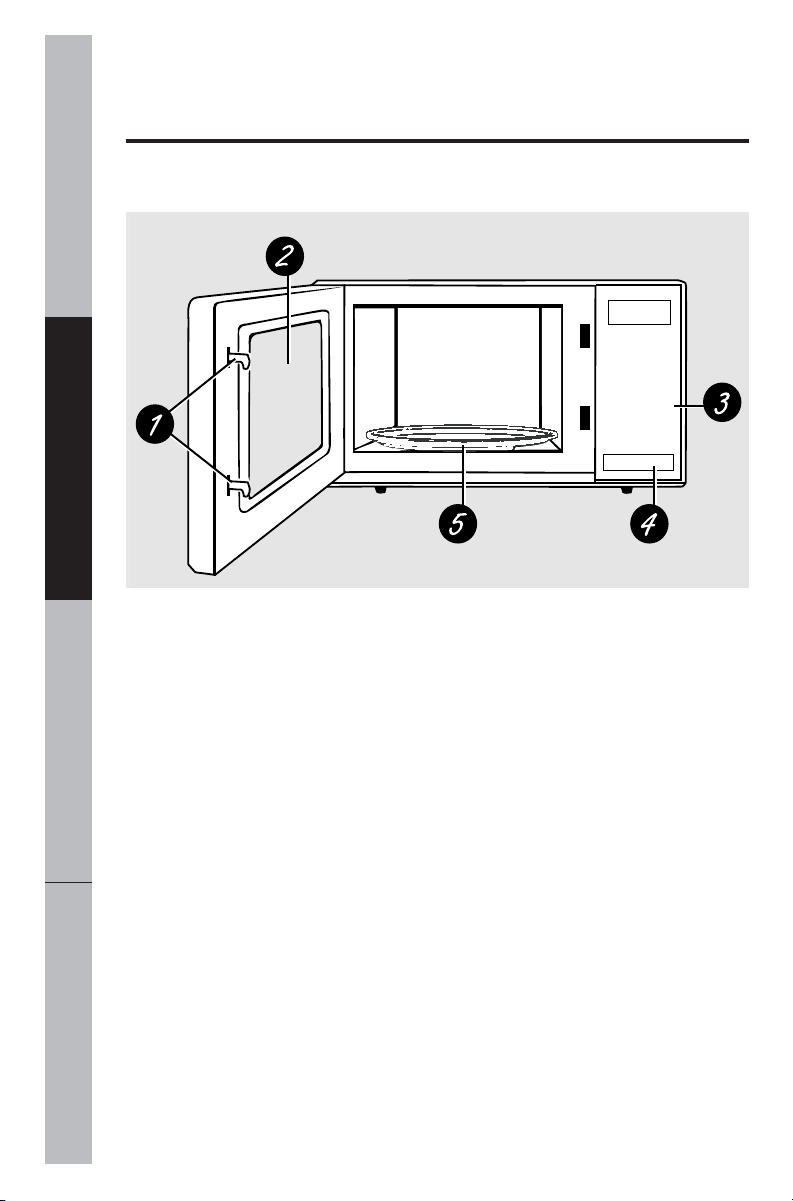
About the features of your microwave oven.
Throughout this manual, features and appearance may vary from your model.
This manual suits for next models
1
Table of contents
Other GE Microwave Oven manuals

GE
GE JE1550GY User manual

GE
GE Appliances JVM1730 User manual

GE
GE PEB2060SMSS - Countertop Microwave Oven Manual

GE
GE Monogram ZMC1095 Series User manual

GE
GE Monogram ZEM200BF User manual

GE
GE Profile Advantium PSA2200R User manual

GE
GE Spacemaker JNM1541 User manual

GE
GE JX82 User manual

GE
GE JEB1095 User manual

GE
GE Spacemaker JVM240 User manual

GE
GE Profile JE2160BF User manual

GE
GE GMOG28ECPSS User manual

GE
GE Spacemaker III JEM6G Installation instructions

GE
GE JES0737 User manual

GE
GE JES1358WL User manual

GE
GE JE2810A Use and care manual

GE
GE JE48 Installation instructions

GE
GE JVM1431 User manual

GE
GE Spacemaker JVM230 User manual

GE
GE Advantium PSB9100DF User manual