Fiber Defender FD50x User Manual 9
3.Installing the Sensing Fiber
The FD50x detects intruders by sensing small disturbances caused by vibrations induced within
a fiber optic sensor attached to the perimeter’s deployment medium. The optical sensor is a
thin strand of multimode optical fiber inside a specially designed fiber optic cable. The fiber
optic cable should be installed in such a way that, when intruders attempt to cross the
perimeter, they create slight vibrations that disturb the sensing fiber. These disturbances are
then detected by the FD50x APU, which generates the appropriate alarm(s).
Fiber Optic Sensing
When an optical fiber is exposed to vibration, the vibrations cause small asymmetric
changes in the fiber’s density. In turn, these changes in density cause measurable
changes in certain characteristics of laser radiation transmitted through the fiber. The
FD50x uses precision lasers and detectors, along with sophisticated digital signal
processing, to measure these changes in the laser radiation. The processor analyzes the
incoming signals in order to determine whether they are caused by intruders, or harmless
nuisances, such as vibrating equipment. To learn more about fiber optics and their use as
sensors, refer to the fiber optics application note titled: AN-SM-007 Fiber Optics.
Types of Installations
There are many different ways to use the FD50x system. The most common installation is
on chain-link fence. For fence-mounted applications, the fiber optic cable is installed inside
a flexible conduit, which is then secured to the fence using stainless steel wire ties. Other
applications involve installing the optical cable inside the channels of decorative metal
fence, or running the flexible conduit (with optical cable inside) along the tops of concrete
walls. For detailed information about the possible fenced perimeter installations, and site
design techniques, see the application note on site design and assessment titled: AN-ENS-
006 FD500 Series –Site Design and Assessment.
Connectors
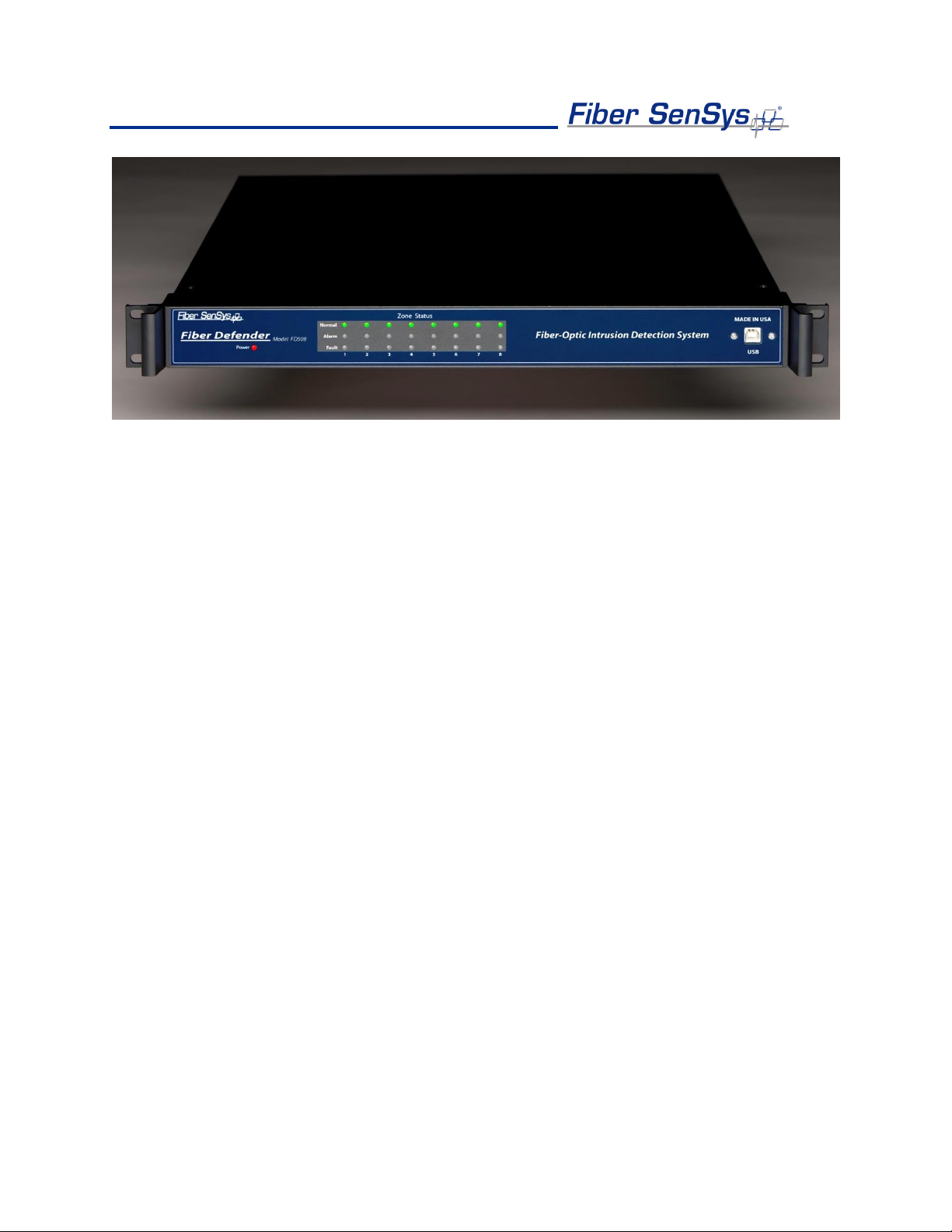
The FD50x is a time-domain-multiplexed system that can monitor multiple fully independent
zones (sensing fibers) using a single APU. The FD504 can monitor up to four zones and
the FD508 can monitor up to eight zones. To maintain a high signal-to-noise ratio, it is
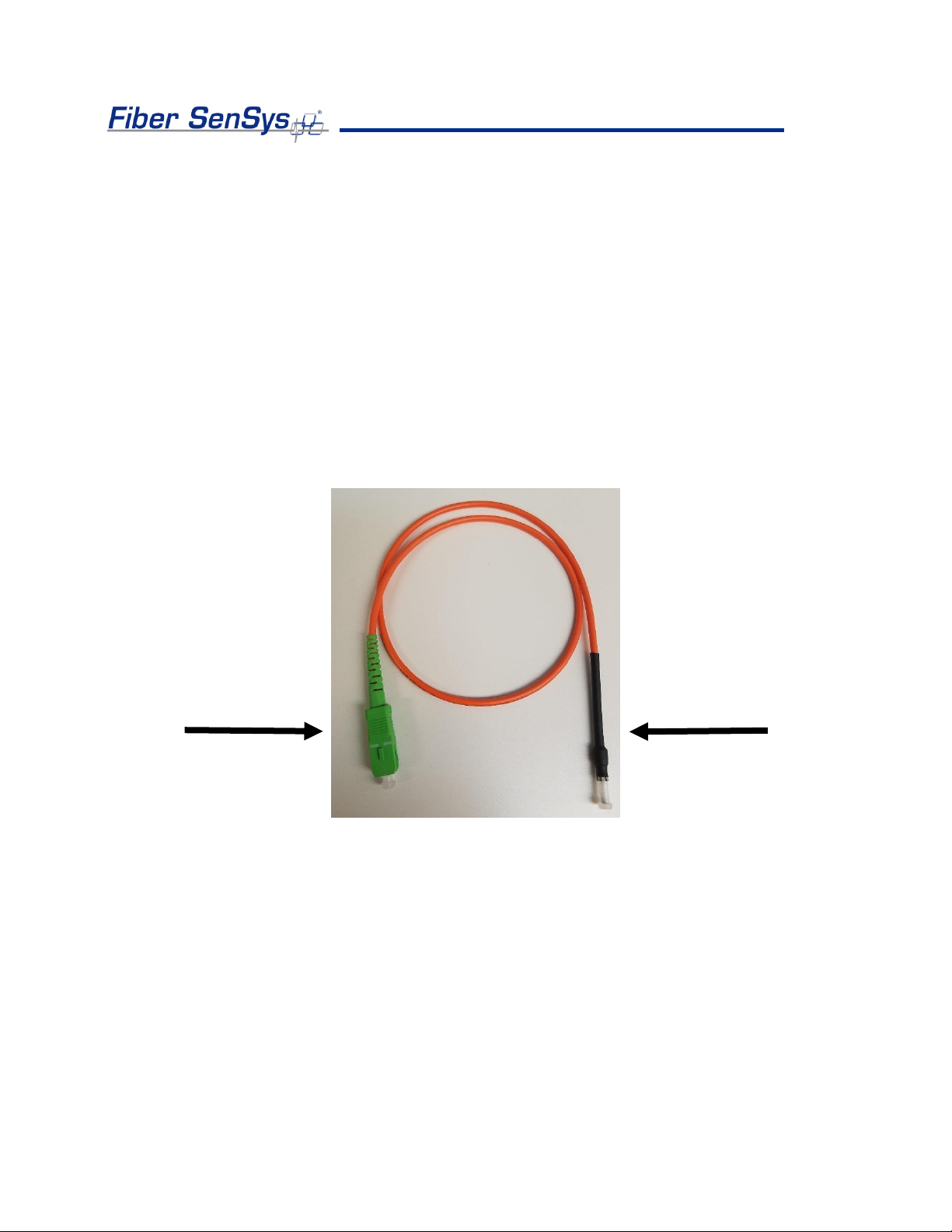
important that all optical connections in the system be made with either fusion splices or
Angled Physical Contact (APC) fiber optic connectors. Physical Contact (PC) and Ultra
Physical Contact (UPC) connectors should not be used. For more information about fiber
optic connectors, refer to the fiber optics application note: AN-SM-007 Fiber Optics.