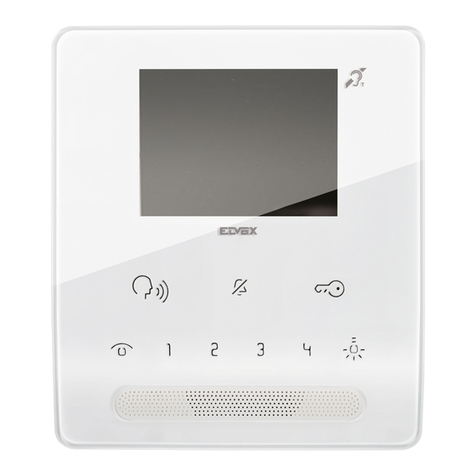
ControlFreq K200-3G User manual

K200-3G
3G GSM INTERCOM FOR UP TO 200 WAY
COMPLETE MANUAL

Contents TOC \t "Naslov 1, 1,Naslov 2, 2"
1. FOR YOUR SAFETY PAGEREF _TOC \H 5
2. INTRODUCTION PAGEREF _TOC1 \H 6
3. FEATURES AND APPLICATIONS PAGEREF _TOC2 \H 7
4. START UP PAGEREF _TOC3 \H 8
5. LED DISPLAY PAGEREF _TOC4 \H 9
6. CLEAR ALL PROGRAMMED DATA FROM K200 PAGEREF _TOC5 \H 10
7. CONNECTING DIAGRAM PAGEREF _TOC6 \H 11
8. PROGRAMMING K200 PAGEREF _TOC7 \H 12
9. THE K200 PARAMETERS PAGEREF _TOC8 \H 13
1.1. ALARM SUPPORT PAGEREF _TOC9 \H 13
1.2. OUTPUT MANAGEMENT PAGEREF _TOC10 \H 17
1.3. SECURITY LEVEL - SL PAGEREF _TOC11 \H 19
1.4. PREPAID CARD CREDIT AND VALIDITY INFORMATION PAGEREF _TOC12 \H 20
1.5. SET-UP PARAMETERS PAGEREF _TOC13 \H 22
1.6. SMS MESSAGES EDITOR PAGEREF _TOC14 \H 25
1.7. INTERCOM PAGEREF _TOC15 \H 26
1.8. ADDITIONAL CALL / TRADE BUTTON PAGEREF _TOC16 \H 28
1.9. DIRECT ACCESS BY ENTERING PIN CODE PAGEREF _TOC17 \H 30
1.10. DIRECT ACCESS BY ENTERING TEMPORARY ACCESS CODES – SPIN - VIA ILLUMINATED KEYPAD
PAGEREF _TOC18 \H 31
1.11. CALLER ID RECOGNITION (CLIP), CALLER-IN FUNCTION PAGEREF _TOC19 \H 32
1.12. EVENT LOGGING PAGEREF _TOC20 \H 34
1.13. SPECIAL SMS COMMANDS PAGEREF _TOC21 \H 35
10. PRINT-OUT OF THE PARAMETERS PAGEREF _TOC22 \H 37
1.1. RECEIVE ALL PARAMETERS (PALL) PAGEREF _TOC23 \H 37
1.2. CHECK SW REVISION (PSW) PAGEREF _TOC24 \H 37
1.3. CHECK SIGNAL QUALITY (PSQ) PAGEREF _TOC25 \H 37
1.4. RECEIVE TELEPHONE NUMBERS (PTN) PAGEREF _TOC26 \H 37
1.5. RECEIVE LINKS (PLN) PAGEREF _TOC27 \H 37
1.6. RECEIVE INPUT PARAMETERS (PIN) PAGEREF _TOC28 \H 37
1.7. RECEIVE INPUT FILTER VALUE (PID) PAGEREF _TOC29 \H 37
1.8. RECEIVE OUTPUT FILTER VALUE (POD) PAGEREF _TOC30 \H 37
1.9. RECEIVE DELAY BEFORE DIAL VALUE (PDD) PAGEREF _TOC31 \H 37
1.10. RECEIVE ACCESS TELEPHONE NUMBERS (PSL) PAGEREF _TOC32 \H 38
1.11. RECEIVE OUTPUT PARAMETERS (POS) PAGEREF _TOC33 \H 38
1.12. RECEIVE ALL PROGRAMMED SMS MESSAGES (P#) PAGEREF _TOC34 \H 38
1.13. RECEIVE SET UP PARAMETERS VALUE (PPA) PAGEREF _TOC35 \H 38
1.14. RECEIVE CREDIT PARS PARAMETERS (PCREF) PAGEREF _TOC36 \H 38
1.15. RECEIVE ALL CLIP PARAMETERS (PCLP) PAGEREF _TOC37 \H 38
1.16. RECEIVE INTERCOM CALL GROUPS PARAMATERS PAGEREF _TOC38 \H 38
1.17. RECEIVE TRADE BUTTON PARAMETERS PAGEREF _TOC39 \H 39

Page PAGE 48

1.18. RECEIVE PIN ACCESS CODES (PPIN) PAGEREF _TOC40 \H 39
1.19. RECEIVE SPIN ACCESS CODES PARAMETERS (PSPIN) PAGEREF _TOC41 \H 39
1.20. STATE OF THE CREDIT FOR THE PREPAID CARD PAGEREF _TOC42 \H 39
1.21. STATE OF THE OUTPUTS (PORC) PAGEREF _TOC43 \H 40
1.22. MANUAL GSM MODULE RETARD (MRES) PAGEREF _TOC44 \H 40
1.23. RECEIVE STATUS OF INPUTS (INS) PAGEREF _TOC45 \H 40
1.24. RECEIVE K200 LOG PAGEREF _TOC46 \H 40
11. CHANGING PARAMETERS USING THE SMS COMMANDS PAGEREF _TOC47 \H 41
12. DEFAULT SETTINGS ON K200 PAGEREF _TOC48 \H 42
13. PARAMETERS PRINT-OUT COMMANDS PAGEREF _TOC49 \H 45
Page PAGE 48

Figures
Figure 1: K200 Connection Diagram……………….………………………………………………..…11
Figure 2: Input Connection diagram. 13
Figure 3: Output Connection diagram 17
Tables
Table 1: IN, ID and DD parameters 14
Table 2: IN, ID, DD parameters example 14
Table 3: Remote alarm reporting parameters 15
Table 4: Remote alarm reporting example 16
Table 5: DTMF control example 16
Table 6: Output management parameters 18
Table 7: Output management parameters example 18
Table 8: SL parameter 19
Table 9: SL parameter example 19
Table 10: Prepaid card validity parameters 21
Table 11: Prepaid card validity parameters example 21
Table 12: Set-up parameters. 24
Table 13: Set-up parameters example. 24
Table 14: Message parameters. 25
Table 15: Message parameters example. 25
Table 16: Intercom parameters. 26
Table 17: Intercom parameters example. 27
Table 18: Trade button parameters. 28
Table 19: Trade button example. 28
Table 20: Entering PIN code parameters. 29
Table 21: Entering PIN code example. 29
Table 22: Entering SPIN access code parameters 30
Table 23: Entering SPIN access codes example 30
Table 24: CLIP parameters. 31
Table 25: CLIP parameters example. 32
Table 26: LOG parameters. 33
Table 27: LOG parameters example. 33
Table 28: SMS commands. 34
Table 29: SMS commands example. 34
Table 30: SOLO-KP default settings. 41
Table 31: SOLO-KP parameters print out commands. 42
Page PAGE 48

1. FOR YOUR SAFETY
Read these simple guidelines. Not following them may be dangerous or illegal. Read the
complete user guide for further information.
SWITCH ON SAFELY
Do not switch the unit on when use of wireless phone is prohibited or when it may cause
interference or danger.
INTERFERENCE
All wireless phones and units may be susceptible to interference, which could affect
performance.
SWITCH OFF IN HOSPITALS
Follow any restrictions. Switch the unit off near medical equipment.
SWITCH OFF IN AIRCRAFT
Follow any restrictions. Wireless devices can cause interference in aircraft.
SWITCH OFF WHEN REFUELING
Do not use the unit at a refueling point. Do not use near fuel or chemicals.
SWITCH OFF NEAR BLASTING
Follow any restrictions. Do not use the unit where blasting is in progress.
USE SENSIBLY
Use only in the normal position as explained in the product documentation. Do not touch
the antenna unnecessarily.
Page PAGE 48

2. INTRODUCTION
K200 is a simple GSM intercom communication system for multi apartments, that is
designed to ensure low-cost, reliable and single box solution for intercom application. It is
designed for unlimited range, wire free GSM intercom and CLIP support.
In addition K200 supports alarm detection, stay-alive messages, credit warning (PAYG:
supported on VF and O2 UK).
Page PAGE 48

3. FEATURES AND APPLICATIONS
Features:
⇒Built-in 4 band (2G) or 5 band (3G) GSM module
⇒Keypad call support (up-to 200 apartments)
⇒1 direct call / trade button
⇒Keypad Access entry support (by 4 digit PIN codes –up to 2000 codes are possible)
⇒Up to 100 temporary SPIN access codes
⇒2 alarm inputs (trade, press to exit, door open)
⇒2 relay outputs
⇒Up to 500 telephone numbers for CLIP support (400 + 100)
⇒Programming by USB cable with PC
⇒Programming by SMS
⇒Programming by Web server
⇒Anti-tampering input
Page PAGE 48

4. START UP
IMPORTANT
USE A MICRO SIM CARD (the middle size)
⇒Insert SIM card to be used for K200 in your personal mobile phone.
IMPORTANT
ERASE THE PIN CODE!
⇒Insert SIM card in K200 device. The unit must be switched OFF when you insert
the SIM!
⇒Connect inputs and outputs to K200.
⇒Connect the antenna to antenna connector.
⇒Connect power cable to K200 device
⇒Connect device to source power supply voltage.
⇒Wait until LED3 display is turned ON (Yellow) and LED1 (Blue) starts flashing. This
is set in around 30 –45 seconds.
⇒K200 unit is now ready to operate.
IMPORTANT
Before sending any SMS commands to K200, the device must be in
normal operation mode!
NOTE
K200 device will “beep”in 15s interval until the device is not in normal
operation.
Page PAGE 48

5. LED DISPLAY
BLUE LED (LED1)
- Indicates the level of the GSM signal from 1 to 5 LED flashes (1 is weak signal, 5 is
excellent signal)
RED LED (LED2)
- When LED 2 is ON the unit has a problem with a GSM network connection or the
GSM part of the unit is out of order. In this case immediately call the service!
YELLOW LED (LED3)
- Short flashing indicates that the GSM module is ON, but it is not yet connected on
the GSM network. After connection, Yellow LED is flashing with short pulse ON and
a long pulse OFF.
Page PAGE 48

6. CLEAR ALL PROGRAMMED DATA FROM K200
This is highly recommended when a SIM card you are going to use for the K200 is not
new and it already has some data stored in the phone book memory.
By sending this SMS to K200 all programmed parameters and numbers are cleared:
;SDCLR;
After sending SMS you should wait at least 30 second for the command to be executed!
NOTE
By sending this command to the K200 all programmed data are erased from the SIM
card and from the memory inside the K200 device!
Page PAGE 48
Table of contents
Other ControlFreq Intercom System manuals