
Alcohawk AlcoHawk Slim User manual
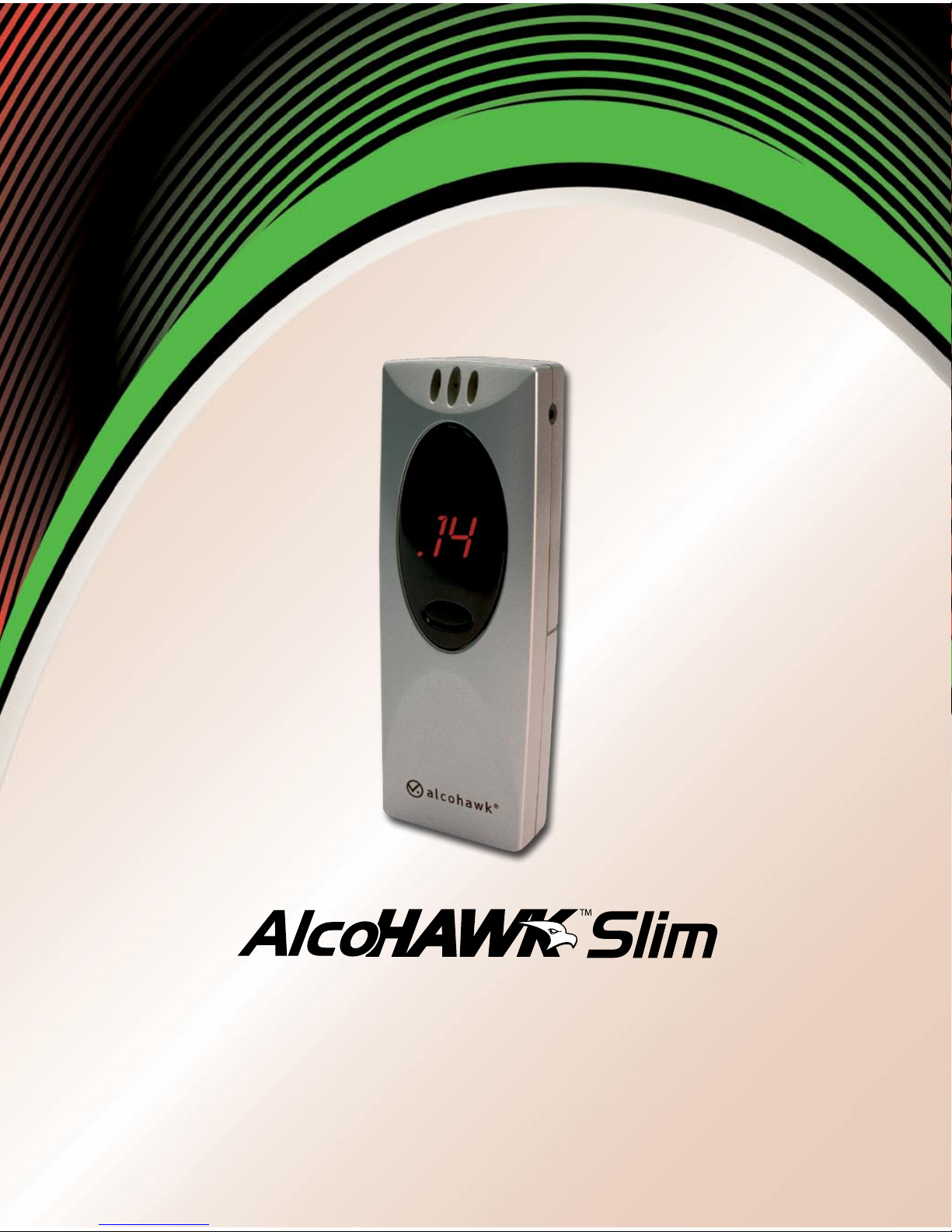
Owner’s Manual
©2006 Q3 Innovations, LLC


TABLE OF CONTENTS
INTRODUCTION 1
Overview of the AlcoHAWK® Slim 1
Alcohol Testing Theory 1
Description of Testing System 2
Dose-Specific Effects of Alcohol Intoxication 2
Uses of Breath Alcohol Screening Devices 4
PREPARATION 4
Installing the Battery 4
Opening the Mouthpiece 5
COMPONENTS DIAGRAM 6
OPERATION 6
Operating Instructions 6
Error Messages 8
Understanding the Results 8
Precautions 9
SPECIFICATIONS 10
VERIFICATION AND CALIBRATION 11
Overview 11
Procedure 11
WARRANTY 11
DISCLAIMER 14

INTRODUCTION
Overview of the AlcoHAWK® Slim
The AlcoHAWK® Slim is a breath alcohol tester designed to test for the
presence of alcohol in the blood. This device provides a digital reading
of an individual’s approximate blood alcohol concentration (BAC) in
seconds. The AlcoHAWK® Slim is powered by two AA batteries that
generally last between 200-300 tests.
To fully utilize this device to its potential, we recommend reading this
entire manual. Enjoy your AlcoHAWK® and please do not drink and
drive!
Alcohol Testing Theory
Ethyl alcohol is detectable in the breath because it is absorbed from
the mouth, throat, stomach and intestines into the bloodstream. When
blood flows through the lungs, some of the alcohol passes across the
membranes of tiny lung air sacs (alveoli) into the air. The concentration
of the alcohol in the alveolar air is proportional to the alcohol in the
blood. As the alcohol in the alveolar air is exhaled, it can be screened
by a breath alcohol testing device. Rather than drawing a subject’s
blood to test for alcohol level, a subject’s breath can be tested using a
breath alcohol testing device. Because breath alcohol concentration
is proportional to blood alcohol concentration (BAC), BAC can be
calculated by measuring alcohol content on the breath. The ratio
of breath alcohol to blood alcohol is 2,100:1. This means that 2100
milliliters of alveolar air will contain the same amount of alcohol as
1 millimeter of blood. This concept is well established by Henry’s
Law, which states that the concentration of a volatile substance in
the air above a fluid is proportional to the concentration of the volatile
substance in the fluid.
1

When performing a breath alcohol test, it is necessary to analyze an
alveolar or deep lung air sample. If the test sample is not based on a
deep lung sample, the sample analyzed could be diluted with breath of
lower alcohol concentration from the upper respiratory tract. This would
result in a lower than optimum test result. As a result, breath alcohol
testers listed on the Department of Transportation (DOT), National
Highway Traffic Safety Administration’s (NHTSA) Conforming Products
List of Screening Devices To Measure Alcohol in Bodily Fluids, typically
have protocols which require the subject to deliver at least 1.5 liters, or
continuous blowing into the unit for least five (5) seconds.
1Federal Register: May 4, 2001 (Volume 66, Number 87)
Description Of Testing System
This device contains a sensor chip designed to test for the presence of
alcohol. A thick film heater is printed on the reverse of the chip placed
in the plastic housing. The metal oxide material is heated to a specific
temperature. The resistance of sensing material changes rapidly
according to gas concentration changes, thereby enabling the reading
of alcohol concentration by resistance measurement. This alcohol
concentration is directly related (as explained in the above paragraph)
to the concentration of alcohol in the blood. Therefore, this device can
give a reading that reflects an estimate of the concentration of alcohol in
the blood.
Dose-Specific Effects Of Alcohol Intoxication
The effects of alcohol intoxication are greatly influenced by individual
variations among users, as well as other factors such as altitude and
air temperature. The following are general dose-specifics effects of
alcohol, although some users may become intoxicated at a much lower
BAC than shown below. Because a safe reading on a breath alcohol
screener does not mean that a driver’s reaction times can respond to
any emergency encountered, do not drink alcohol and drive.
2

Some states prohibit driving with a .08% BAC or above reading, and
in many states, individuals can be prosecuted for driving under the
influence at any level.
Some states also prohibit driving commercial vehicles or any vessel
with .04% or more. There is no safe way to drive under the influence of
alcohol. Even one drink can make you unsafe.
BAC Dose-Specific Effects2
0.02-0.03%3 Generally no loss of coordination, slight euphoria or loss of shyness.
Depressant effects are not apparent.
0.04-0.06% General feeling of well-being, relaxation, lower inhibitions, sensation
of warmth. Euphoria. Some minor impairment of reasoning and
memory, lowering of caution. Driving skills may be impaired at this
level of intoxication.
0.07-0.09% Slight impairment of balance, speech, vision, reaction time, and
hearing. Euphoria. Judgment and self-control are reduced, and
caution, reason and memory are impaired. Driving skills are always
impaired at this level of intoxication.
0.10-0.125% Significant impairment of motor coordination and loss of good
judgment. Speech may be slurred; balance, vision, reaction time and
hearing will be impaired. Euphoria.
0.13-0.15% Gross motor impairment and lack of physical control. Blurred
vision and major loss of balance. Euphoria is reduced and dysphoria
is beginning to appear.
0.16-0.20% Dysphoria (anxiety, restlessness) predominates, nausea may appear.
The drinker has the appearance of a “sloppy drunk.”
0.25%-0.29% Needs assistance in walking; total mental confusion. Dysphoria with
nausea and some vomiting.
0.30%-0.39% Loss of consciousness.
0.40% + Onset of coma, possible death due to respiratory arrest.
2 Bailey, William J., Drug Use in American Society, 3rd ed., Minneapolis: Burgess, 1993.
3 Some individuals may experience impairment at BAC levels of .03% or even lower.
3
Uses Of Breath Alcohol Screening Devices
Breath alcohol screeners are used in a wide variety of applications.
For example, law enforcement officials use breath alcohol screeners
on the roadside to determine if a subject should be tested on an
evidential alcohol test (a test given to determine an exact blood alcohol
concentration). In addition, breath alcohol screeners are used in a wide
range of professions and industries to screen for the presence of alcohol
before an individual performs certain job functions. Since the presence
of alcohol in a person’s body can impair numerous activities of an
individual, a simple breath alcohol screening device that can test for the
presence of alcohol in a individual’s system can be of great value.
PREPARATION
Installing The Battery
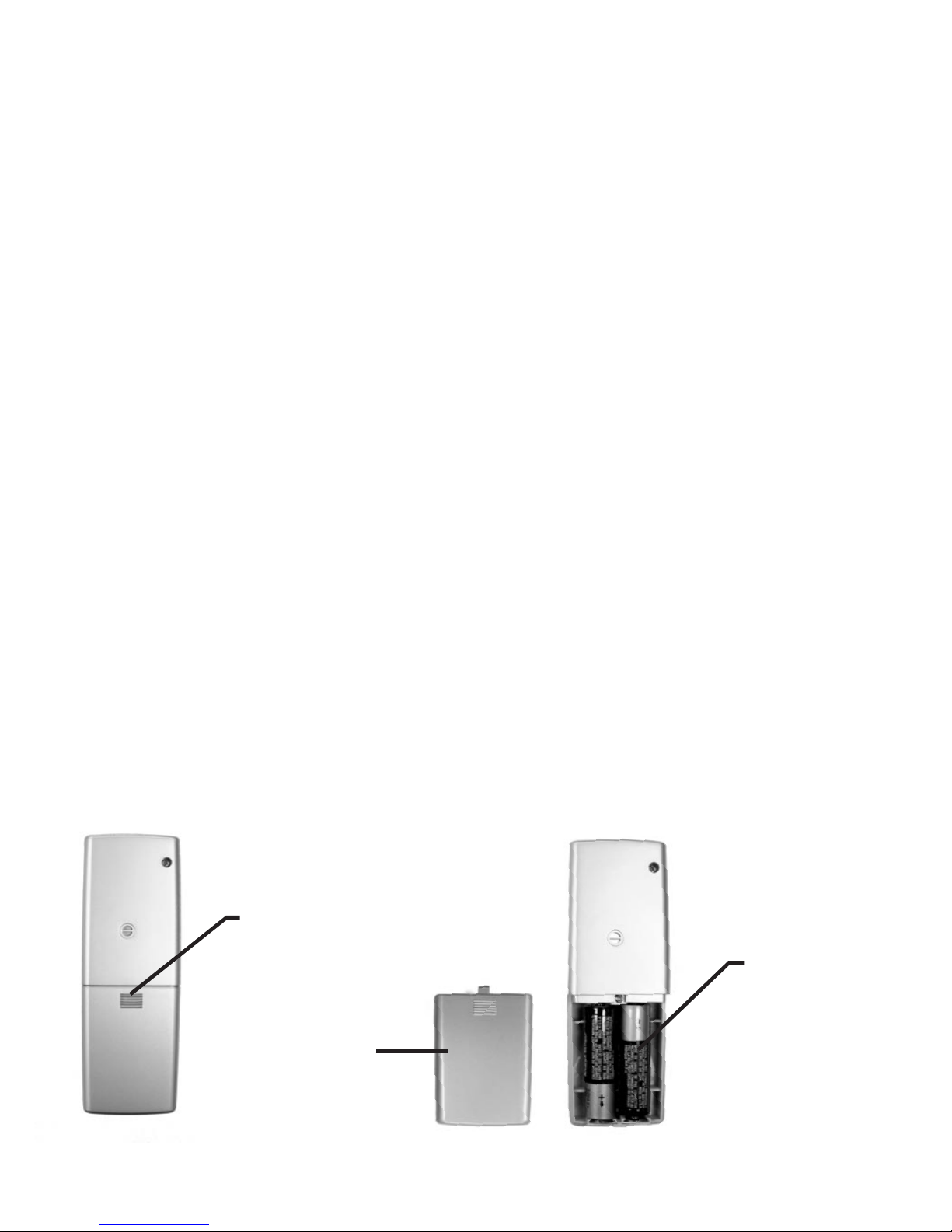
Apply a small amount of pressure on the indention of the battery
compartment cover located on the rear of the unit and pull the cover out
and away from the bottom of the unit to release the cover. Install the
batteries and replace the battery compartment cover. See the following
diagram.
4
COMPARTMENT
INDENTION
BATTERY
COMPARTMENT
COVER
DETACHED
AA BATTERIES
Opening The Mouthpiece
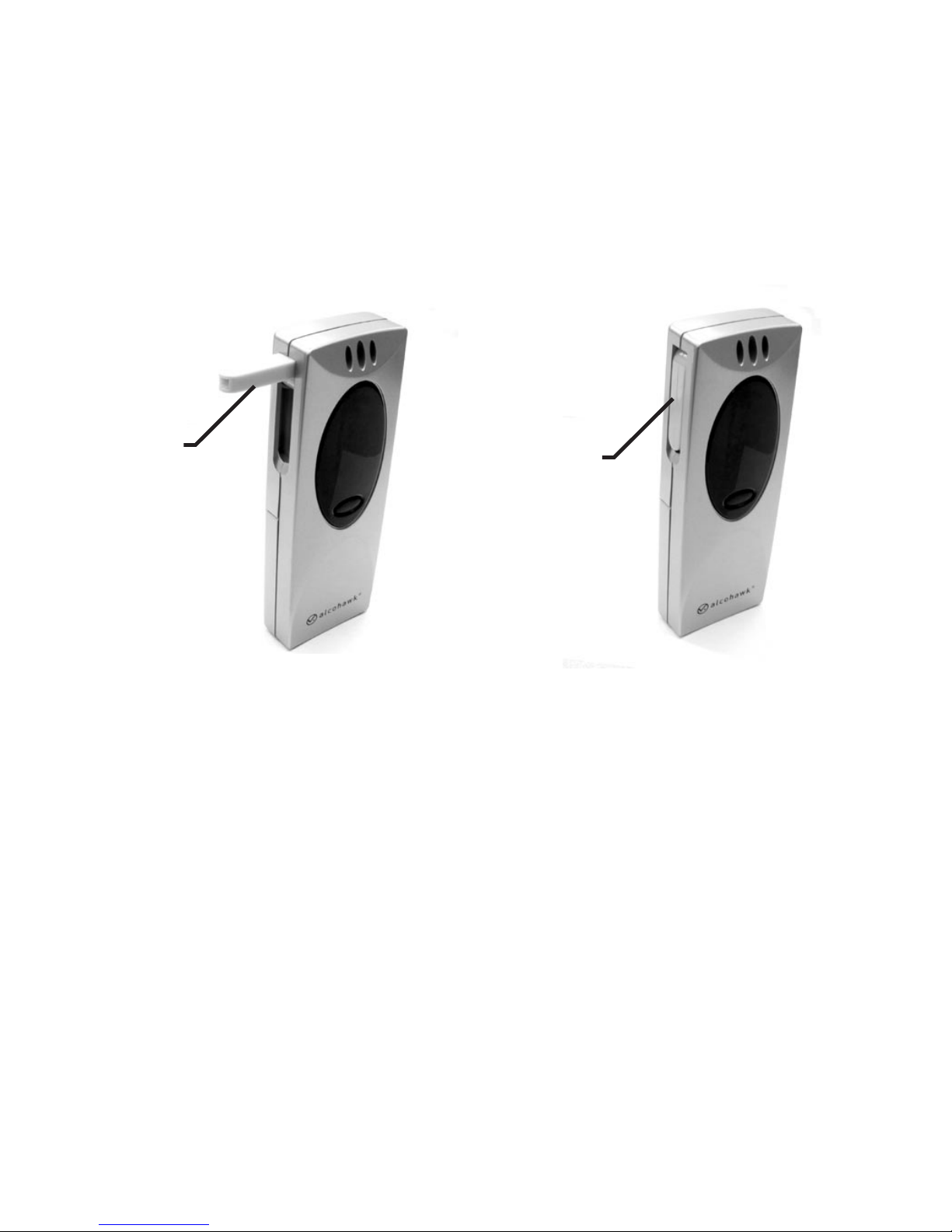
Pull up on the folding mouthpiece located on the left side of the unit until
the mouthpiece extends straight out from the unit. If testing multiple
individuals, it is suggested to place a new cover over the mouthpiece
each time for sanitary purposes. See diagram below.
MOUTHPIECE
STRAIGHT UP MOUTHPIECE
DOWN
5
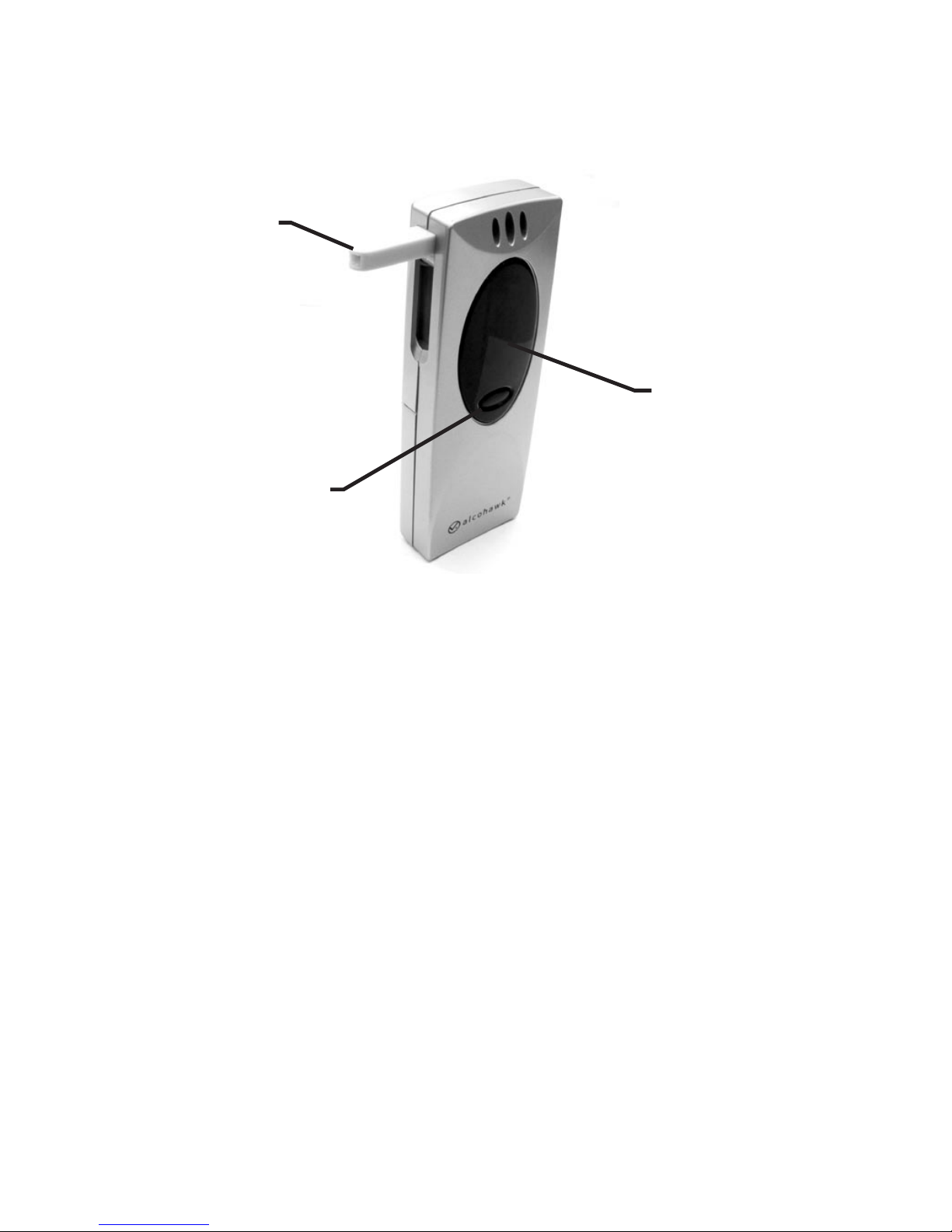
COMPONENTS DIAGRAM
OPERATION
Operating Instructions
WAIT 20 MINUTES AFTER SMOKING, EATING, OR DRINKING
BEFORE USE. FAILURE TO DO SO CAN ALTER THE BAC READING
AND CAN DAMAGE THE SENSOR.
1) Place a fitted cover over the mouthpiece each time you test another
individual.
2) If it has been more than 24 hours since the device was last used,
prime the sensor by blowing into the mouthpiece for 4 to 5 seconds
before turning on the device.
3) PRESS the black Power On/Off button located on the front of the
unit. A single beep will sound and the device will count down from 60 as
6
FOLDING
MOUTHPIECE
DIGITAL DISPLAY
ON/OFF BUTTON

it perpares the sensor for testing.
Note: The device will restart a count down from 10 if the sensor is not ready
within the first 60 second countdown.
4) WAIT until the RED LIGHT IS SOLID RED and you hear a SINGLE
BEEP.
Note: The device will not shut off until a test is performed OR until 15 seconds
of non use elapses.
5) Take a DEEP BREATH AND BLOW STEADILY (for at least 5
seconds) until a BEEP sounds to signal completion of the testing.
6) READ THE RESULTS (NEVER DRINK AND DRIVE).
Reading What It Generally Means
.02-.03% Generally no loss of coordination, slight euphoria or loss
of shyness. Depressant effects are not apparent.
DO NOT DRIVE.
.04-.06% General feeling of well-being, relaxation, lower inhibitions,
sensation of warmth. Euphoria. Some minor impairment
of reasoning and memory, lowering of caution. Driving
skills may be impaired at this level of intoxication.
DO NOT DRIVE.
.07-.09% Slight impairment of balance, speech, vision, reaction
time, and hearing. Euphoria. Judgment and self-control
are reduced, and caution, reason and memory are
impaired. Driving skills are always impaired at this
level of intoxication. You are legally intoxicated at
0.08% in most states!
DO NOT DRIVE.
.10% + Significant impairment of motor coordination and loss of
good judgment. Speech may be slurred; balance, vision,
reaction time and hearing will be impaired. Euphoria.
DO NOT DRIVE.
7) For more testing, wait one (1) minute and repeat steps 1 – 6.
7
Other manuals for AlcoHawk Slim
1
Table of contents
Other Alcohawk Test Equipment manuals

Alcohawk
Alcohawk AlcoHAWK ABI User manual

Alcohawk
Alcohawk AlcoHawk Slim User manual

Alcohawk
Alcohawk AlcoHawk PT500P User manual

Alcohawk
Alcohawk Micro User manual

Alcohawk
Alcohawk AlcoHAWK Slim Ultra User manual

Alcohawk
Alcohawk PT400 User manual

Alcohawk
Alcohawk AT7000 User manual

Alcohawk
Alcohawk PT750 User manual

Alcohawk
Alcohawk PRO FC User manual

Alcohawk
Alcohawk AlcoHAWK ABI User manual


